
Staffordshire History Centre helps uncover remarkable wartime family story
The remarkable story of Flight Sergeant Albert Edward Cooper, a Staffordshire-born Spitfire pilot who lost his life during the Second World War, has been brought to light through family research at Staffordshire History Centre, where his nephew Robert Cooper works
The remarkable story of a Staffordshire-born Spitfire pilot who lost his life during the Second World War has been brought to light through family research at Staffordshire History Centre.
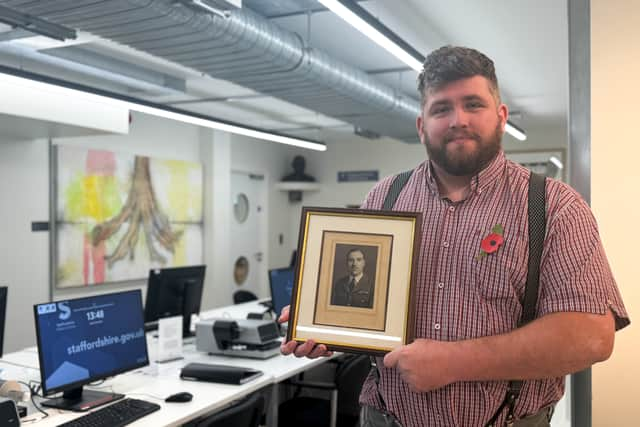

Flight Sergeant Albert Edward Cooper was born in Lower Gornal on 28 February 1915 and came from an ordinary Black Country background. He volunteered for the RAF in 1939, initially training as a telegraphist before being selected for pilot training during the Battle of Britain.
Albert earned his wings in September 1941 and went on to fly Spitfires with 154 Squadron. His service included convoy escorts, reconnaissance missions and fighter sweeps over occupied Europe, as well as providing air cover during the Dieppe Raid.
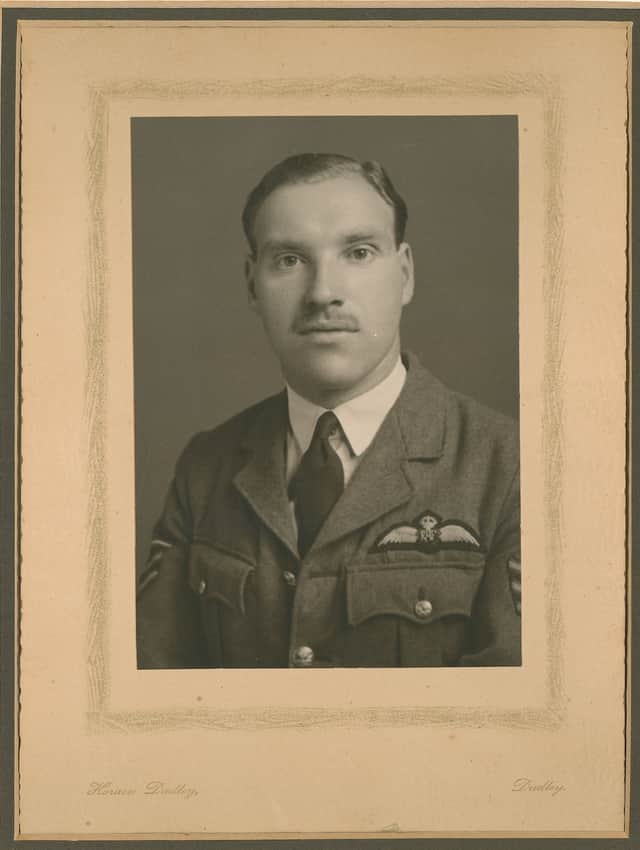
He was later transferred to 54 Squadron, known as the Castle Bromwich Squadron, and sent to Darwin in northern Australia as part of efforts to defend the country against Japanese attack.
Tragically, Albert was killed on 15 March 1943 when his Spitfire was shot down by a Japanese Zero over Darwin. He was just 28 years old and married to Doris. He is buried at Adelaide River War Cemetery near Darwin.
His nephew, Robert Cooper, who works at Staffordshire History Centre, has pieced together Albert’s remarkable story with the help of centre volunteer Ray Wilson.
Robert said: The History Centre brings together Staffordshire’s archive collections alongside local resources. It helps people explore their family history and discover the stories of people and places from the county’s past.
Albert’s story is especially poignant as communities mark Armistice Day, remembering those who served and sacrificed in conflicts around the world.
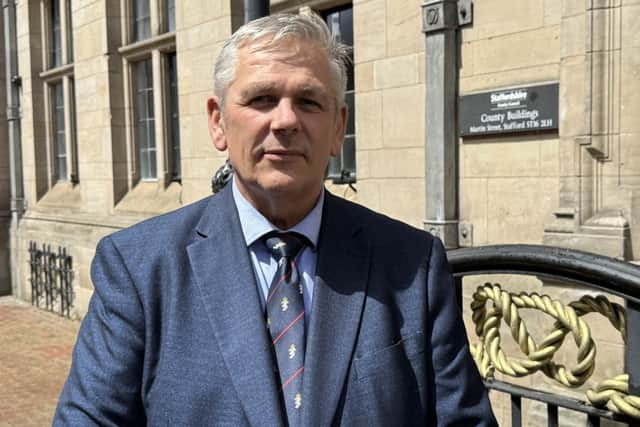
Patrick Allen, Cabinet Member for Communities and Culture at Staffordshire County Council, said: “Albert’s remarkable story is a wonderful example of the personal histories that can be uncovered through research.
Further information on the Staffordshire History Centre is available on its website.