
More than 4,000 deaths recorded in DR Congo Ebola outbreak
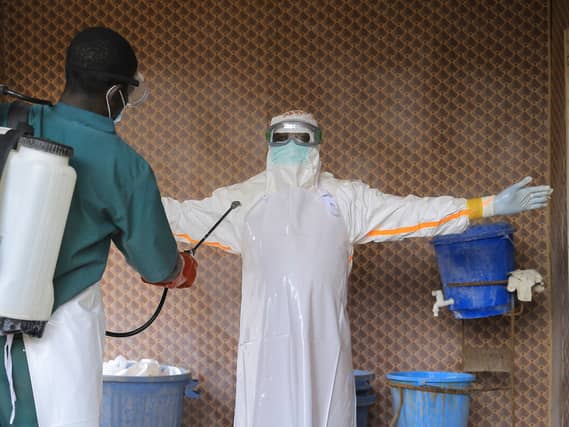

Authorities are struggling to contain the spread of the virus.
The Democratic Republic of the Congo’s Ebola outbreak has recorded more than 4,000 deaths, authorities said, as they struggle to contain the spread of the virus.
The latest figures released by the Health Ministry on Thursday showed 4,018 people have died – nearly half of the 8,300 confirmed cases – in what has become the fastest-growing Ebola outbreak in history.
Congo announced the outbreak on May 15, caused by the rare Bundibugyo virus, which has no known treatment or vaccine.
Some health workers gathered in Bunia, the capital of north-eastern Ituri province, the heart of the outbreak, to demand payment for owed wages. They were quickly dispersed by officials.
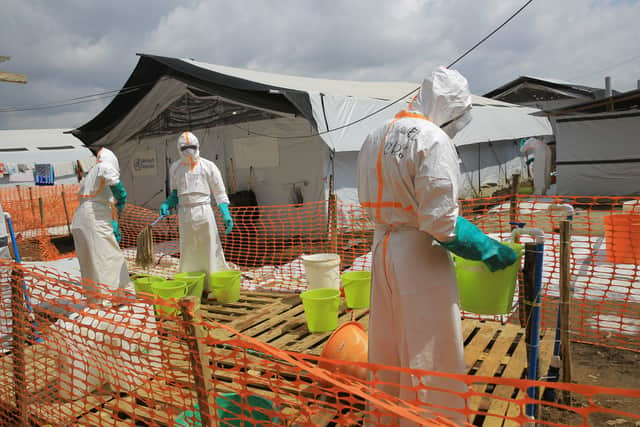
The protesting workers included surveillance teams working to find those who were in contact with an infected person. They waved placards saying: “No money, no data!” and “No payment for months.”
Frontline workers have gone on several strikes since the start of the outbreak to demand payment, further hampering efforts to contain the disease.
An aid worker with Medecins Sans Frontieres (Doctors Without Borders) was infected with Ebola while working in Congo, the group said in a statement.
The worker arrived late on Thursday after being flown to the Netherlands on a special medical flight and was transferred to a high-level isolation unit, Leiden University Medical Centre said in a statement.
“The human cost of this crisis is unprecedented in the DRC, with communities facing the largest Ebola disease outbreak ever recorded in the country,” MSF said.
More than 50 health workers have died after contracting the virus.
The World Health Organisation has recently raised the alarm about the virus’s rapid spread into new health zones, stretching limited resources.
Africa CDC said in its latest news conference that the number of confirmed cases is falling, but that could be attributed to insecurity and challenges in getting communities to co-operate in some of the hotspots.
A Congolese politician was beaten to death earlier this week for defending government measures to deal with the outbreak, highlighting tensions that have stretched the health community and local resources.
The attack on Marie-Celestin Karondwa, a local official with the ruling Union for Democracy and Social Progress party, took place on Sunday at his home in Butembo, an Ebola hotspot in eastern North Kivu province. His house was set on fire afterwards and he died in hospital.
Widespread mistrust of health workers and authorities has hampered efforts to slow the Central African nation’s 17th Ebola outbreak.
Authorities last month launched a village-centred approach, but those efforts are battling beliefs of some residents who dismiss Ebola as a hoax. There is also deep distrust in the country’s government for reasons ranging from how it has managed past Ebola outbreaks to chronic corruption.