
This man's family have been working the grounds of Weston Park for 220 years
When it comes to the history of Weston Park, there's little that Martin Gee doesn't know.
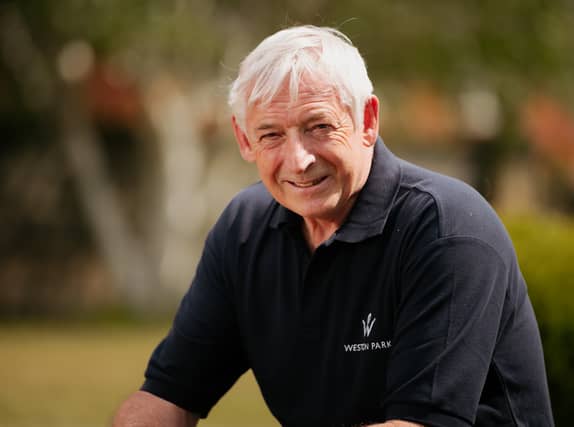

His family have been working and living on the grounds for an impressive 220 years – since 1803 – and the reign of King George III.
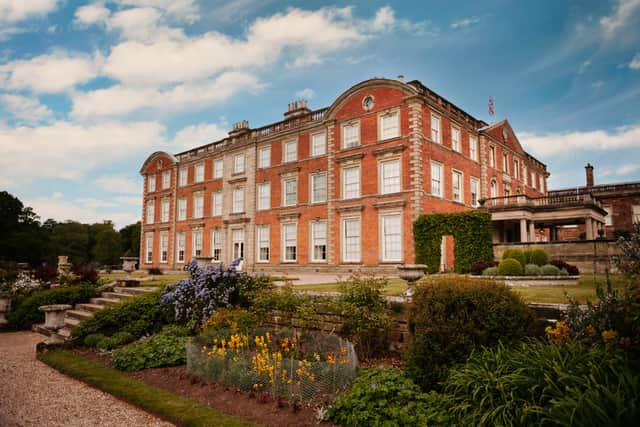
As Head Gardner, Martin's day-to-day role is to look after the Capability Brown pleasure grounds, rose gardens, holiday lets and the large walled garden on the 1,000-acre estate.
But Martin also leads guided history walks of the Park's 'Fabulous Follies' – structures which were built purely for ornamentation and don't necessarily have an obvious purpose.
Six generations of Gee men have worked at Weston Park and Martin's own story began at the age of 15.
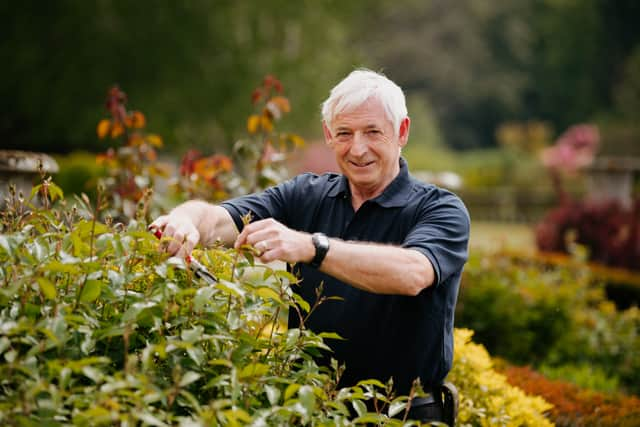
Now, some 54 years on, and Martin is still working hard to maintain the beautiful setting which he puts down to having the support of a great team. hard
Martin said: "The whole place is beautiful. It's a beautiful place to work and you know, a place is only as good as the team you've got working around you and I'm very lucky.
"You've got to have a good relationship with your team or it can be quite hard. We work closely with the Parks Operation team and our paths cross quite a lot. The young team of apprentices have started to show promise as well now.
"Most of what I know about Weston Park tends to come from family," Martin added, "but every day is a school day because you are always finding something out."
Family lineage
Martin's ancestry dates back to the arrival of his great great grandfather John Gee in 1803, whose portrait can be found in the Park's gallery.
John Gee was a ploughman who came from Weeting in Norfolk, at a time when the Bradford family inherited the estate from Lord Mountrath.
He brought horses to Weston Park and is pictured in the painting – by Thomas Weaver – with a plough after he'd been declared victorious in a ploughing match.
Thomas Weaver, who was from Shrewsbury, wrote in his diary that the match took place between the Earl of Bradford, Sir Watkin Williams-Wynn, Richard Lyster and John Gee.
"We always thought that John was married when he came here," Martin said, "but he met a girl who lived near Albrighton – Hannah – and they had a family."
"But he got killed by a wagon and so then his role passed to his son William."
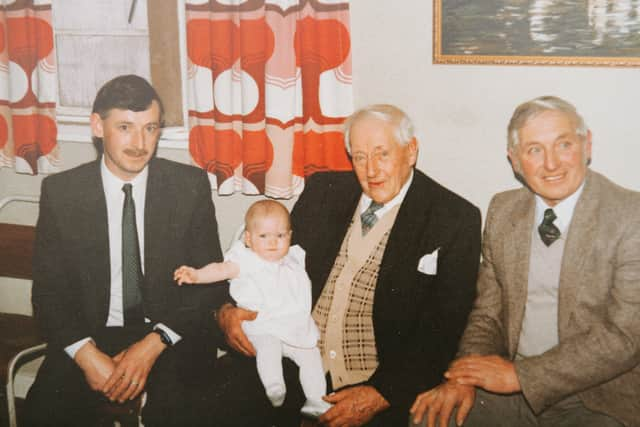
The family line goes: William, born 1827, George, born 1860 and then Martin's grandfather Arthur and Martin's father William.
While Martin and his father both took on gardening roles, Arthur was actually head gamekeeper.
They are pictured in this image with Martin's daughter Felicity:
When asked about his day-to-day role, Martin said: "I normally walk around first thing in the morning before anyone starts. I will take the dog for a walk around the area and see what is needed.
"You obviously have a rough idea, but things can change overnight and then the team will meet in the morning and we decide what jobs need doing and which jobs everyone is going to be given."
Martin went on to say that the role changes from season to season, with springtime being the busiest, as flowers are in bloom and the grass grows at a faster rate.
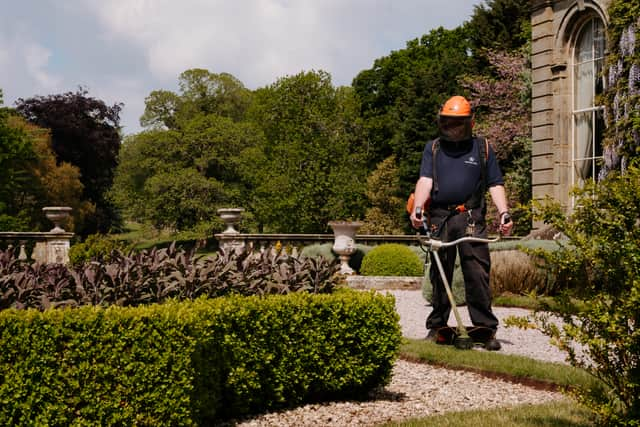
Commenting on the impact of global warming on gardening, Martin said: "It's challenging. I remember 1976 when we had an extremely hot summer, so I had that experience to draw from and I think that's the key thing.
"Because I have been here for so long, you experience a lot of things and so you can draw from that."
Martin went on to say that the equipment that is used now is very different to what his ancestors might have used – and the team have radios and mobile phones to communicate.
But he said that the basic skills needed do not change dramatically from year to year.
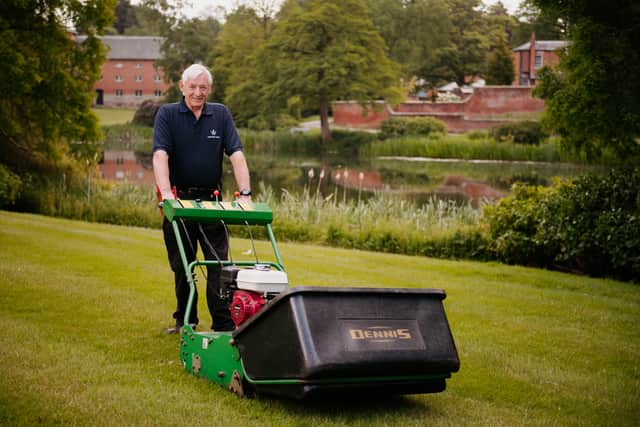
"We do change things around a bit and you never get two days the same," Martin added, "I think that's half the attraction to the job."
"It's nice when people come in and comment on how everywhere looks nice and we rarely get any negative comments."
Martin proudly declared that Weston Park is in possession of two of approximately 170 gardens designed by Capability Brown.
Lancelot 'Capability Brown' was the UK's most famous landscape designer of the 18th century and developed the naturalistic style which became renowned throughout the world.
To take in the spectacular sights at Weston Park and hear the stories behind its wide range of structures – including the Temple of Diana and the Knoll Tower – you can join Martin on Sunday June 4 at 10.30am.
Weston Park's Spring Fling will also be taking place on both Sunday May 28 and Bank Holiday Monday, May 29, with a line-up of food, craft stalls, live music and street food.
To find out more visit weston-park.com.
Comment Guidelines
Iconic Media encourages reader discussion on our stories. User feedback, insights and back-and-forth exchanges add a rich layer of context to reporting. Please review our Community Guidelines before commenting.