
Tidal power across Solent and Wales can boost transition and growth, sector says
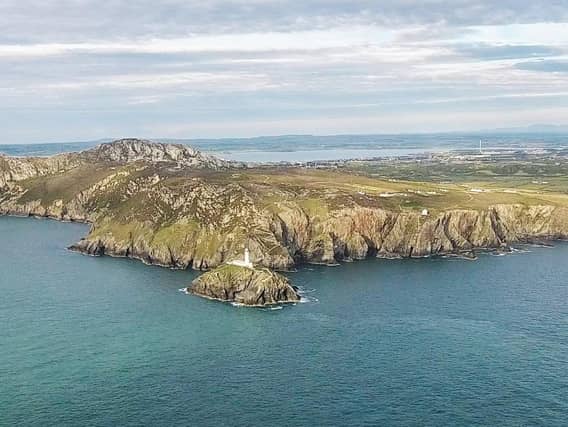

Industry experts envision tidal stream turbines operating at scale in waters across Scotland, Anglesey and the Isle of Wight in the coming decades.
Tidal stream turbines across the Solent and Welsh coast can play a key role in the energy transition and boost local growth, industry experts say.
Given its rich tidal resources and strong maritime heritage, experts say the UK is uniquely placed to roll out tidal energy, which involves turbines being installed underwater to generate power from currents.
Industry leaders, academics and developers envision turbines operating at scale in waters across areas of Wales, Scotland, the Isle of Wight and the Channel in the coming decades with the potential to provide 11.5 gigawatts (GW) of capacity to the grid.
But the sector continues to face major barriers including high upfront, operation and maintenance costs, harsh underwater environments and insufficient government support.
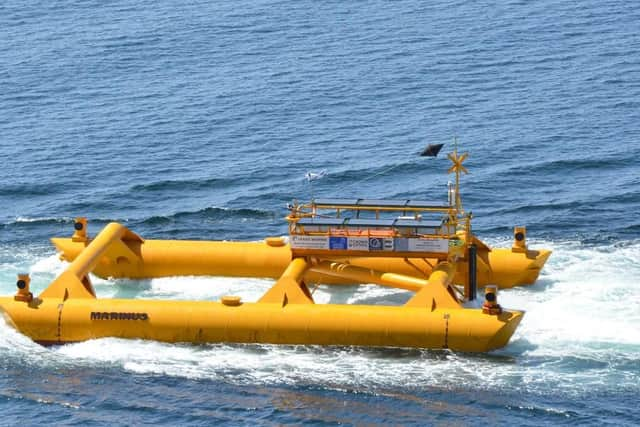
Many hope this is now set to change after the sector has come together under the Marine Energy Council industry body to put forward a core message on how tidal and wave can play a key role in the energy transition as part of the UK Marine Energy Taskforce’s final report, expected to be published in December.
Currently, there are only a handful of turbines operating in higher speed tidal currents in Orkney, Shetland and the Pentland Firth in Scotland.
Other demonstration projects in Wales and England have been advancing slowly, including the Morlais demonstration zone in Pembrokeshire, Wales, which has secured permission for a 240 megawatt (MW) site and has built a new substation on land to connect power to the grid.
Sue Bartlett-Reed, chairwoman of the Marine Energy Council, argued that the Government must support the roll out and scale up of these early leading demonstration projects, which are all located in areas with strong tides.
“I think that will really be the turning point for the sector at the moment,” she told the Press Association.
She also said ministers need to set out a long-term vision for the deployment of other technologies that can work in slower tide areas further down the line, including other Welsh coast areas and parts of the Solent.
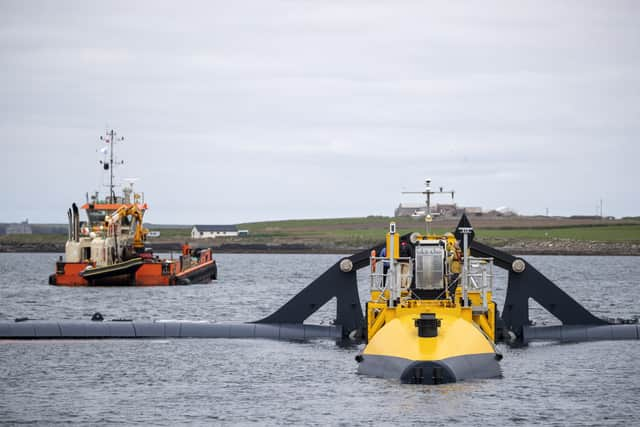
Pablo Ouro, a senior lecturer and tidal energy expert at the University of Manchester, said: “In these regions, you are capable of extracting less energy than in the very highly energetic sites, but those highly energetic sites are very sparse. We have just a few of them.”
This means there is “definitely a business case” for tidal to be deployed at commercial scale across more areas including parts of Wales and the Solent, but also it opens up export opportunities to more places across the world, he said.
Deploying turbines in more of these areas can also create local jobs and economic growth, Ms Bartlett-Reed said, adding that it “really speaks” to Prime Minister Andy Burnham’s ambition for growth in every postcode.
Most UK developers are focused on sites with stronger tides as well as so-called “horizontal axis” turbines, which work almost like plane propellers or wind turbines in water.
But Danny Coles, a senior research fellow focusing on marine renewable energy at the University of Oxford said: “It’s about diversification – diversity in terms of technologies but also diversity in terms of the locations that you install tidal.”
He said many potential sites are located in parts of the UK which currently have little renewable energy generation but are areas of renewable demand, meaning tidal stream could help balance the grid, reducing the need for costly infrastructure and renewable storage technologies.
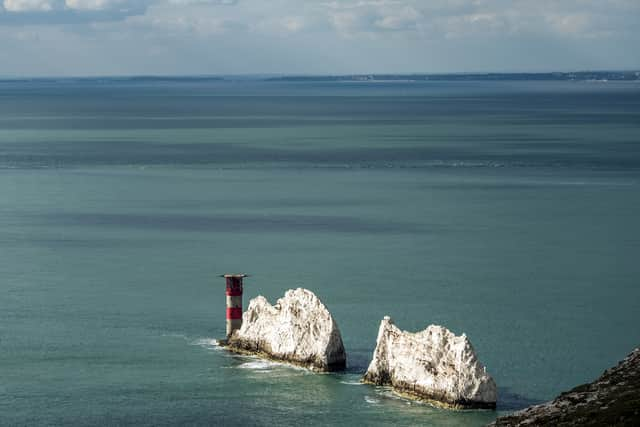
Some of the areas around the south of England or Wales also have better opportunities or existing infrastructure to connect new tidal projects to the electricity grid than some of the fast flow sites, Mr Coles added.
“When you factor in the system perspective… then actually sites with lower flows that tend to be located around the Isle of Wight or Anglesey start to look more attractive,” he said.
Tidal Technologies, a firm based in the south of England, is the only British firm exploring “vertical axis” turbines, where the blades run vertically.
The company says its technology addresses most of the challenges currently slowing the scale-up of tidal energy because they can operate in more-widely-available slower tides and can be clustered closer together in a large “array”.
James Scrimgeour, Tidal Technologies founder and director, said: “This is a completely new approach.
“It has a much bigger potential market. It’s completely different to everything that’s ever happened before, and we believe it’s the breakthrough needed to make tidal energy relevant.”
He said if they can get the technology rolled out slower tide areas then “suddenly you can have a material difference to the overall energy mix”.
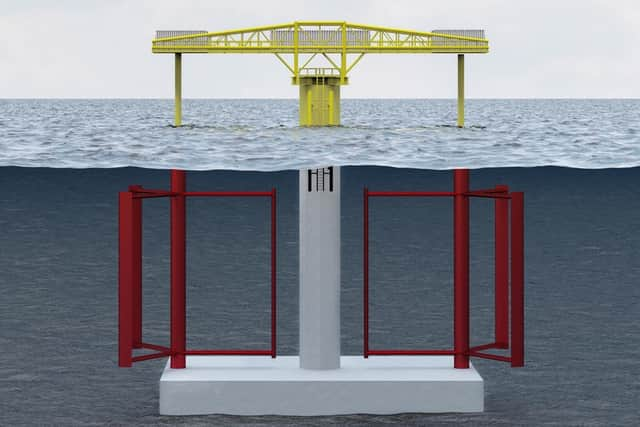
The company is aiming to deploy its first 3MW unit at Morlais in 2028, with more hopefully to follow but the founders also say 250 units could theoretically be installed in medium energy tides south of the Isle of Wight.
The team said this could provide power to every home from Bournemouth to Portsmouth, with a substation at the old Fawley power station site near Southampton potentially being repurposed to provide a grid connection.
Meanwhile, John Idris Jones, chairman of Menter Mon Morlais Ltd, said the tidal demonstration zone has “always been about more than generating clean energy”.
“As a social enterprise and a community-led project, we’re responding to the need for low carbon energy while helping to strengthen the local economy and ensure the benefits of a green economy are felt here on Ynys Mon.
“Morlais also has strategic importance for the wider energy network, with its location offering direct connection to the grid.”