
Pat Finucane ‘murdered because he posed challenge to security forces’
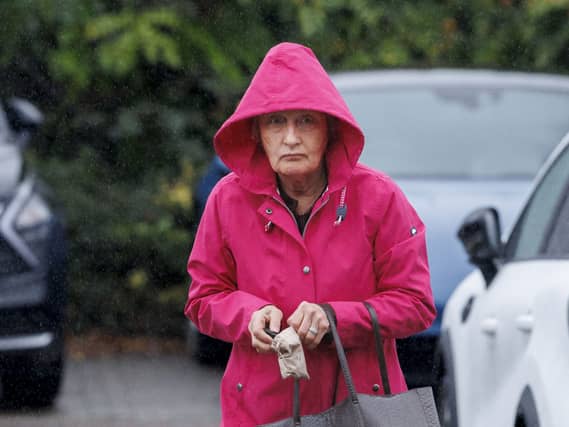

The Patrick Finucane Inquiry is holding a hearing in Belfast.
Pat Finucane was murdered because his work as a lawyer posed an “increasing challenge to the security forces” operating in Northern Ireland during the Troubles, his family’s barrister has told a public inquiry.
Danny Friedman KC told a public inquiry it existed to answer the question “how far up the chain of command” the order to murder the solicitor went.
The chairman of the Patrick Finucane Inquiry, Sir Gary Hickinbottom, is hearing opening statements from core participants.
Mr Finucane was 39 when he was shot dead at his home in north Belfast by loyalist paramilitaries in front of his wife and children in February 1989.
Several examinations of the case have found evidence of state collusion.
The Finucane family campaigned for decades for a public inquiry to establish the extent of security force involvement.

Delivering his opening statement to the inquiry on Tuesday, Mr Friedman said he represented 21 members of the Finucane family.
The inquiry was played a video of media interview in which Mr Finucane’s widow Geraldine said: “I wanted to know who instructed the gunmen, I wanted to know how far up the chain of command this went.”
Mr Friedman said: “That is the question we submit that this inquiry exists to answer.”
He added: “On Sunday, the 12th of February 1989, Pat Finucane was murdered in his home, in front of his wife and their three children, in what was obviously a planned assassination.
“The reason Pat Finucane was killed is because he was a lawyer and an effective one, whose work had come to pose an increasing challenge to the security forces that operated in Northern Ireland at the time.
“For almost all of those years, this family has met denial.”
Discussing the context of the murder of Mr Finucane, the barrister said the inquiry had to consider was it a product of “institutional failure or institutional design”.
He said during the Troubles in Northern Ireland “the administration of law there had been changed in ways in which elsewhere in the United Kingdom would have been perceived as radically altering the nature of the legal order”.
He added: “That is the theme of this part, not the rule of law, but rule by law.”
Mr Friedman said in the 1980s Mr Finucane was part of “a new generation of lawyers” who “began to take the state to court”.
He said Mr Finucane’s challenge to the legality of coroner procedural rules in place in Northern Ireland at the time was “part of the chain of events that led to his death”.
He said that the then-deputy chief constable of Greater Manchester John Stalker was investigating allegations of security force shoot-to-kill incidents in Northern Ireland.
He said: “When Stalker spoke to Pat in a remand hearing at Crumlin Road Courthouse, RUC officers berated Stalker for it.
“Quote ‘Any man who represents the IRA’, they said, “is worse than the IRA’.”
He said: “Those officers knew that state crimes had been committed.
“They feared an effective lawyer who might expose them, and they wanted to stop John Stalker, who was investigating their own organisation, for speaking to that lawyer.”
Mr Friedman said the state had had a “long relationship with armed loyalism”.
He added: “From the foundations of Northern Ireland, it was policed in part by armed auxiliaries drawn almost entirely from one community”.
Turning to previous findings of collusion in the murder, Mr Friedman said: “No-one suggests that the cabinet sat around a table and agreed to have Pat Finucane killed.
“Though ministers did press for charges not to be brought against one of the killers and failed to order a public inquiry.
“The family starting position is this was a practice deliberately kept outside the ordinary chain of command, deliberately kept from public view as much as probable, and deliberately placed beyond the reach of the ordinary law.”
He added: “It is easy to speak of the rule of law as if it were solid and unquestionable.
“In Northern Ireland, in these years, it was neither.”
Mr Friedman said: “The question with which we began was institutional failure or institutional design.
“The emergency legal order, the relationship with armed loyalism, and the agent system must be examined together.
“Together, they bear the marks of a state practice, repetition, and official tolerance.
“The family’s starting position is that this was design.
“That is the context in which we ask you to consider the state’s involvement in Pat Finucane’s death.”