
NHS facing ‘overwhelm’ as plans to help service have come ‘dangerously late’
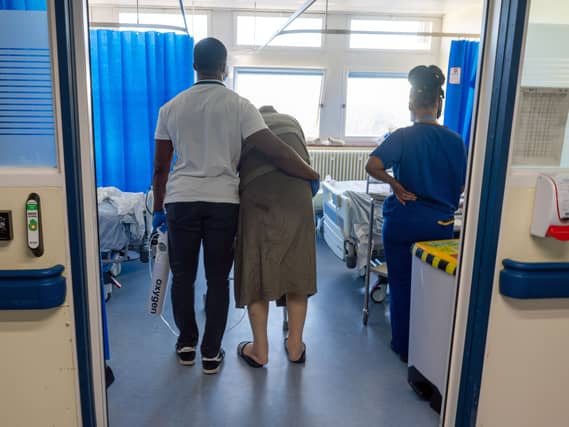

Health leaders said that demand has grown faster than ‘anyone could have imagined’.
Plans to shift care out of hospital and into the community have come “dangerously late”, health chiefs have warned, as they said the NHS should be prepared for the busiest winter on record.
Leaders said that demand has grown faster than “anyone could have imagined” as they expressed “frustration” at how “overwhelmed” the health service has become.
NHS bosses warned that the service in England is at “risk of regressing” as services are “stretched to the limit”.
Meanwhile, trust leaders expressed concerns about cutting back services due to financial constraints and staffing pressures.
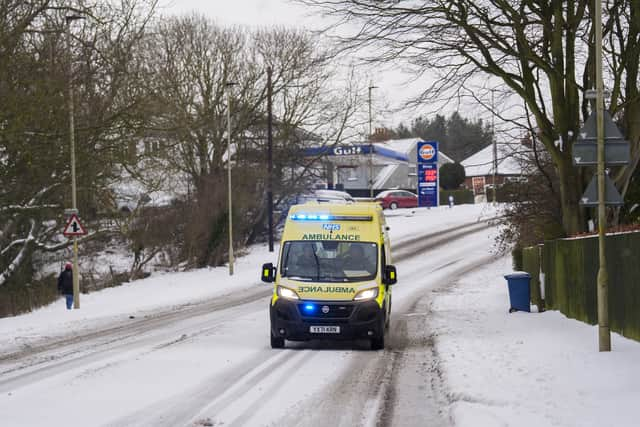
A new poll of health chiefs across England has shown that more than half (58%) are concerned that demand could outstrip capacity this winter.
One trust boss said: “Last winter was the busiest winter on record. This winter will be busier. Therefore, this winter will be the busiest on record.”
Some 79% of 184 NHS leaders said they do not believe the NHS can simultaneously recover waiting time targets and deliver the Government’s three major shifts in care with current funding, according to the survey by NHS Alliance.
Labour’s health plan promised three shifts for the NHS: from analogue to digital, treatment to prevention, and from hospital to more community care.
Speaking anonymously as the poll was released, one NHS boss told journalists: “We are dangerously late, I think, in terms of trying to shift care outside of hospital.
“There is no plan for the investment in community and primary care services in order to do that.”
“I fear that A&Es will become overwhelmed before we put in the alternatives that would keep people sensibly out of hospital when they don’t need to be there.”
“I think the number of over 65s and over 85s from the population projections is frankly scary… I think we are seeing that Baby Boomer generation live longer at this particular time – they do not benefit from going into hospital, for the most part, not because hospitals don’t do brilliant things. But if you’re old and frail, you do not benefit from being admitted to hospital and decompensating while you’re there.”
Another NHS chief said they were “both prouder, but also more frustrated” than they had ever been with the health service, adding: “The frustration comes from how overwhelmed the NHS is at the moment, and I do feel we’re at risk of regressing, whether it’s general practice, acute community, mental health, or beyond.
“Our services are clearly stretched to their limits.”
Experts described A&Es as “extremely busy”, saying these services can become “overwhelmed” when people struggle to access GP care and there are high levels of deprivation.
Referring to neurodiversity services for children, another leader described how the NHS trains staff who are lured away to private services offering higher salaries and better working conditions.
Another added: “There aren’t a whole load of therapists that are sitting out there waiting in coffee shops to be employed by the NHS when we find money, so there is a resourcing problem.”
The NHS Alliance poll found that half of trust leaders do not believe the NHS will be able to meet its constitutional standards over the next five years.
“We have the reality that demand is growing faster than probably anyone imagined when they designed the constitutional standards,” one trust leader said.
Another health leader said: “Many of these constitutional standards have been in place for 22 years now, the NHS and society have changed immeasurably over those 22 years, and I think it’s worth reviewing them.”
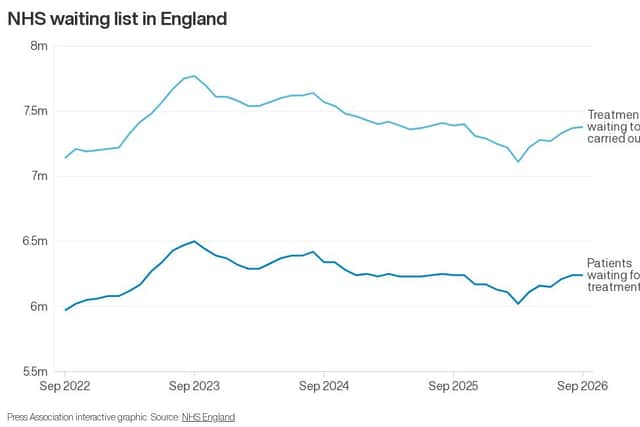
In 2024, Labour pledged that 92% of patients in need of pre-planned care such as a hip or knee replacement would be treated within 18 weeks by July 2029.
One trust leader declared that “as things stand, it looks unlikely (we will) deliver it”.
NHS Alliance said that health leaders have expressed concerns about unbudgeted extra cost pressures including pay settlements, higher than expected inflation, rising energy and medicine bills and continued growth in patient demand.
Sir Ciaran Devane, chief executive of the NHS Alliance, said: “Local NHS leaders are warning that the hard-fought gains of recent years are in peril due to a series of extra costs that are not covered in the budget.
“This is opening up a widening gap between what the NHS is being asked to deliver and the resources it has available.
“Without realistic expectations, sufficient workforce capacity and sustained investment in reform, there is a growing risk that progress on both performance recovery and long-term transformation will be slower than patients, politicians and policymakers want to see.”
Royal College of Nursing general secretary and chief executive, Professor Nicola Ranger, said: “Nursing staff have repeatedly warned about how the failure to invest in community services would lead to unsustainable pressures in hospitals, but Government has been too slow to provide the investment needed.
“It is incredibly worrying to hear service leaders speak of cutting back services further in England.
“Registered nurse roles in hospitals are already being reduced due to financial pressures and this must be reversed, not made worse.
“There is a clear link between increased mortality and nurse shortages and patients will be put at risk if further cuts take place.”