
New safety guidance issued on babywearing after death of six-week-old boy


The update is the first significant change in baby wearing advice in 16 years, according to the Lullaby Trust.
New guidance has been issued on how to safely use slings and baby carriers following the death of a six-week-old boy.
The update is the first significant change in baby wearing advice in 16 years, according to the Lullaby Trust.
It is backed by the parents of Jimmy Alderman, who died after he stopped breathing while in a baby carrier.
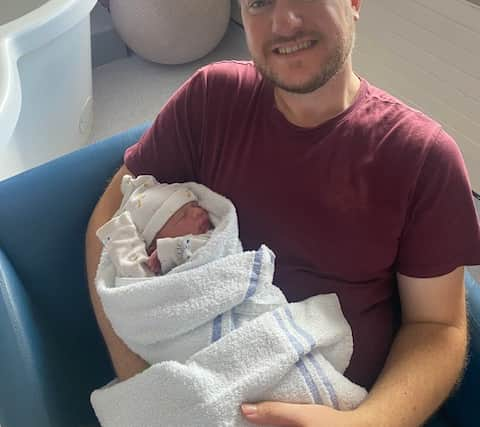
His father George Alderman told the Press Association that the new guidance is “the first step” as they called for safety standards for all slings and carriers.
In October 2023, Jimmy was breastfed in his baby carrier by his mother Ellie Alderman.
He fell asleep, but stopped breathing soon after.
Despite resuscitation starting straight away, he died three days later.
Mr Alderman said the safety campaign was sparked after an inquest into his son’s death found there was not enough clear guidance for parents using slings and baby carriers.
The couple, from Weybridge in Surrey, said the carrier was a “reputable brand” and was originally bought for their older son.
However, Mrs Alderman raised concerns about the instructions on the carrier.
She told PA the carrier had been advertised for “hands-free breastfeeding”, however charities such as the Lullaby Trust and NCT warn that this is unsafe.
“The instructions on the carrier were, in hindsight, actually wrong, which is really worrying,” Mrs Alderman said.
“It was advertised for easy hands-free breastfeeding, and then in the inquest process, we found out that’s not even a thing.
“You can’t breastfeed hands-free. It’s not possible in a carrier to do that safely.”
Mr Alderman added: “The carrier that Jimmy was in, there was a frequently asked questions bit on the website that said ‘Can you breastfeed in this? Is it possible to hands-free breastfeed in this carrier?’. And the answer was yes, you can.
“Since Jimmy died, that’s now just been taken off their the website completely, which again highlights the lack of regulation.
“It shouldn’t be that easy for a company one minute to say one thing, then a baby dies and then they take it down.”
The instructions on the sling also advised people not to wear it too tight, but the couple has since learned that a baby is more likely to suffocate if it’s too loose, as they can slump forward.
The new guidance has been developed based on research into slings and carriers – funded by The Lullaby Trust and Teddy’s Wish – by the Durham Infancy and Sleep Centre.
It comes after a survey of 1,470 parents with babies under a year old found manufacturers provide little safety guidance, with both new and experienced parents struggling to use the products.
Common issues included problems around positioning.
The new guidance highlights three important checks for people to make while baby wearing.
These are ensuring the baby is on the firm part of the chest, with the parent able to kiss their head easily, making sure the baby’s mouth and nose are in sight, and making sure the sling is holding the baby tight against the body with their back evenly supported.
Currently, the only babywearing guidance available to parents is the UK Sling Consortium’s Ticks – tight, in view at all times, close enough to kiss, keep chin off the chest, and supported back.
Mr Alderman said neither he or his wife had heard of Ticks until the inquest into their son’s death.
“We just wanted something that was a bit easier to remember and follow,” he told PA.
The launch marks a step forward in ensuring all baby-wearing practices are as safe as possible, according to the Lullaby Trust.
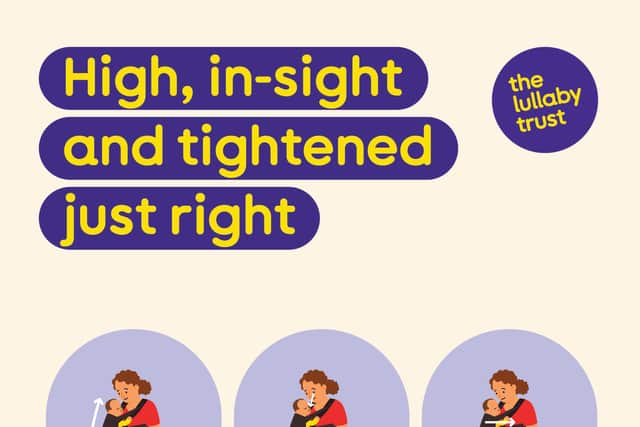
The charity and its partner organisations will provide downloadable cards and posters, as well a as a social media toolkit which will be distributed to professional midwives and health visitors.
Mrs Alderman said she is feeling “really positive” about the campaign.
“We just want really clear, informative guidance for parents so that they can wear their babies safely,” she told PA.
“We’re really optimistic. What we want to come from this is that on discharge from hospital after having a baby, new parents will be given this literature about safe baby wearing.
“It’s all very clear and easy. Even if you can’t read, there are diagrams. It’s accessible to everyone.”
The couple are also hopeful that the guidance will be covered as standard in antenatal classes.
Jenny Ward, chief executive of The Lullaby Trust, said: “We created this guidance as we saw it as our responsibility to act when the safety of babies was at risk.
“In particular, at this time of year with Black Friday sales coming up and Christmas just around the corner, we urge anyone buying a sling or carrier to check the British Standards are met and to look at the manufacturer guidance for suitability around weight, height and age when it comes to their baby.
“We are grateful to all the organisations who contributed to this new guidance and especially thankful to Ellie and George for their unrelenting pursuit of change.
“They are without a doubt the reason this new guidance has been created.”
Professor Helen Ball, of the Durham Infancy Sleep Centre, said: “Parents in our survey felt that they needed easy to remember guidance on how to use slings and baby carriers safely.
“Many were also not aware of the existence of sling libraries and babywearing educators who can help with choosing and fitting a carrier.”
Mr Alderman also called for safety standards across all products.
“There’s no mandatory safety standard or manufacturing standard, it’s all voluntary,” he said.
“We see this as a really positive change for parents, but it’s the first step, and I think the next thing that we’d like to see would be some sort of safety standard or regulation that’s there for all slings and carriers.”