
More than 300,000 children no longer in poverty after benefit cap removed
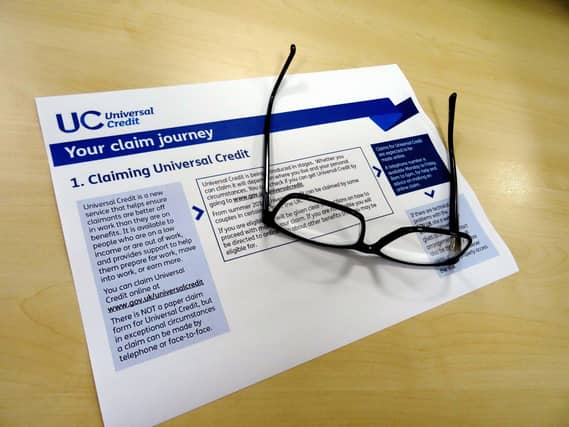

The two-child limit for universal credit payments was scrapped in April 2026.
More than 300,000 children across Britain are no longer defined as living in poverty, following the Government’s decision to scrap the two-child limit for one of the main types of welfare, figures show.
Under previous rules, families could only receive the child element of universal credit for their first two children.
Universal credit (UC) is the main form of means-tested social security in the UK and is intended to help with living costs for people in work who are on low incomes, as well as those who are unemployed or cannot work.
The decision to scrap the two-child limit for UC was announced by former chancellor Rachel Reeves at the budget in November 2025 and came into effect in April 2026.
Analysis published on Tuesday by the Department for Work & Pensions (DWP) estimates that 301,720 children in Britain are no longer living in households below the poverty line, due to the removal of the UC cap.
Households where income is less than 60% of the median national average, after housing costs, are considered to be living in poverty.
The figures also show 118,630 adults are no longer defined as living in households in poverty, because of the lifting of the two-child rule.
Overall, 1.57 million children are in families that have seen a rise in UC payments since April, including those no longer below the poverty line.
Responding to the figures, Secretary of State for Work & Pensions Pat McFadden said: “This is about changing the story of children’s lives.
“Children who grow up in poverty are more likely to have mental health difficulties, to be Neet and to earn less as adults.
“We want to give every child a genuine shot at life – to do well at school, stay healthy, succeed at work – ultimately contributing to their community as adults.
“Removing the two-child limit is the most cost-effective way to drive down child poverty rates and is an investment worth making – for those children, for their families, and for the whole country.”
The two-child limit for universal credit was introduced by former Conservative chancellor George Osborne and had been in place since 2017.
The Government estimates that 450,000 children will have been lifted out of poverty by the end of this parliament in 2029 because of the removal of the benefit cap.
This figure increases to 550,000 when other child poverty strategy measures are included, such as expanding eligibility for free school meals.
The findings have been published on the same day as the release of a major Government-commissioned review of youth unemployment carried out by former Labour minister Alan Milburn.
The review argues that “poverty and inequality” are “at the core of the Neet crisis” – a reference to the recent rise in young people in the UK who are not in education, employment or training.
Removing the two-child limit for universal credit has had an impact on the proportion of the population below the poverty line, DWP data suggests.
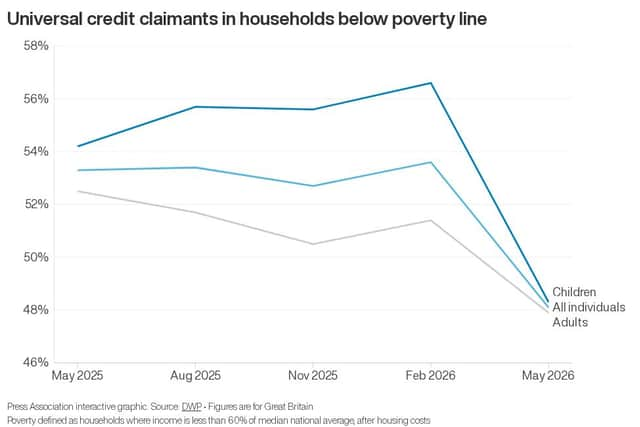
Some 56.6% of children in UC families in Britain were classed as living in poverty in February 2026.
By May, one month after the two-child limit was scrapped, this figure had fallen to 48.3%.
The proportion of adults in UC families living in poverty dropped over this period from 51.4% to 47.9%.
The DWP has also estimated the proportion of all under-16s in Britain who live in families that both receive universal credit and are below the poverty line.
This figure is estimated to have dropped from 21% of the under-16 population in February to 17.5% in May.
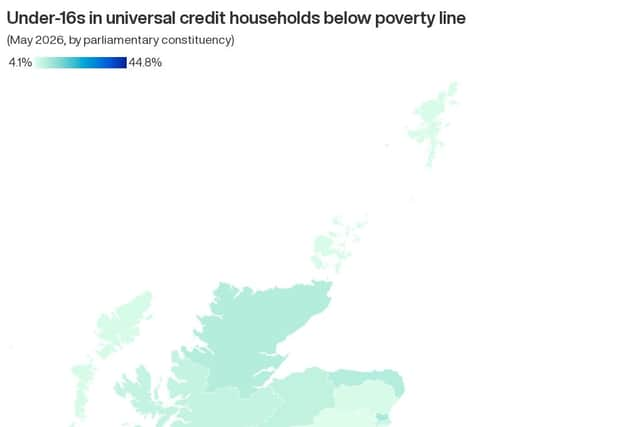
Birmingham Ladywood is the parliamentary constituency in Britain with the highest proportion of under-16s in families that both receive UC and are classed as being in poverty, at 44.8% in May, down from 51.1% in February.
Mid Dunbartonshire in central Scotland has the lowest proportion, at 4.1% of under-16s, down slightly from 4.7%.