
Leading headteacher warns that feminism has become ‘unfashionable’
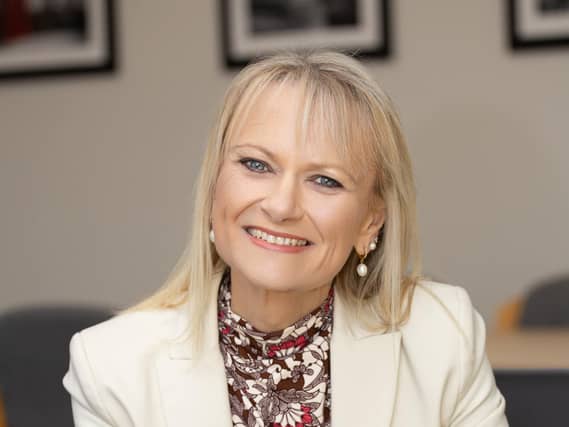

Helen Jeys, headteacher of Manchester High School for Girls, will call for female role models to be put on the syllabus.
Britain has gone “backwards” by a generation in how it listens to girls as feminism has become “unfashionable” due to a rise of misogyny in society, a leading headteacher will warn.
Helen Jeys, president of the Girls’ Schools Association (GSA), will say politicians have begun a “serious conversation” about boys – but a similar focus is needed for girls.
Mrs Jeys, headteacher of Manchester High School for Girls, will call for female role models to be put on the syllabus after a recent study found there is only one female scientist named in GCSE exam specifications.
Addressing headteachers of girls’ schools in Leeds, Mrs Jeys will say: “I believe we have gone backwards, and not by a little – by a generation, in how the voices of girls and women are received.”
She will add: “In some quarters, ‘feminist’ has become an unfashionable word.”
The GSA president will say: “We are seeing the apparent normalisation of misogynistic attitudes online, arriving on a twelve-year-old’s phone before she has even left for school.”
In a speech to the GSA conference on Monday, Mrs Jeys will highlight how politicians have recently debated whether we need a minister for men and they have looked into loneliness among boys and young men.
She will say: “But where is the same conversation about girls? Who is asking what it means to be a girl now?”
A study by University of Cambridge researchers, released last month, found that only one of 86 scientists featured in the main Key Stage 4 exam specifications for science was a woman – Rosalind Franklin.
Mrs Jeys will say: “When girls are asked what makes them feel confident to be themselves, more than half name role models.
“So, to the exam boards and the Department for Education: this is fixable, and it is fixable now.
“Put women on the syllabus. There are so many to choose from.”
Speaking to the Press Association, Mrs Jeys said social media algorithms are taking people into “echo chambers” where feminism is associated with a stance that does not relate to the definition of feminism being about equality.
She said: “I think that as feminism has become associated almost with a negative perspective, we just need to remember that it’s a really positive term.
“It’s not to exclude anybody. It’s not to isolate anybody. It’s to bring girls back into that discussion space.
“When we’ve got people of a grandfather’s generation being more positive about feminism than modern boys, I think that the increasing misogyny in society, particularly that girls are seeing on social media, means that we’re going backwards.”
Mrs Jey added: “I think that we’re seeing a science gap opening up. Boys are 13 points ahead at the age of 15 than girls, and that’s great for boys. Boys are moving on – that’s fantastic.
“But we need to make sure those opportunities are there for girls, and for girls to see that those rooms are there for them.”
A Joint Council for Qualifications (JCQ) spokesperson said: “Exam boards recognise that there is a clear need for greater representation in science qualifications, and this is an area they will be focusing on as these qualifications are reformed.”
A Department for Education (DfE) spokesperson said: “Girls should see the contribution women have made in science and know that those opportunities are open to them too.
“We are determined to change this and ensure women are properly represented in what children learn at school.
“Alongside improving the curriculum, programmes like Stem Ambassadors are giving young people inspiring role models and challenging outdated stereotypes about who belongs in Stem.”