
Killer jailed after double jeopardy law change recommended for release
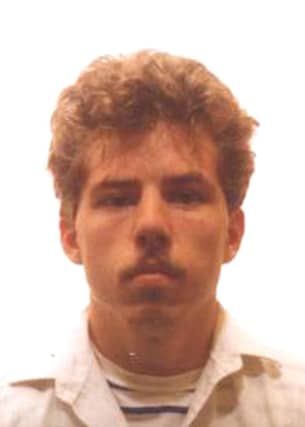

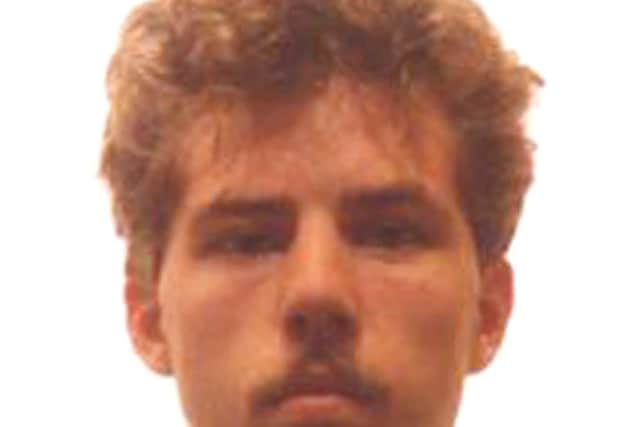
William Dunlop, now 63, strangled Julie Hogg in Billingham, Co Durham, in 1989 and hid her mutilated body behind a bath panel.
A jailed murderer who became the first person tried after a change to the 800-year-old double jeopardy law has been recommended for release by the Parole Board.
William Dunlop, now 63, strangled Julie Hogg in Billingham, Co Durham, and hid her mutilated body behind a bath panel. She was discovered by her mother, Ann Ming, more than two months later.
The 22-year-old’s murder was “accompanied by the brutal sexual degradation of (her) body”, the Old Bailey judge said in 2006 as he sentenced Dunlop to life imprisonment with a minimum term of 17 years.
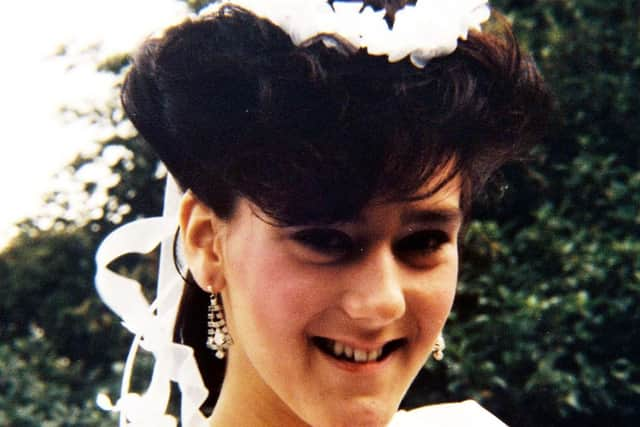
The case made legal history: Dunlop was the first person to be retried after a change to the double jeopardy law.
On Thursday, the Parole Board found he had been rehabilitated and recommended he be released after his fourth application to review his case.
In response to the result, Miss Hogg’s son Kevin, who was three when his mother was killed, called the Parole Board “not fit for purpose”.
The 40-year-old said: “You know them victim personal statements? They mean absolutely nothing – nothing whatsoever and that’s been proven time and time again.”
A panel has recommended Dunlop’s transfer to open prison multiple times but three justice secretaries have intervened, a public parole hearing on October 21 was told.
Mr Hogg told Press Association: “They’re an absolute waste of space, not fit for purpose and I’ve said it all along.
“When will they actually listen? When will they actually listen and take note of what the ministers said? Take note of what victims and the victims’ families are saying?
“And, most importantly out of it all, they need to be held to account.”
On Dunlop, he said: “I’m not scared. I don’t fear him whatsoever because if he wants to, you know, seek some type of vengeance or what have you, then my attitude will be: bring it on because there will be one loser and it will be him because he will be sent straight back to prison.”
In its decision, the panel said it is “mindful” of the victims’ feelings – particularly Mrs Ming’s.
They “take the view that (Dunlop) should never be released”, it added.
“The Panel fully understands their feelings and has great sympathy with their views.
“Mrs Ming, Ms Hogg’s sister and her son Kevin will have enormous difficulty being persuaded that (Dunlop) has, in the judgement of the panel, served his punishment and been rehabilitated.
“However, if a prisoner presents as a person who, on the totality of the evidence available to the panel, meets the statutory test for release, then the panel is obliged by law to conclude that his release must be directed.”
In his victim impact statement, Mr Hogg had recounted his childhood trauma of “hearing screaming and shouting in the home with the pungent smell of my mother’s decomposing body” as his grandmother found it.
He said: “I can say categorically that time isn’t the great healer it’s purported to be.
“As the years pass, the pain of losing my mother to this murder remains acute.”
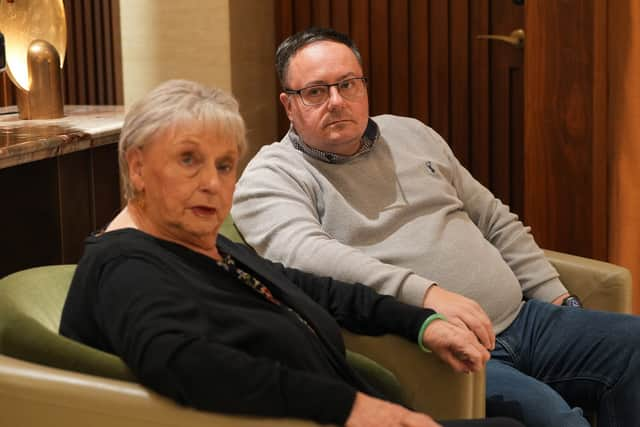
Mr Hogg described the devastation wrought on himself and family members, including health and relationship issues, and “joy or even just cheeriness” falling in “short supply”.
After the statement, Dunlop, who psychiatrists previously found has “psychopathic traits” and “severe personality problems”, told the panel that he now empathises with the family after his son died last year.
“I get it now. I totally get it now,” he said.
“I was struggling when (Mr Hogg) was talking about it, from what it was bringing back for me.”
Dunlop said “if I think about my significant other, I think about Julie” and “this is going to be the most difficult parole hearing I have been in”.
He added: “I can’t understand (Mrs Ming) finding her daughter, that I struggle with, but I relate to the loss now, the not knowing – I get that, I really do.”
The killer, who claims to be rehabilitated, described getting “snippets of information” about his son’s death while in prison.
Per Dunlop’s request not to be seen, he spoke with his back to the camera that was live-streaming from an unnamed prison to a room in London with Miss Hogg’s family inside.
The following day, Miss Hogg’s mother, Ann Ming, 80, told the Press Association that she “wanted to scream” when hearing of his newfound empathy, adding: “I don’t know how we kept it together.”
Sitting next to her in a London hotel was Kevin, who said the family believes the “vicious, violent offender” should never be released.
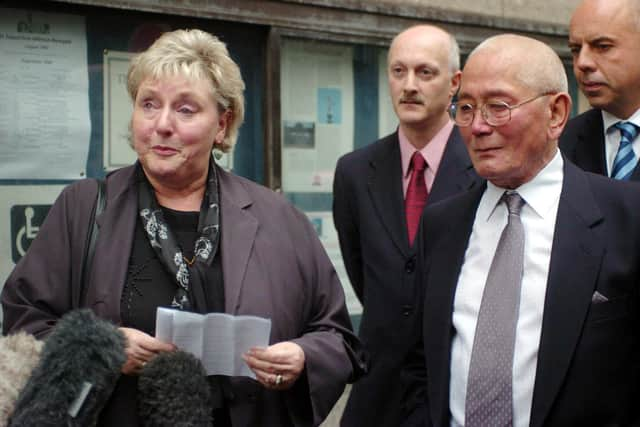
“As a family, we don’t believe he should, but we have to accept he will,” he added.
Mr Hogg criticised Dunlop’s emphasis on his bereavement to the panel, claiming it was “scripted” and his grief “incomparable” to his grandmother’s.
He told PA: “He wasn’t empathetic last year, 18 months ago, two years ago, but now he is.”
Dunlop, known as Billy, was tried twice for the murder but both juries failed to reach a verdict.
Three years later, while in jail for another crime, he confessed and admitted lying in court, boasting there was nothing anyone could do about it because of the double jeopardy rule in place at the time.
Miss Hogg’s family, including her mother, campaigned for 15 years to get the law changed and he became the first person to be tried under the new rules.
He admitted murder and was jailed for life with a minimum term of 17 years.
Asked if he believes he would have gone on to commit another murder or serious violence, Dunlop told that panel: “I would say yes because that’s what my life was.”
He said he had intended to take Miss Hogg’s life because “you cannot strangle somebody and think you’re not going to do that”.
His thoughts of violence are now only directed at himself, not to other people, he claimed.
On whether he considers himself a risk to the public, Dunlop told the hearing: “No, I’m more frightened of them than they should be of me – I’m more concerned about people finding out where I am and causing me harm… I don’t want to cause anybody any harm.”
A prison psychologist and an independent psychologist agreed that Dunlop should be released after finding a low risk of violence, increasing to moderate in the community.
Dunlop’s prison offender manager said his ability to cope had improved.
She observed this last year as he navigated his son’s death, then-justice secretary Shabana Mahmood’s intervention to keep him in prison, and the documenting of his case in ITV drama I Fought The Law.
Dunlop has served five years more than his minimum term for murder.
He was already imprisoned at the time of that sentence and has now been detained for around 28 years.
A spokesperson for the Parole Board said: “Following a public hearing held on October 21 2026, we can confirm that a panel of the Parole Board has directed the release of William Dunlop following an oral hearing.
“Parole Board decisions are solely focused on what risk a prisoner could represent to the public if released and whether that risk is manageable in the community.
“The panel carefully examined a huge range of evidence, including details of the original crime, and any evidence of behaviour change, as well as exploring the harm done and impact the crime has had on the victims.
“Members read and digest hundreds of pages of evidence and reports in the lead up to an oral hearing.
“Evidence from witnesses such as probation officers, psychiatrists and psychologists, officials supervising the offender in prison, as well as victim personal statements may be given at the hearing.
“It is standard for the prisoner and witnesses to be questioned at length during the hearing, which often lasts a full day or more.”
“Parole reviews are always undertaken thoroughly and with extreme care. Protecting the public is our number one priority.”