
Interest rates should rise to 5% to control inflation, says think tank
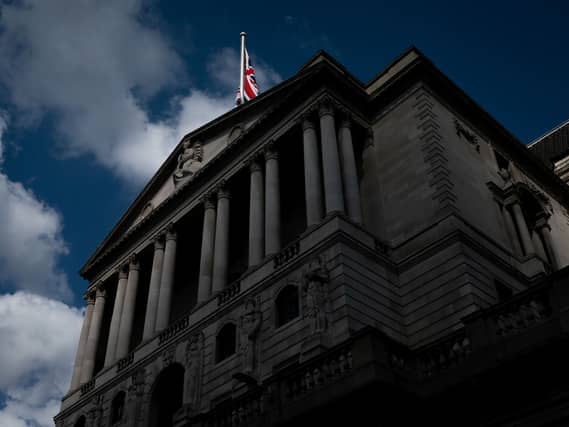

The National Institute of Economic and Social Research said decisions around both monetary and fiscal policy were being ‘deferred’.
Interest rates will need to rise as high as 5% to control inflation while the Government is adding to economic pressures by postponing difficult tax and spending decisions, according to a think tank.
The National Institute of Economic and Social Research (NIESR) argued that decisions around both monetary and fiscal policy were being “deferred”.
It warned this risks worsening inflation in the UK economy and squeezing the public finances.
New forecasts by NIESR show Consumer Prices Index (CPI) inflation in the UK rising to a peak of around 4.4% in February – up from the 3.8% peak predicted in July.
Rising inflation prompted the Bank of England to take action by raising interest rates to 4% last week – the first hike in more than three years.
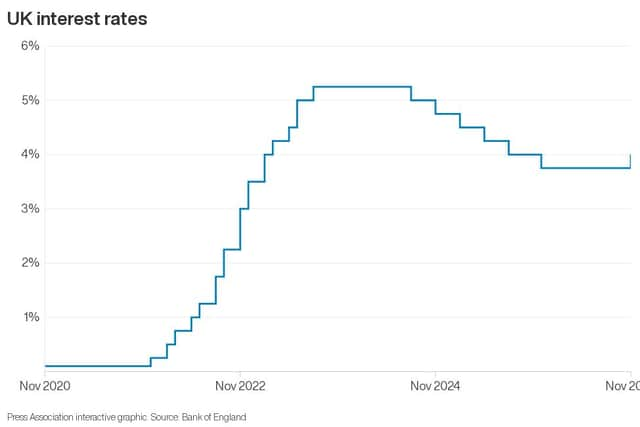
NIESR said it was expecting the Bank to raise rates one more time, but that this would not be enough, and would mean inflation not returning to the 2% target until late 2030.
This would hit poorer households the hardest because it leaves them with no choice but to buy less, rather than make adjustments to spending or dip into savings, it said.
Rates need to go as high as 5% to tackle the risk of second-round inflation effects, which will show up early next year when companies set their wages and prices, according to its analysis.
The Bank is only risking future hikes by delaying now, it argued.
Meanwhile, NIESR also took aim at the Government’s fiscal policy, arguing that major spending drives remain unfunded, including on defence, social care and disability.
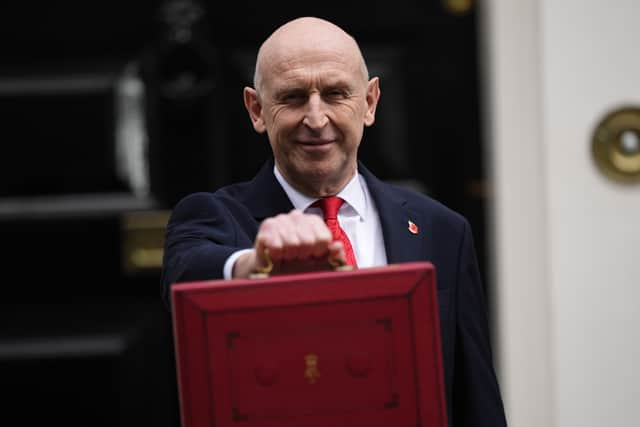
In last month’s autumn Budget, Chancellor John Healey confirmed that the UK’s fiscal headroom will reduce to £14.5 billion from £23.6 billion, which was linked to a jump in debt interest costs for the past year.
NIESR said plans to balance the public finances rely heavily on restraining public spending scheduled for the years ahead.
But its analysis found that if the plan slips by as much as previous ones have, then the Government’s fiscal rules would be missed by around £30 billion.
The think tank argued that the Chancellor did not seize the opportunity at the autumn Budget to put the public finances on a firmer footing, and difficult decisions about taxes and spending were largely postponed.
In the summer, NIESR called for the Government to raise or reform taxes or make cuts to spending in order to fund new cost-of-living and defence commitments.
Elsewhere in the latest report, it forecast UK gross domestic product (GDP) at 1.6% this year – stronger than a previous prediction of 1.4%, and driven by Government spending and business investment, including on AI.
But GDP is forecast to slow to 1.1% next year – lower than the previous projection of 1.3%.