
Roll up for the Kabaddi World Cup: How a 5,000-year-old sport is breaking new ground in the West Midlands
Chances are you may not even have heard of Kabaddi.
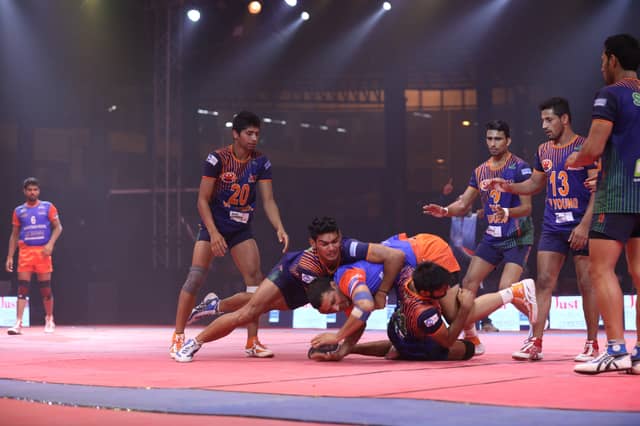


Even if you have - and actually seen it played - the memories may be hazy. Vague snippets of a sport played far away, watched on Saturday mornings in front of the television more than 30 years ago, while waiting for the Italian football highlights to be shown.
Yet over the next week, Kabaddi is about to announce itself to a new generation and will do so right here in the West Midlands.
The 2025 Kabaddi World Cup, which starts in Wolverhampton on Monday, is being hailed a milestone moment, the point one of the oldest sports on the planet, with a history dating back 5,000 years, moves into the mainstream.
Over the course of seven days, 16 teams from four continents will do battle across the region, in front of several thousand spectators and a global TV audience of around half a billion.
It is the first time the World Cup has ever been staged outside the sport's heartland of Asia and there is also a major sponsor in terms of one of the UK’s biggest gambling brands to boot.
“This is our launchpad. It is a dream coming true,” says Ashok Das, president of World Kabaddi.
Das is nicknamed the “Kabaddi Daddy” and it is entirely appropriate. No-one has done more to promote the sport outside of Asia over the past three decades.
Born in Punjab, Das played Kabaddi at a national level in India before moving to the UK and Birmingham in the early 1990s.
From struggling to put a team together back then, the sport now has 12 clubs playing in the British Kabaddi League in which Das, much like everything else, has been a driving force.
After first introducing the sport to the British Army, he founded the England Kabaddi Association in 2004 and set-up the first England women’s team five years later. To be frank, there is not enough space here to list all of the titles he has held but it is his enthusiasm and willingness, on more than one occasion, to put his own money where his mouth is which has kept the sport on the rise, reaching a point where the World Cup has moved outside of Asia for the first time.

“We built steadily, every year,” says Das, a former pest control officer with the Environmental Health Agency.
“We started with the army, then went into university and colleges. From that beginning, you can imagine how exciting it is to have the World Cup staged here.”
At this point, it probably needs explaining exactly how Kabaddi is played. The sport which will be seen in the Midlands next week is far more professional in look and feel to the outdoor version screened on Channel 4 on Saturday mornings all those years ago.
Played on an area about the size of a tennis court, teams of seven players take it in turns to send a “raider” into the opposition half, where they have 30 seconds to tag as many opponents as possible without being tackled.
It is fast, athletic and once you’ve watched a couple of games, pretty easy to understand. For Das, part of Kabaddi’s beauty lies in its simplicity.
“You don’t need any equipment,” he explains. “You just need shorts and a vest. Try it and if you don’t like it, you can leave it, having lost nothing.”
What seems clear is many people who do try it, very quickly get to like it. The England women’s team contains players who started out in rugby and wrestling.
Their skipper, Athira Sunil, is a former badminton player.
“I don’t consider Kabaddi as just a game. It is a way of life,” she says. “It is about supporting each other. It doesn’t work without unity and teamwork.
“There is a unique blend of strength and strategy. Each player contributes to the team’s success.”
Das goes further when explaining the importance of community.
“Someone asked me the other day, what is the beauty of Kabaddi?” he says. “I said look at the beauty here. The England team has a Hindu, a Sikh, a Muslim, a Jain and a Buddhist as well.
“I asked which sport do you see all those religions playing in one team? That is the beauty. That is the unity. That is why I love this sport.”
Increasingly, people are coming round to Das’ way of thinking. India and Pakistan remain the powerhouses but a quick glance at next week’s fixture list indicates the growing appeal, with teams from the USA, Poland, China and Cameroon all taking part.
Kabaddi is also the fastest growing sport in India outside of cricket, with 250 million tuning in to watch the national finals. Those are the kind of numbers which attracted the attention of those in the Midlands responsible for building on the success of the 2022 Commonwealth Games, with £500,000 from the latter’s legacy fund spent on bringing the World Cup here.
“Once I learned about Kabaddi, the power of it, it was a no-brainer,” explains Joel Lavery, strategic lead major sporting events at the West Midlands Growth Company.
The tournament will be streamed live on BBC Iplayer in the UK, while the global TV audience is expected to be around 500 million. Little wonder, then, West Midlands mayor Richard Parker this week described it as a "huge moment" for the region.
“It’s the number of eyeballs that will be on this sport in terms of TV and broadcast audiences around the world,” continues Lavery.
“It is a bit like the Commonwealth Games. It is not just the audience in person, it is the global TV audience this can achieve. It will be really important to showcase the region from a tourism perspective and economy perspective.”
The involvement of Paddy Power is also significant. While links with gambling companies can make some uncomfortable, the Irish bookmakers are donating their branding for this event to the Sporting Equals charity, which promotes diversity and inclusion in sport.
“If you look at what Paddy Power have done to a sport like darts, they are a brand that have embraced the difference,” says Lavery.
“They love the fact Kabaddi is a quirky, watchable sport which has not really had the exposure it has needed. They want to help grow the sport. I really do think this will take it to a new audience.”
Next week might be a landmark moment but Das hopes it will also be a stepping stone to even bigger things.
Discussions have already taken place over Kabaddi being a demonstration sport at the 2026 Commonwealth Games, while the fact the World Cup will also be broadcast on the Olympic Channel is of particular significance.
“This World Cup is a milestone and a potential gateway to the Olympics,” he says. “That is the ultimate dream.”
The opening ceremony and matches of the Kabaddi World Cup at Wolverhampton’s WV Active Aldersley on Monday. Walsall Campus Sports Centre is also a host venue. For more information visit kabaddiworldcup2025.com
Comment Guidelines
Iconic Media encourages reader discussion on our stories. User feedback, insights and back-and-forth exchanges add a rich layer of context to reporting. Please review our Community Guidelines before commenting.