
The Wolves hall of famer turned podcaster recalls Molineux memories and his Steve Bull partnership
Wolves are into a week of two huge games against highflying Liverpool, in the Premier League last night and then FA Cup on Friday.
For one of their Eighties heroes, it pits the team he supported as a boy against one where he will always be hugely acclaimed. As Paul Berry discovered.
It is 40 years on Sunday since Andy Mutch made his Wolves debut.
And so, it seems fitting, that this week will see Wolves, the club where Mutch made his name and is regarded with so much affection, twice tackle Liverpool, his boyhood team and the one he has always supported.
Those fixtures, in the Premier League last night and FA Cup on Friday night, will be very different to that debut, a goalless draw against Rotherham, in which Wolves legend Geoff Palmer – sorry Geoff – missed a penalty.
The crowd that day, back in 1986, was a mere 2, 838. Wolves were in the final throes of a season which ended in relegation, a third in succession, and were soon to be threatened with going out of business for the second time in the decade.
Every one of those heroes of the mid-to-late Eighties fightback for Wolves deserves their place in the club’s record books. And history.
And frontman Mutch was one of the first cabs off the rank.
His strike partnership with Steve Bull finished up being one of the greatest the club had ever seen, and one of the most potent of a generation. Between them, across two seasons, they amassed an incredible 148 goals, 102 for Bull and 46 for Mutch.
But Mutch should also very much be regarded as a top class striker on his own merits. His 338 appearances cement his place in the illustrious 300 club, and his 105 goals put him firmly in the select band of those who have reached a century for Wolves, a group currently featuring only 15 members. He also earned international recognition, at England Under-21 and ‘B’ levels, including being part of the same teams as Paul Gascoigne and David Platt.
Mutch also, quite rightly, was inducted into the Wolves’ Hall of Fame, in 2013.
All of this makes the visit of Wolves chief scout and later manager Sammy Chapman to a fixture between Southport and Kidderminster Harriers all the more crucial.
As Mutch explains.
“I was actually with Everton as a schoolboy, getting released at 16 and then asked to go back at 18 when they were winning the league with all those great players like Sharpy (Graham Sharp) and Reidy (Peter Reid),” he says.
“I was training as a young professional with the likes of Adrian Heath and Derek Mountfield, but I never broke through – in truth, I wasn’t really ready.
“I was still a bit small and hadn’t strengthened up enough, and eventually the coach Colin Harvey told me I wasn’t going to be taken on, but that non-league Southport were interested.
“I went there and scored a few goals until the one game we had against Kidderminster, when Sammy came to watch.
“He was a cracking fella Sammy, and he signed me for Wolves, where I still remember my debut, and infact the first few games, very clearly.
“That’s because I really struggled and remember calling my Dad to tell him that I’d made a mistake, that the centre halves were too quick and too strong, and I couldn’t get a kick.
“I won’t repeat what he said back to me, but enough to say I carried on going, and I guess if I’m being really truthful, I was getting an opportunity because the club was in the state that it was at that time.
“If the club had been in a better place, I wouldn’t have had the chance to play, but I finally got my first goal and ended up getting seven in 15 in that first half season.”
It’s a good job Wolves persisted with Mutch, and Mutch persisted with Wolves. Because the rest, well, that’s Molineux history.
And explains why, a few months into the life of the new ‘Mutchy and Denno’ podcast launched with close pal and former team-mate Robbie Dennison, and hosted by Johnny Phillips from Sky Sports, he remains such a popular figure among those Wolves fans who are so appreciative of his contribution to restoring the club from the depths of despair.
More on that later. But first, back on Liverpool, just as Wolves will be on Friday after last night’s hors d’oeuvre.
Growing up, supporting the Reds was a real family affair with Mutch going to Anfield and taking up a spot in the Kemlyn Road Stand with his Dad, Grandad and Uncles.
The iconic number seven shirt provided his early idols, first Kevin Keegan and then Kenny Dalglish, although he managed to avoid any hero worship when scoring a hat trick for Wolves against Keegan’s Newcastle, and then grabbing his first Premier League goal for Swindon against the very same opponents!
“When I first signed for Swindon, I was staying in the De Vere hotel,” Mutch explains.
“Back then, it was a time when you didn’t really want to see or speak to the opponents before you played a game, whereas now it feels like they are swapping shirts even before they go out!
“But anyway, I got back to the hotel after training the day before we played Newcastle, and all of a sudden, their squad arrived as they were staying there as well.
“I just wanted to get my room card off reception and get out of the way but then Kevin Keegan strolls over and says, ‘Andy, lovely to meet you’.
“He actually introduced himself by his name, which I thought was great because he was my hero and I knew who he was, but we had a lovely chat.


“When he left Liverpool for Hamburg in 1977, I was actually devastated, but it was fantastic to meet him all those years later, even though I probably upset him by scoring the next day!
“When you are growing up, your team is your team isn’t it?
“For me, that was Liverpool, and I will always have such fond memories of going to the games with my family, and then getting to meet Kevin was just the icing on the cake.”
Memories for Wolves fans of the days of Mutch and Bull and company are equally special.
The story of Wolves in the late Eighties is one often told, and yet, for those who witnessed it in the flesh, it is sometimes difficult to fully put its significance into words.
After so much turmoil, of twice thinking their club – lauded in the 50s as the ‘best in the world’ – might actually go out of existence, the spectacular roots of recovery were truly special to behold.
The Molineux faithful finally had a team to be proud of, a group of honest and diligent personalities who both worked hard and played hard.
Did it matter that it was lower league titles that were snapped up back to back, or that it was the Sherpa Van Trophy final at Wembley rather than the League Cup, or even that only two sides of what was becoming a very tired-looking stadium remained open?
Not at all. Try downplaying those achievements to the thousands upon thousands of delighted fans who lined the streets for the open top bus parade following the Wembley triumph in 1989.
Just over two years after Mutch’s debut against Rotherham in front of under 3,000, over 50,000 Wolves fans had travelled to the Twin Towers to be part of a crowd of 80,841 as Mutch and Dennison grabbed the goals to see off Burnley 2-0.
Beyond all that they were a Band of Brothers. Whether it was the ‘Tuesday Club’ drinking sessions after a hard day’s training or being put through their paces on the North Bank Car Park on a Friday, bonds and memories were formed which have more than stood the test of time.
Mutch was one of the originals. There at the start, and one of the key figures throughout.
“I’d been there a few months before Brian Little came in as interim manager and brought Ally Robertson in, and then Graham Turner arrived and the likes of Bully, Thommo (Andy Thompson) and Robbie also signed,” Mutch recalls.
“I would also highlight the massive contribution of Jack Harris and Dick Homden at the time, who took the club on that summer.
“When Sir Jack came a few years later it was absolutely sensational what he did but Jack and Dick deserve so much credit for starting to piece it all together in 1986 and, slowly and surely, get the club going again.
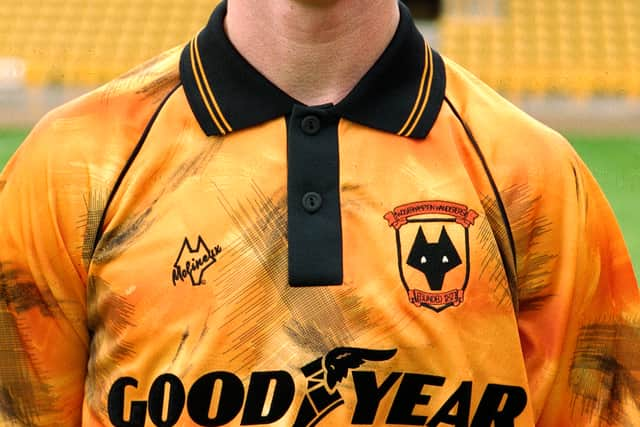
“They brought Graham in who was very disciplined and knew what he needed to do, and it was either his way or no way, which is absolutely fine because you need that from a manager.
“Myself and Bully formed a great partnership, but everyone behind us was absolutely brilliant, you know?
“I can tell you for sure, we didn’t have one guy who thought he was ‘Charlie Big Potatoes’.
“It was just a load of cracking, cracking lads who really wanted to give it go, and when we were together, we were properly together.
“It just developed and developed and we had the promotions and Wembley and scoring there, well, that is very difficult to describe.
“As a Liverpool fan, of such a fantastic team, I’d watched them in a fair few cup finals when we’d go down Wembley Way with all the Reds, and then the next minute I’m going down there on the Wolves team coach, which was something I would never have believed.
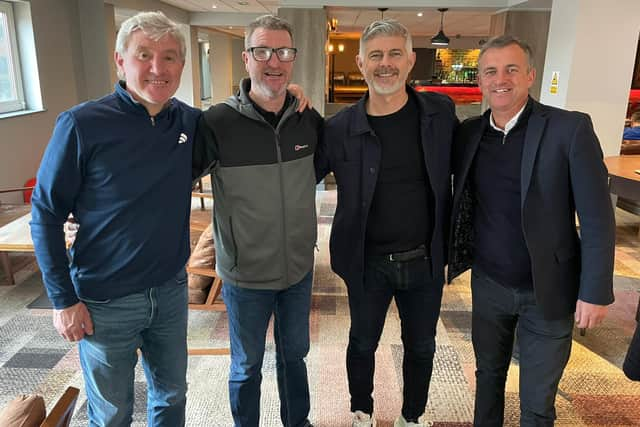
“There were Wolves fans everywhere, and a lot of Burnley as well to be fair, but what a day that was, and to win the game and get a goal just topped it all off.
“People might say if you win at Wembley, it doesn’t matter who scores. Me and Denno have a laugh about that, because it certainly makes it feel a whole lot sweeter!”
All good things, however, must come to an end. And after a few bites at the Championship cherry ended in disappointment, the Wolves squad started changing.
David Kelly was brought in as a new striker, and Mutch departed, albeit to achieve his Premier League dream with Swindon in the 1993/94 season, the only one they have ever played in the top division.
His Premier League debut came, fittingly, against Liverpool, and he scored six league goals that season, including against Manchester United at Old Trafford, and the Newcastle equaliser after which his cartwheel celebration found its way onto the opening credits of Match of the Day.
After a couple of years at Swindon, Mutch’s next permanent home was with Dave Jones and plenty of success at Stockport, including promotion and a giantkilling run to the semi-finals of the League Cup.
A love of football eventually saw him round off his career in non-league, including later heading into coaching and management, but now he is purely a fan, albeit a very eloquent and passionate one who has loved reliving the Molineux glory days on this new podcast.
Mutch and Dennison have recorded episodes with Phillips online, but have particularly enjoyed getting together in person, often to co-incide with a Molineux matchday and including welcoming special guests such as Neil Masters last month and, only last Friday, Tom Bennett.
“It’s been brilliant so far and a real privilege to do,” says Mutch.
“And the thing that I really love, along with talking both about the present day as well as our memories, is that there are no edges with us.
“We all get on really well and are really honest. Maybe I talk through my backside now and again but, with me, it all comes from my heart, and it’s just great to get together and chat about all things Wolves.”
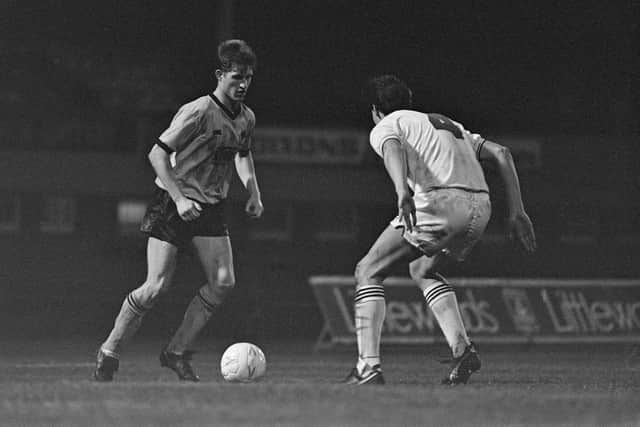
There have also been a few Q&A nights delivered as part of the podcast, with more to come, and more special guests, as ‘Mutchy and Denno’ aims, just like Wolves in the late Eighties, to continue pushing forward.
And, as part of that, continuing to keep the memories alive of such a special time in the club’s history.
“When you stop and think about it, what happened in those few years gave the fans and the community so much pride back, especially as they had nearly lost their club just before,” says Mutch.
“I always say to people there are lots of different eras in football clubs, and when people talk to me about our era, their love for that whole team is unbelievable.
“Sometimes fans talk about wanting to go back to that day when we were smashing teams, scoring loads of goals, getting promoted, winning things.
“But there are always eras, and there was a team after us, and a team after them, and successful teams which have followed.
“We will always have our time, such a special time, and, even now, a story that is sometimes difficult to believe.”
Forty years on, it is one which has stood the test of time.
Mutchy and Denno’s regular podcasts can be found on the usual platforms, including this week’s episode featuring Tom Bennett.