
The former Wolves and Burnley man behind new tech initiative designed to aid wellbeing of academy players
Wolves and Burnley lock horns at Molineux on Sunday in a fixture already of mammoth importance for their Premier League fortunes. For Roger Eli, fond memories of both clubs came at a much lower level. As Paul Berry discovers.
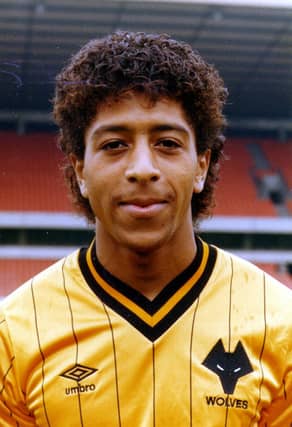

Wolves, Burnley and Leeds. Three clubs delighted to be plying their trade in the Premier League. And three clubs represented by Roger Eli with plenty of pride. Not to mention having spent time as a youngster with Nottingham Forest.
“My claim to fame is playing for the first team of those three,” he says with a chuckle.
“But seriously, all of them are great clubs with great histories and supporters.
“Even if I didn’t score a load of games or play 100 games for all three – and that was always my intention – I was grateful to have been a part of them.”
Eli had considerably more success with Wolves’ next opponents Burnley, where he did chalk up over a century of appearances and 31 goals, than he did at Molineux, or indeed Elland Road, albeit that came at the start of what turned into a versatile career.
Versatile in the sense of occupying so many different positions, but also injury-hit, through no fault of his own, with setbacks tending to come along at the most inopportune moments.
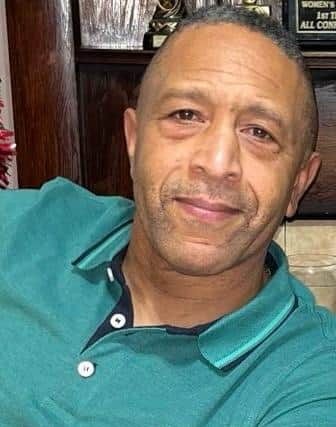
Eli turned 60 last month. He remains as busy as ever, in the world of business, in which he has been very successful since hanging up his boots some three decades ago.
He is currently seeking investors for a new tech initiative linked to football academies, effectively a wellbeing sports platform for both parents and children. Initially he went into the world of textiles, manufacturing materials for suits initially for the pristine clientele frequenting Savile Row, Regent Street and Kensington, before branching out globally to include basketball players in Malaysia. Then came an office supply business, before a printing company. A level of versatility in his business interests that matches his capability as a footballer.
“I think it’s always good in life to be able to learn, and to try to be entrepreneurial,” says Eli.
He has certainly achieved that.
Born in Bradford, his footballing ambitions first took him to the East Midlands and Nottingham Forest.
And, working with the first of many managers with a pedigree which matched the level of their success: Brian Howard Clough.
“I was with Forest probably from the age of 12, when I used to go down and train there once a week, and a bit more in the school holidays,” Eli recalls.
“They were flying at the time, a smallish club but a brilliant club, and we’d see Brian Clough around the place quite a bit.
“It was during the holidays that we bonded as a group of young players, not just in training but spending time around the city, going ice skating and bowling and that sort of stuff.
“When I was 15, I was often playing a few years up for the Under-18s, and remember once going over to play in a tournament in Italy.
“In the first game I came on against Juventus, and even though I was giving away a few years to most of the defenders, I was pretty quick and, playing as a striker, could get in behind.
“This one centre half was kicking lumps out of me, and then called me a racist name, eventually getting sent off.
“Brian Clough was actually over there with us, and I will never forget looking over to the dugout, where he jumped out, gave it his legendary thumbs up, and shouted ‘well done’.”
Eli was actually courted by both Lazio and Fiorentina during the tournament, who were keen to have a closer look at him, and Clough’s advice was to take their advances extremely seriously.
But the young hopeful was keen to return closer to home where he was attracting plenty of interest. And even though his promise didn’t lead to the offer of an apprenticeship with Forest – Clough showed he could see into the future by suggesting he would suffer too many injuries - he was soon snapped up, in his native Yorkshire, by Leeds United.
Having met Clough at Forest, he did the same with his managerial nemesis Don Revie in his early days at Elland Road, where he had been signed by one of his heroes, Allan Clarke.
“I’m a Leeds fan, and growing up, whenever I was playing football in the garden, I’d want to be either Allan Clarke or Peter Lorimer,” Eli recalls.
“So, it was quite surreal when Allan actually signed me!”
Clarke lost his job not long afterwards, with another Leeds legend Eddie Gray taking over, and, coming through the ranks, Eli was primed to make his first team debut only to suffer a cartilage injury playing for the reserves, the first of many such issues to afflict him during his career.
He did, though, make his senior debut from the bench against Wimbledon in December 1984, and by the time he made his first start a year later, Gray had been replaced by yet another Leeds legend in Billy Bremner.
“I’d just come back from a broken leg, another injury, and Billy was trying to change things by bringing in a few players from his previous club Doncaster,” says Eli.
“I had three months or so of playing some of the best football of my career, and Billy gave me my full debut against Brighton, but my opportunities were still limited, and then Wolves came in.”
Whilst at Leeds, Eli had already come into contact with several players who would go on to have affiliations with Wolves.
Terry Connor, future coach, assistant and manager, was a couple of years older, whilst Denis Irwin, future play-off winner, and Scott Sellars, later technical director, were within his age group.
But it was fellow Bradford-born mate Micky Holmes who had alerted him to Wolves’ interest, sparked by Brian Little, then working as assistant to Sammy Chapman.
Wolves, at the start of 1986, were on the decline, but that didn’t do anything to put Eli off.
“Wolves, like Leeds, were a massive club, even if they were going through a difficult time,” he recalls.
“I had also remembered being a kid, collecting football cards, and that great old gold kit.
“Billy said he would keep me, but I would have probably been released like Denis Irwin was at the end of the season, so I was keen to come to Wolves and play more regular football.
“I went into it with open eyes, and even though the crowds when I joined were around 3,000, that was still a lot more than the reserve games I was playing before, and it was going out with a result at stake in front of fans.
“I’d say the only thing that shocked me was that we had to wash our own kit!
“At Leeds I used to just turn up with a washbag as they had a laundry and people working on it but at Wolves, it was a case of sorting our own kit.
“I loved it though, that was my first regular taste of football with thousands of fans watching, and those Wolves fans were so genuine and supportive.
“Success isn’t always achievable, and we can’t always play well, but supporters pay their money and what I always did was to try my best for them.”
He did that in many different parts of the pitch. Having started out at Leeds as a striker, at Wolves he occupied shirt numbers 2, 4, 5, 6, 7, 8 at different times as well as 12 from the bench. Those sorts of players are worth their weight in gold – excuse the pun – given their adaptability, but it sometimes comes at a personal cost denying the chance to build up a head of steam in a particular position.
“I’d always been versatile when it came to football,” Eli explains.
“Even in schoolboy teams, at county level, going to England junior camps, I played in many different positions and it really didn’t matter to me.
“I don’t want to big myself up or anything but I just felt confident I could play wherever I was put, and it was all about being able to handle the ball and also being physical.
“In Leeds youth team I played at centre back with Denis Irwin, in the reserves I played right wing or midfield and at Wolves it was the same.
“Then later at Burnley I went up front, which is where I started at Forest, and with hindsight maybe it would have been better to have stuck with that all the way through.
“But it really didn’t matter, I was happy to do a job wherever.”
On the pitch, it was a tough old time for the team. Eli’s 21 appearances, in those different positions, came as Wolves suffered a third successive relegation which took them from First Division to Fourth in barely the blink of an eye.
He moved on, just as the seeds of the famous revival were starting to be sewn. A broken metatarsal, which then recurred, damaged all hopes of being able to impress new boss Graham Turner, whilst he also jokingly blames his good mate Holmes for scoring in seven successive games and denying him a route into the team.
Dean Edwards and Andy Mutch provided much of the firepower, and then along came Steve Bull, but even amid an 18-month stay punctuated by injuries and poor results, Eli only looks back with fond memories. Particularly of his lodgings!
“I stayed with the legendary Jack and Olive Carr, who were amazing for me,” he recalls.
“Olive used to serve the most fantastic meals, piles of really healthy food, and Jack would tell all the stories about the history of the club - they were such perfect digs to stay in for any young player.
“But I did enjoy it at Wolves, playing for both Sammy Chapman and Brian Little, and playing in front of those fans.
“I remember when I went off to Crewe, who I had got sent off against playing for Wolves, and got all sorts of grief from the Wolves fans but that was fine – I expected it, part and parcel of the game!
“The only disappointment was that I didn’t get a chance to impress Graham Turner, but I understand it.
“I had another of my injuries and as a new manager, needing to turn things around, you need players who are available.
“Everything happens for a reason, and Wolves went on to achieve all that success in the following years.
“And for me, even though I never played in the same team as Bully, his influence stayed with me.
“When I went on and played as a striker at Burnley, I used to watch videos of Bully, as I have so much time and respect for what he achieved.
“The psychology of it, of him constantly having the determination to get in front of a defender to score a goal, and his overall courage, is something I always mention to young players.”
Eli too went on to taste success, finding his way via various clubs including Crewe to Burnley, once scoring past Peter Shilton in an FA Cup tie with Derby as well as helping them to the play-offs in 1990/91 and then, gloriously, the Fourth Division title the following season.
Playing up front, he notched 10 league goals as the Clarets, who had taken on Wolves in front of a capacity Wembley crowd in the Sherpa Van Trophy in 1988, finally started delivering some upward momentum.
It was a fantastic campaign, topped and tailed rather bizarrely, by a pre-season tour of Russia, and post-season celebration…in Bermuda!
“I have to say that the trip to Bermuda, even up to now, is probably the best place I have ever been to,” he admits.
“But to have that and Russia at the end and start of that season was probably the biggest contrast you could ever get!
“Over in Russia we had security from the KGB (Russia’s committee for state security), and it was all quite surreal.
“We went from staying in hotels in pretty poor areas to social events and barbecues in the mountains with people of influence.
“The captain of the Russian national team and others from the squad would come and see us and even cook for us and it certainly helped us bond as a squad.”
Russia and Bermuda didn’t signal the end of Eli’s globetrotting stints as a footballer.
Before rounding off his career a bit closer to home with Scunthorpe and Partick Thistle, he headed over to China, to play for Foshan.
“That was another great life experience,” he explains.
“We had a Scottish lad there who was 6ft 4in, and me at about 6ft, and we used to have people following us around because they couldn’t believe how tall we were!
“But again, the Chinese players in the team would come and spend time with us at the hotel, eating with us and helping us learn the language.
“It was all about doing what they could to help us settle.”
Even when moving into business in footballing retirement, Eli has maintained close links to the game.
And none more so when it comes to the devastating diagnosis of motor neurone disease received five years ago by John Pender, the defender who built his career with Wolves and was then captain of Burnley when winning the Fourth Division championship.
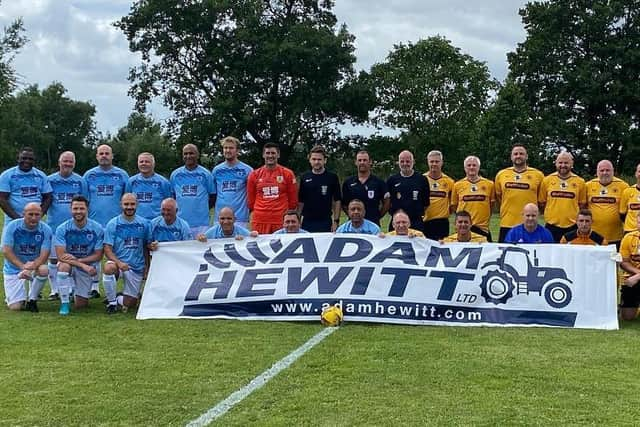
Pender and his family went public with his diagnosis in 2021, and, two years later, Wolves fan Carl Falconer organised a charity match between former players from Wolves and Burnley to raise money to help provide support.
Eli was among those involved, playing for Burnley, on an afternoon where the football community came together to demonstrate the admiration which they continue to share for the former defender.
“I’m a couple of years younger than John, and have always really looked up to him,” says Eli.
“I used to watch him play for Wolves on Match of the Day, so to then become his team-mate at Burnley was something which I will always appreciate.
“He was always such a model professional, he did absolutely everything right, and was a role model for many players at that time.
“It’s so sad what happened to him with his diagnosis, and all of us involved have always just wished we could do more.”
Those elements of care and compassion are qualities which Eli has carried through not just his respective careers, but his life.
His profile on X includes a quote about the purpose of human life being to serve, show compassion and have the will to help others.
“I’m a Catholic and go to church and my Mum is a staunch Catholic and if I could feed the world then I would do it,” he says.
“The new business I am leading on is also about showing offering wellbeing support to players and their parents, and that is where the compassion side comes from.
“We are only here for a short time, and football is a great sport which we all love, but there is also more to life as well.
“I think so many people are beautiful people, but are sometimes just scared to show it.”
Powerful words, not least concerning a sport which produces so much emotion, and also, so much tribalism.
Much is at stake at Molineux on Sunday afternoon, but you sense that for Eli, there is always a strong sense of perspective.
Comment Guidelines
Iconic Media encourages reader discussion on our stories. User feedback, insights and back-and-forth exchanges add a rich layer of context to reporting. Please review our Community Guidelines before commenting.