
Matt Maher: International thrillers showcased football in its purest form
Around lunchtime on Tuesday I messaged a Scottish friend asking his thoughts on the evening’s forthcoming football.


“Fancy your chances?” I enquired.
“I wouldn’t fancy our chances if we were 3-0 up heading into stoppage time,” came the rather blunt reply.
So spoke a man who through more than four decades has become used to his team snatching defeat from the jaws of victory.
A summer afternoon in 2017 has always remained lodged in the memory. Leigh Griffiths had just scored two free-kicks in as many minutes to put Scotland 2-1 up against England in a World Cup qualifier at Hampden Park. Just seconds remained.
England were just kicking-off again when the phone buzzed in my pocket. The same Scottish friend.
“We’ll still screw this up.” I just had time to read the message, before looking up to see Harry Kane head home the equaliser.
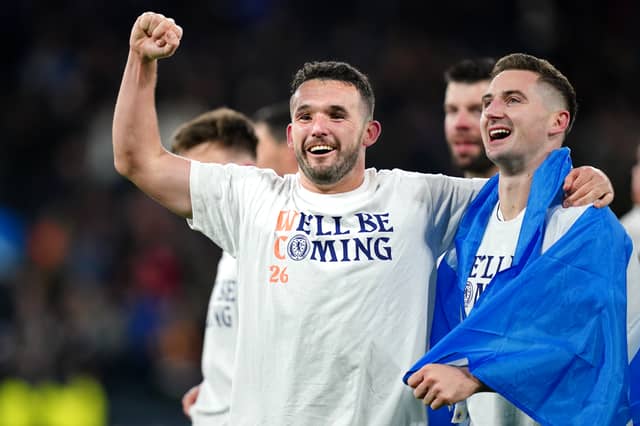
After so many years of knowing it is the hope that kills, you can well imagine the emotions of my friend and millions of his compatriots were experiencing on Tuesday night as Scotland’s winner-takes-all qualifier with Denmark entered stoppage time with the scores level at 2-2. Here, surely, came more cruel heartbreak.
Except this time it was different. As Scotland manager Steve Clarke put it rather beautifully later on, there was “magic” in the air.
Kieran Tierney’s screamer was the mere appetiser for Kenny McLean scoring from his own half. Two of the nation’s greatest-ever goals netted within the space of about four minutes. Glory snatched from the jaws of despair. All very un-Scotland.
Neither were they the only team giving long-suffering supporters something to cheer.
Around 48 hours earlier in Budapest, the Republic of Ireland left it even later to keep their own dreams of reaching the World Cup alive, beating Hungary with virtually the last kick.
After twice coming from behind, Troy Parrott completed his hat-trick in the sixth minute of stoppage time to steal victory to continue both his own and his team’s remarkable resurgence.
Midway through the qualifying campaign, with just one point from three matches, Ireland looked dead and buried. Head coach Heimir Hallgrimsson was facing calls to be sacked after an embarrassing defeat away to Armenia.
Last month’s victory at home against the same opponents at least restored some pride but there really was no inkling of what was to follow, a shock 2-0 win over Portugal followed by Sunday’s drama, with the promise of more to follow.
“This is only for a play-off place!” screamed the RTE commentator, seconds after Parrott’s winner had gone in.
The 23-year-old scored all five of Ireland’s goals against both Portugal and Hungary, doubling his tally from his first 31 international appearances.
As legendary Irish pundit Eamonn Dunphy later observed, the striker has spent the past couple of years battling for his professional career after failing to live-up to the big expectations once placed on his shoulders at Tottenham.
A move to Holland and AZ Alkmaar has seen rejuvenation.
“Football is a game for everyone. You don’t have to be big or have muscles. You have to have a brain and a heart, go baby,” remarked Dunphy, when explaining football’s enduring popularity in a nation which is attempting to qualify for only its second major tournament in 24 years.

To think there are some who find international breaks boring.
That said, if your focus is solely on England, that is understandable. Younger readers may be amazed to learn there was an age when the Three Lions reaching a World Cup or European Championship was a source of genuine jeopardy. Believe it or not, they once missed two World Cups in a row.
For nearly two decades now qualification for tournaments has never been in serious doubt and England’s serene progress is something for which they and the FA probably don’t get enough credit.
This time they have been more impressive than ever. No team has ever progressed from a group of England’s size winning every match and without conceding a goal.
Such a lack of drama on the pitch heightens the need for some off it and Thomas Tuchel’s achievements have been somewhat overshadowed by the discussion around the head coach’s relationship with Jude Bellingham. There will be plenty of time to write about that when the real action, from England’s perspective, starts next summer.
For now the big stories lie elsewhere, with the Scots and the Irish providing only two of them.
It was an extraordinary week, in many respects, around the world from Haiti (helped by Wolves midfielder Jean-Ricner Bellegarde) reaching their first World Cup since 1974, to another country ravaged by military conflict, DR Congo, knocking out both Cameroon and Nigeria in the space of just a few days.
Then there was Iraq keeping their hopes of just a second finals appearance alive by beating the UAE, courtesy of a 107th minute penalty. Tierney, McLean and Parrott, eat your hearts out.
Critics will point out these fairytales are fuelled in part by the expansion of the tournament to 48-teams and a qualification system which provides greater opportunity for “lesser” nations.
Some potential qualifiers may undoubtedly require a Google search (New Caledonia, anyone?), while the structure of a finals which will see just 16 teams eliminated in the group stage carries the risk of mismatches if not dead rubbers.
But there will still be excitement, storylines and new heroes to discover. The sport is simply too good for that not to happen.
In an era when it is so easy to be cynical and so much of the discourse centres around off-field matters and financial rules, the international game provides a reminder football in its purest form is about sheer enjoyment.
Comment Guidelines
Iconic Media encourages reader discussion on our stories. User feedback, insights and back-and-forth exchanges add a rich layer of context to reporting. Please review our Community Guidelines before commenting.