
Jim Walker interview: Paul McGrath's 'guardian angel' at Aston Villa explains why he's finally chosen to tell his story
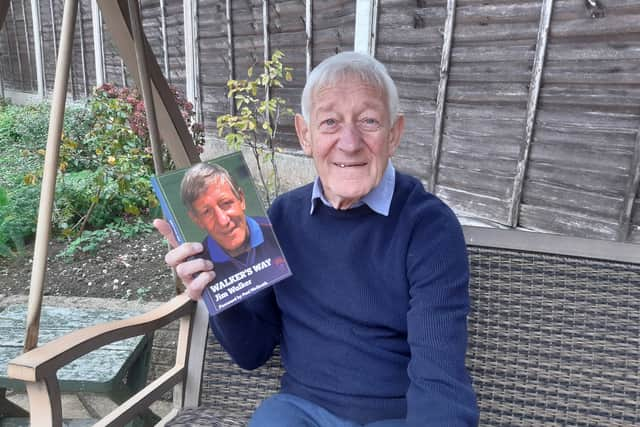
To understand the vital role Jim Walker played at Villa, you need only read the first page of his book.


“Jim is maybe the best friend I ever had in football,” writes Paul McGrath, describing his honour at being asked to write the foreword for the autobiography of a man who kept him “healthy and sane” through the best years of his career.
Walker’s essential care, both physically and psychologically, for a player regarded by all as one of the greatest to ever wear a Villa shirt, would on its own be enough to earn him reverence among supporters.
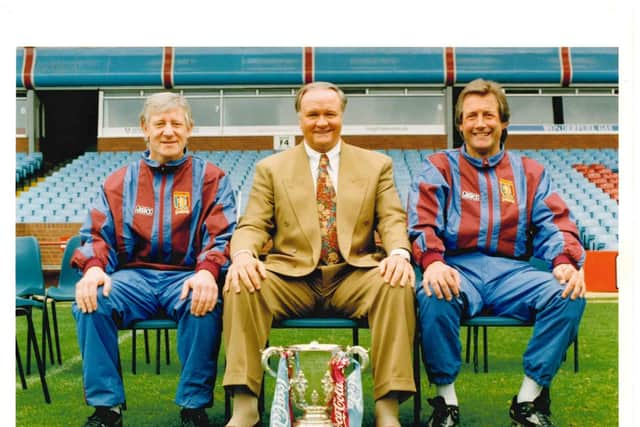
Yet the tributes do not end there. Far from it. The pages of his book, Walker’s Way, are stacked full of testimonials, some from the managers he worked under including Ron Atkinson and Brian Little, yet the majority from players, many of whom saw their careers extended thanks to his medical expertise.
In the case of Dion Dublin, Walker’s knowledge and quick-thinking genuinely proved life-changing.
“If it wasn’t for Jim, I could well have spent the rest of my life in a wheelchair,” says the former striker, recalling the frightening incident when he broke his neck in a match against Sheffield Wednesday in December 1999.
Walker, realising immediately the severity of the situation, held Dublin’s head still while they awaited the stretcher. Having then travelled with the player to hospital, he then sat in on the surgery to repair damaged vertebrae, eventually arriving home at 3am.
“That was typical of his care and attention,” says Dublin, who was remarkably back playing within four months.
Examples of Walker’s willingness to go above and beyond are countless, so it should perhaps come as no surprise the book has been written with the primary aim of helping others.
All profits from sales will be donated to dementia charities. Walker’s extensive research into a condition which impacts so many of his former colleagues and friends earned him a Master of Philosophy from the University of Leicester.
“I’d been asked quite a few times to write a book but I’d always said no, I’d never really had the motivation,” he says. “But then I’ve done so much work researching dementia I guess the penny dropped and I thought if I do this, maybe I can help someone?”
Walker certainly has quite the story to tell. While it is the 17 years he spent at Villa, a key part of the club’s fabric in an era which included two League Cup wins and two runners-up finishes, which obviously draws most of the most focus, it wasn’t only footballers who received his care.
Bruce Springsteen, Ozzy Osbourne and Elton John were among the big-name music stars Walker treated as part of a regular link-up with the NEC. Walker recalls the shock on the faces of Villa’s players when Simply Red singer Mick Hucknall walked into the dressing room to thank him ahead of a match at Manchester United.
A forward with his hometown club, Northwich Victoria, Walker signed his first professional contract with Derby County in 1968 at the age of 20.
“Get your hair cut,” were the first words he received from the club’s manager, one Brian Clough. When Walker’s father pointed out George Best had long hair, Clough replied: “Mr. Walker, when your son can play like George Best, he can have his hair like George Best!”
Walker helped Derby win promotion from the Second Division in 1969 and then three years later was part of the squad which won the First Division title, scoring the only goal in a 1-0 win at Crystal Palace which ultimately proved critical as the Rams finished just one point ahead of the chasing pack.
Walker made the bulk of his professional appearances after leaving the Baseball Ground in 1974, first with Brighton and Peterborough and eventually Chester, where he spent five seasons.
By the time he was forced to retire due to an Achilles injury in 1981, he was already some way down the rarely-trodden path from player to physio. His interest in medicine, he claims, came about in part through a reluctance to get out of the bath.
“I was invariably the last one to leave the dressing room after a match and I’d often chat to the Derby physio, Gordon Guthrie,” he explains. “It was those conversations which first made me think physiotherapy might be a career to pursue after I hung up my boots.”
Walker took over as Chester’s physio but was axed when he refused to add cutting the grass to his list of duties.
“The team bus used to pick me up near my home on the way to away games. One day it didn’t turn up, that’s how I found out I was out of a job,” he says.
Walker tried coaching and spent two years in Kuwait with his former Derby team-mate and manager Dave MacKay, before returning to the UK and spending a short stint at Blackburn.
Then, in the summer of 1987, he was recommended to new Villa boss Graham Taylor by his assistant, Steve Harrison. Between then and the time he left the club, in 2004, he would become almost as well-known to supporters as some of the players he treated.
“It was a bit different back then,” smiles Walker. “Clubs didn’t have so many people in the backroom team as they do now, so we were more recognisable.
“These days clubs even have throw-in coaches. I think to myself sometimes, what is the manager doing?”
Walker’s primary concern was always the well-being of the players and while his manner might have been mild and his words softly-spoken, it belied an inner steel.
“If I had a player with a hamstring injury which I knew would keep him out for four weeks, there was no way I was going to speed up the process and put them at risk,” he says. “Not even a million pounds would have done it!”
Gareth Southgate, among those players to provide a testimonial for the book, explains how Walker was both “old school” and ahead of his time.
“If you were injured, he would focus on getting you working as quickly as possible, rather than lying on a bed or hooked up to a machine,” explains the former England boss. “He understood the importance of maintaining fitness levels.”
Yet in addition to fixing their bodies, Walker’s own experiences as a player helped him understand their minds.
He certainly knew how to take a joke, such as the occasion he opened his medical bag during a match at Swindon to find Alan McInally had replaced all his equipment with items from the home groundsman’s toolkit, or the time Paul Birch, aware Walker was suffering from his own hamstring injury, went down the furthest distance from the dugout.
“As soon as I got over there he jumped up and said: ‘How’s your bad leg?!’” laughs Walker.
Most importantly, Walker was there in the toughest moments, most famously with McGrath. He still remembers the phone call from Taylor, informing him the then Manchester United centre-back was on his way to Bodymoor.
“He’s just failed his medical at Tottenham. I don’t want him to fail his medical here,” explained the Villa boss.
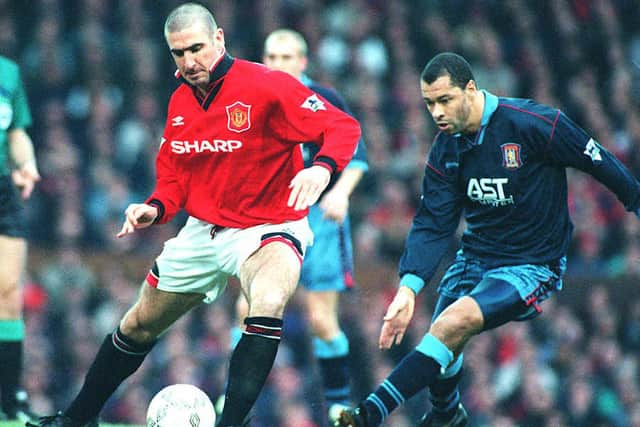
Within months of joining Villa, McGrath was mostly training with Walker alone, in part because the latter knew what was best for the player’s body after five knee surgeries but more crucially because no-one understood him quite so well.
“It was the little things,” reflects Walker now, when asked how he was able to build such an understanding. “My grandmother was Irish and I knew how tough it must have been for Paul growing up.”
McGrath, who was struggling with alcoholism, describes Walker as having been his “guardian angel”.
Walker was wary about putting certain stories in print but McGrath told him to “tell it like it was”.
That includes Walker’s account of the player’s suicide attempt in 1989. Walker took the call at Bodymoor Heath and immediately got in his car to drive to the hospital in Manchester where McGrath was being treated, bringing him back to Birmingham in the early hours of the following day.
“Paul used to tell me I had saved his life,” he says.
Now aged 78, Walker is determined to keep helping others. He wants the FA and PFA to set up a scheme which will see players undergo medical testing at the end of their careers and then another every five years.
“It wouldn’t eradicate dementia, but it would be a significant step towards early diagnosis and slowing down the process of this dreadful disease,” he says.
“If writing this book helps just one person, it will have been worth it.”
Walker’s Way is available to buy from curtis-sport.com
Comment Guidelines
Iconic Media encourages reader discussion on our stories. User feedback, insights and back-and-forth exchanges add a rich layer of context to reporting. Please review our Community Guidelines before commenting.