
'I'm so proud to have known the Three Degrees' - West Bromwich Albion legend Tony 'Bomber' Brown's emotional tribute
"They broke the mould for black players. It was something new that hadn't happened before."


Albion's greatest player, Tony 'Bomber' Brown, is proud to have called Laurie Cunningham, Cyrille Regis and Brendon Batson team-mates. He has no doubt about the pioneering impact they made at The Hawthorns - one which was felt far and wide.
"Anything that happened with those three players in those days was headline news," Brown adds. "It was new and there were headlines. It was something different. They were trendsetters.
"It spread the word for West Bromwich Albion. It was unique in this country. You didn't see many black players.
"We were doing it on the pitch domestically and in Europe, some great cup runs, with these lads involved. They were integral parts of the side.
"Never mind the Three Degrees. Individually they were top-class players."
Racism still exists in 2025. But society has developed and moved on significantly more than 40 years since the trailblazing trio were part of a idolised Baggies side managed by Ron Atkinson.
Back then, as winger Cunningham, striker Regis and full-back Batson shone in blue and white stripes, black players were few and far between in the English game.
As a result, an undercurrent of racism from the terraces festered in the 1970s and would continue for the couple of decades that followed.
'Kick It Out' launched the brand 'Let's Kick Racism Out Of Football' in 1993 and worked alongside the Professional Footballers' Association (PFA) - of which Batson was deputy chief executive - and Football Association (FA) in a bid to slowly turn the tide by way of education and inclusivity.
John Homer, 70, lifelong fan, chairman of the official supporters' club and a non-playing Baggies legend, struggles to hide his pride when reflecting on his club's place in the history of English football culture.
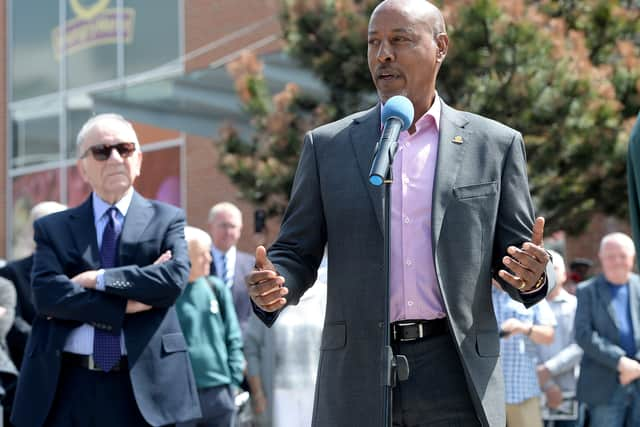
"If you were around at the time when everything was going on - we had a football club that was bold enough with three black players to take on all the insults, all the chants and c**p that was going on and overcome it," Homer says.
"That was at our club. At West Bromwich Albion. So many black players followed, the Ian Wrights and Dion Dublins of this world. Ian Wright said the moment he wanted to become a footballer was when he saw the Three Degrees on the telly. He turned to his dad and said 'look, black people who can make their way in the game - if they can do it I can do it'."
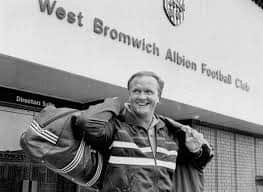
Homer, who hosts a Memories Group for those struggling with dementia and Alzheimer's each Wednesday morning at The Hawthorns, continues: "Ground-breaking, pioneering stuff, and we at the Albion and Ron Atkinson should certainly be proud we were at the forefront of that movement.
"We all know what happened to Ron later on. But he still should get some credit for pushing those boys and being brave enough for putting them in the team.
"The team-mates' attitude to whatever was going on for Cyrille, Laurie and Brendon, whatever chants and taunts, it was not only directed at them, we're their mates and we're going to make sure we conquer that along with them. That is the vital element, teamwork and looking after your mates."
The subsequent incident referenced involving Atkinson happened in 2004, when the former Albion boss, then working as a pundit, was dismissed by ITV after a racial slur aimed at Chelsea defender Marcel Desailly was picked up by a microphone after a Champions League fixture.
Homer recalls how, by Christmas 1978, Albion were the 'in-thing'. Not just in the football world - the word had spread. The impact of The Three Degrees had been felt.
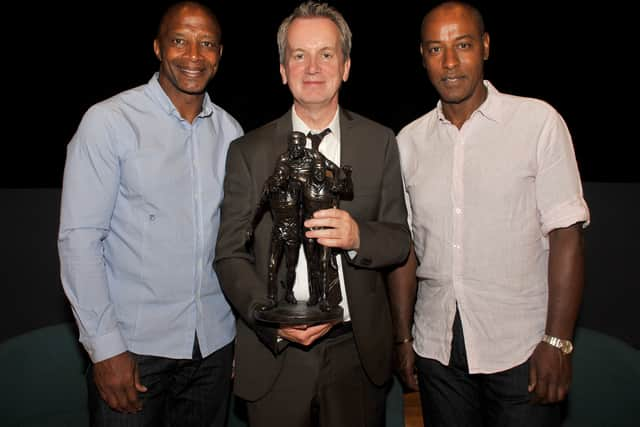
New Musical Express (NME) magazine carried a 'what's in' and 'what's out' feature each Christmas. It did not often bother with sport, but after the iconic 5-3 victory over Manchester United at Old Trafford and a win over Arsenal it was Albion, and more specifically the late Regis, on the front cover. That same cover is depicted on the wall inside the East Stand at The Hawthorns.
"I know that when we went away and West Bromwich Albion were coming to town, everybody wanted to see them," Homer says "We were very much the in-thing because of these pioneering black players and also the wonderful fluid attacking football, the cavalier style that we had."
Batson was forced to retire before turning 30 and entered a successful administrative career. He went on to return to the club in a director role and in 2003 helped form Albion's Former Players' Association, of which he remains president.
Asked if, while representing Albion, the trio had the foresight that their careers would become historic in the future, Batson modestly replies: "No - we couldn't and we wouldn't. We wouldn't have been egotistical to think of that. It was just something at the time, we didn't really think it would make such an impression with West Brom supporters and then out to wider ethnic communities, particularly the black community.
"I would meet people in London years later, not West Brom fans, who would tell me they'd come to watch us play in London purely because of the three of us. We had a fantastic record in London at times!
"I don't think we knew the impact we were making on the black community. It's only later on you realise they were very proud of us. You didn't have to be a football supporter, they were proud of seeing three lads from the wider community doing so well in the profession when there were so few of us and with the racist abuse at that time."
Grenada-born Batson, awarded an MBE and OBE for services to football in 2001 and 2015 respectively, adds: "I feel very lucky and fortunate having come to England as a nine-year-old and football found me.
"I'm forever grateful for that. It's given me a life that I couldn't have imagined. I've met fantastic people, not just within the game but wider society. Football's allowed me to do that.
"I'm still involved within sport, I chair the Professional Players' Federation, which is all the major associations and unions under an umbrella. I did similar in Europe. It's been wonderful."
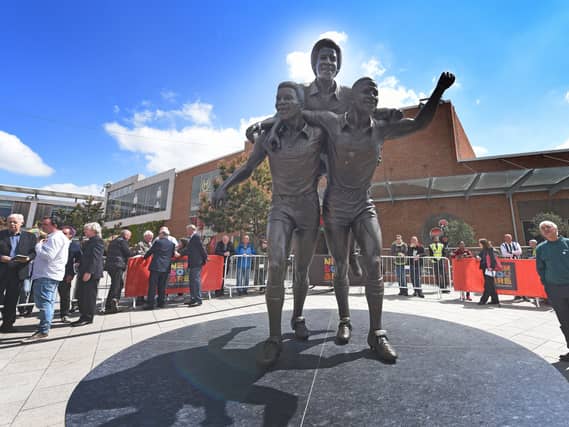
Baggies legend Brown, who turns 80 this year, is immortalised in the form of a statue outside The Hawthorns. The same honour was bestowed on The Three Degrees in West Bromwich town centre in 2019, when a 10-foot bronze monument by renowned sculptor Graham Ibbeson was unveiled.
"They were trailblazers - simple as that. They paved the way for people who followed on," says Brown.
"The black players that followed them owed them a great debt of gratitude for what they did and went through.
"There is still racism in the game now, and in life generally, but nowhere near what it was in those days.
"It was the quality of the players that swayed fans - away fans - to turn them and show what good players they were and that colour didn't matter."
Homer adds: "West Bromwich the town is so proud of these people. Don't forget we've got a diverse population. At the time it encouraged more black people to come to The Hawthorns.
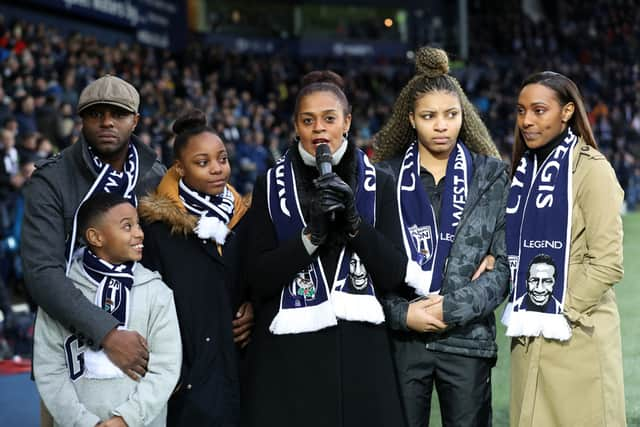
"I started to meet people who came to the Albion a long time ago, I remember them still, a core of West Bromwich Albion fans said thank you very much because they've got people on the pitch to aspire to. Previously they were shut out."
Batson, 72, now spends his time between England and Spain and insists it is not up to him to reflect on the legacy he and his two, much-missed team-mates left.
"When you talk about legacy, a legacy is how other people view you," Batson says. "I always think that I've done my best in what I'm good at, I'll continue to try to do that and help where I can.
"Sport has been my love and I've got a few years under my belt now. I'm so grateful I've had a life in sport. I wouldn't change any of it for the world."
Comment Guidelines
Iconic Media encourages reader discussion on our stories. User feedback, insights and back-and-forth exchanges add a rich layer of context to reporting. Please review our Community Guidelines before commenting.