
The Wolves influences in the Norway camp ahead of this summer's World Cup
There are several past and present Wolves influences in the Norway squad heading into this summer’s World Cup.

Including their head of analysis who still has fond memories of his spell at Molineux, not to mention working with Rob Edwards at Luton. Paul Berry catches up with him.
A week to go until the start of the World Cup.
Yet for many involved, it has been weeks, months, maybe even years in the making.
That’s the case for former Wolves Head of Analysis Andrew Findlay, now Senior Performance Analyst with the Norway team, whom, under former Molineux boss Stale Solbakken, have qualified for their first major tournament in 26 years, and first World Cup since 1998.
For Findlay, who worked at Wolves during the ‘Golden Years’ under Nuno, the next few weeks could prove the pinnacle so far of over a decade-and-a-half in the relentless environment of analysis and coaching.
In the here and now, however, it’s very much focused on work. ‘Business as usual,’ a phrase Findlay remembers well from his time with Rob Edwards at Luton. He and a colleague are bedded into Norway’s pre-tournament camp and working with Solbakken, his staff and players to ensure the squad is as prepared as possible for what lies ahead.
“It is the World Cup, and it’s once in a lifetime so you have to try and enjoy it, but you also can’t get caught up in it,” he says.
“And the big focus for us in the build-up has been about getting as much preparation done as we can before we get there.
“That means when we are there it becomes more of a ‘topping up’ rather than having to recreate things or start from fresh.
“It’s like when a club goes on a pre-season camp for ten days. By day eight or nine everyone is looking at each other and thinking they’ve got to spend another season together – you have to keep it fresh and keep it fun where you can.
“There will be days when it’s mad and there is so much to be done, but the more we have prepared in advance, the better it will be.
“So, it will be very similar to when we meet up for a camp and are ticking off the boxes of the playing style meeting, the first meeting about the opposition, the goalkeepers meeting, the set piece meeting, marking them all off as you go.
“But you also have to remember this is also a World Cup.
“When we play France, it’s going to be Erling (Haaland) against (Kylian) Mbappe, in front of 82,000 people, and you have to be able to take that in.
“The job, though, always continues.
“Something might happen in a game – the opposition might change system or come up with a certain pattern of play – and you want to get a message to the bench to solve it, so it has to be business as usual.
“It is probably only after the tournament, when you can look back and fully reflect.”
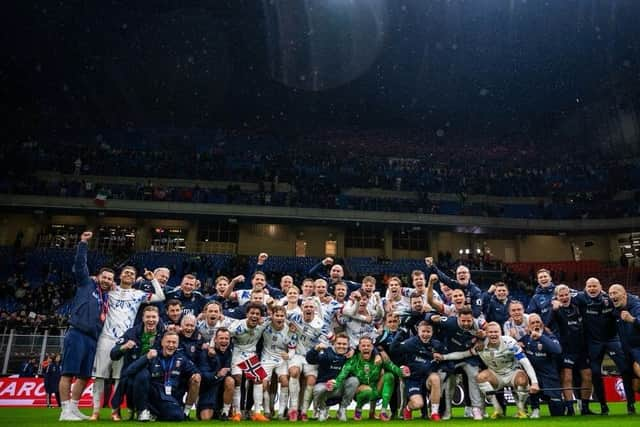

It’s a long and much-travelled road which has taken Findlay to a World Cup. One packed with so much hard work, so much learning and development, but also one focused on forging close and positive working relationships which carry so much gravitas in the world in which he operates.
Because whilst he is, to a large extent, dealing with the world of tactics and data, that only goes so far when it comes to performance analysis. The human element, how to present that information, adapting to work with different coaches and managers, how best to engage and interact with players, those sorts of challenges take more talent and skill than merely sitting at a laptop and sifting through footage and statistics.
“One of my first jobs was within the Academy at Manchester City, when Scott Sellars was head of academy coaching,” Findlay says, to prove that point.
“There is a quote he once told me, which I have never forgotten.
“Scott said: ‘Analysis is basically coaching but it is on a screen rather than on the grass.’
“And that is something that has stayed with me and I have always stuck to.
“With the national team now, we will often meet up on a Sunday night or a Monday morning after a lot of players have been involved with their clubs on the Sunday.
“The first game of camp might be on the Thursday.
“They will be in recovery Monday, maybe half a session Tuesday, tactical session or travel on Wednesday, and then the game, so you don’t get to really train properly for any length of time.
“So that quote and attitude has helped me with the national team, thinking of our work as a training or a coaching session to supplement and support their preparation on the pitch.
“It’s still all about football, looking at what to do in certain situations and what not to do, but it’s delivered in a different way alongside how they are working out on the grass in training.”
Sellars, who would later move on from City to deliver a similar role at Wolves before progressing to technical director, is one of many Wolves figures, past or present, to have influenced Findlay during his career, even aside from his own time at Molineux.
Obviously Solbakken is now managing the Norwegian national team which includes current Wolves defender David Moller Wolfe and former striker Jorgen Strand Larsen in their ranks for the World Cup.
And, back in the 2023/24 season, Findlay dove-tailed his work with Norway with serving as Luton’s analyst coach, working with Edwards and his assistant, as now at Wolves, Paul Trollope.
That’s even without getting into the overall list of managers whom Findlay has worked with, which began with Sam Allardyce at Blackburn Rovers, and later, during four-and-a-half years with Manchester United, featured David Moyes, Louis Van Gaal and Jose Mourinho.
Huge names and profiles, from whom Findlay learned so much.
His own journey into performance analysis began almost by chance.
A Boltonian by birth and the football team he supports, Findlay was keen to somehow gain a foothold in football or sport in some way, having enjoyed playing in his formative years.
After finishing college, he completed a degree in Coaching and Sport Performance at the University of Cumbria in partnership with the University of Lancaster, and, on the day of his very last exam, discovered there was a potential internship available with Blackburn.
Having already done some coaching at Morecambe both within the club and community during his degree, Findlay was successful in landing the internship which, over the following 15 months, provided an incredible introduction into the industry.
Working with another intern mainly on the reserves, there were also plenty of opportunities to support the two first team analysts, bringing Findlay into contact with Allardyce, who was very much across the value of the potential gains involved with more detailed pre-match preparation.
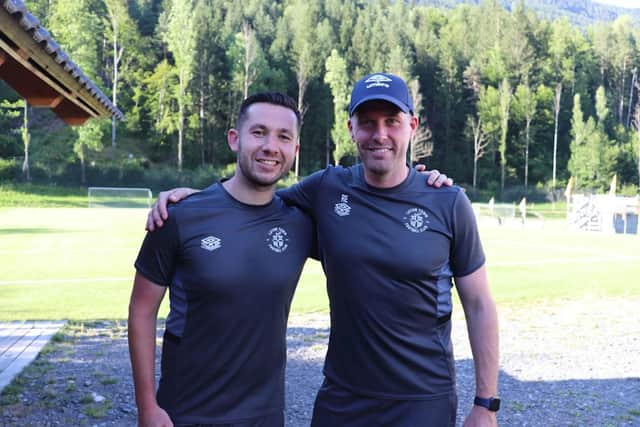
He explains: “Big Sam was so positive in how he used video, statistics and data on the tactical side and also the physical side, and with individual players, and I learnt so much faster by being pitched in at the deep end.
“We were supporting the first team guys in producing a lot of the background research, the post-match reviews and documents, working on set pieces and penalties, and anything we needed to deliver in terms of individuals.
“The culture was great because they trusted people and they wanted us to embrace everything and to learn, and they enjoyed having fresh faces in the building.”
Blackburn provided the perfect launchpad for Findlay’s career, and, prior to arriving at Wolves in October of 2017, he had already enjoyed spells with Northern Ireland Under-17s and Scotland’s Under-21s.
Not to mention the stints with both the Blue and Red halves of Manchester, two years within the Academy set up at City and then four-and-a-half years as a first team Performance Analyst at United.
“Working at City was at the time when they had really started investing in the academy and Scott had gone in as head of academy coaching,” Findlay adds.
“I remember Phil Foden was around 11 at the time, Jeremie Frimpong was eight or nine, and in my Under 15/16 group we had Tosin Adarabioyo, now at Chelsea, and David Brooks.
“Then going to United later on, that came about as Paul Brand, who had headed up the analysis at Blackburn when I was an intern, had just gone there after things changed following Sir Alex’s departure, and needed to recruit an assistant.
“I think getting that opportunity from Paul showed me that you get what you deserve from working hard, doing the right things and learning off people.
“The world is a bit different now with social media and having more of a chance to showcase what you can do, but back then I always felt if I worked hard and professionally, then hopefully the opportunities would come.”
In the four-and-a-half years Findlay spent at Old Trafford, United won the FA Cup, the League Cup and the Europa League, and his own development continued to gather pace, especially under such top and high-profile managers.
“In today’s game, clubs can have five or six different analysts, maybe one focusing on set pieces, one on open play, one’s a transition coach, and it’s caught up with sport science which went that way maybe 20 years ago,” Findlay explains.
“Back then at United there was mainly just two of us, and when you are working with different managers with different approaches and personalities, then you have to adapt.
“With Jose Mourinho, the year we won the League Cup and the Europa League, we had 65 games, and the two of us analysts were delivering three meetings per game, with all the data animated and drawn, not to mention the travel, and it was relentless, because United were expected to win every time.
“They were such great managers in different ways, and David Moyes’ work ethic was like nothing I’d seen before.
“There were long hours, late nights, sleeping over at the training ground, and that’s when it helps that your job feels like a hobby as well!
“Louis had very clear tactical principles of how he wanted to play, a belief built during his time with Ajax, the Netherlands national team, Barcelona, Bayern Munich, all the clubs he had been at.
“That taught me so much, tactically, in terms of thinking as a coach.
“And then came Jose, who is, as everyone knows, the master of winning, often when he shouldn’t really win.
“He was a machine – no matter where we had been on the road, even if we’d been to Russia on a Thursday night, he’d be back in on Friday morning first thing, turning it all on again and ready to go.
“He’d be straight onto the next gameplan, how to work on it, how to win, and coming up with solutions all the time.”
Despite enjoying all the challenges faced with United, when the Wolves’ opportunity emerged, it was the right time for Findlay to move into a new chapter.
And that chapter was the chance to build and lead an analysis department across the whole club.
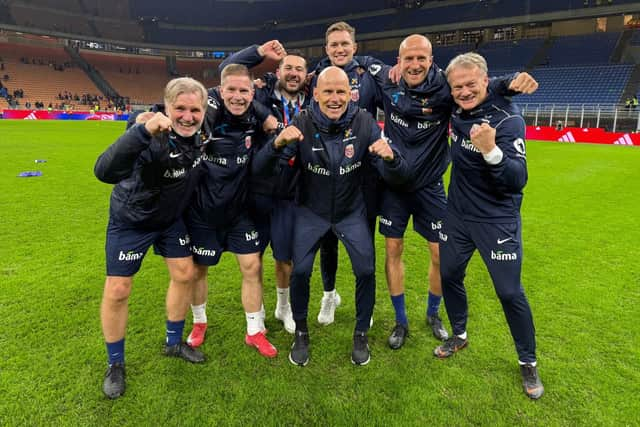
He met Jeff Shi and Kevin Thelwell on the bridge of a motorway service station midway between where Wolves and Manchester United had played fixtures, and was impressed with their vision on where the club was heading – hopefully from Championship to Premier League – but also in terms of building an overall identity.
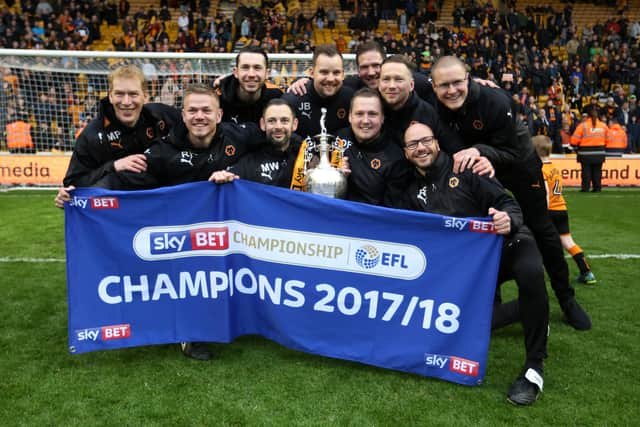
What followed over the next three years was a special time not just for the club – the Championship title, successive seventh placed finishes in the Premier League and a run to the Europa League quarter finals – but also for Findlay.
“Coming from Bolton, as a fellow founder member of the Football League, I knew the massive tradition of Wolves, and had always loved coming to Molineux as it’s a proper stadium,” he explains.
“My Dad is Scottish and my mum is a West Ham fan from East London but they too said how much they loved coming to Molineux which is such a great place to watch football.
“And when it came to the job, Nuno was unbelievable with what he did out on the grass and his work with the players and the identity he brought to the team.
“He was so clear in his principles of how he wanted the team to play and that is always a massive help when it comes to performance analysis.
“Kev wanted me to link the analysis team to the scouting department and create an identity around the place in how we played and how we wanted to recruit, and I think we brought in some really good people in terms of the staff.
“We had quite a young group in both analysis and scouting, which brought a lot of energy which mirrored what was happening on the pitch with the first team.
“I remember one day talking to Coads (Conor Coady), who was saying that as a player, even when you have a style of playing and a way of doing things, sometimes you might get unsure and need an answer from the coach or the staff.
“He said that every time that happened, he just knew there would be a solution and that everyone would adapt, and I think that was such a major factor behind the success at that time.
“Nuno liked to run with a small squad, and yet they were able to cope with all those fixtures in that European journey, keeping players on the pitch, and I think that came from how closely departments worked together and having such really good people at the club.
“Kudos to the people at the top as well, we had Kev steering the ship and whilst a lot of time he might be fighting fires, he was maintaining everything as an elite footballing environment, and I think that was certainly the case.”
Findlay’s next adventure came abroad, as he twice moved during Covid, initially to FC Copenhagen, linking up with Solbakken for the first time, and then again following the former boss to his current position with Norway.
During that time came that year combining the role with working at Luton, leaving Findlay well placed to comment on life under Wolves managers present and past.
“I’d grown up watching a lot of Danish football, and seen a lot of Danish players at Bolton, and the chance to go and set something up with Copenhagen, was another great challenge,” he recalls.
“I met up with Stale and his then assistant Johan Lange, who was with Wolves and is now at Tottenham, and a one hour meeting turned into about three hours as we were chatting about the role, what they were looking for, and football in general.
“It became a strange period for Copenhagen – we went out of Europe thanks to one of the most ridiculous own goals you could ever see – and Stale departed, before getting the Norway job a couple of months later.
“I really enjoy working for him because he demands high quality off everyone but in a way in which you feel valued rather than feeling he keeps coming and saying, ‘I need this’.
“A lot of it for the players is black and white, no grey areas, but there is also time to relax, and they all really enjoy his leadership style.
“We’ve got some good players but what Stale has done is turn them into a really good team, one which won eight out of eight in qualifying and scored 37 goals in the process.
“Of course, we’ve got Erling (Haaland), which helps, but even without his 16 goals we still got nearly three a game from everyone else.
“Stale has his values, and he has built a team and staff which has been successful in qualification, and it’s also funny when we speak about Wolves, which we do not just with Stale but also David (Moller Wolfe) and Jurgen (Strand Larsen).
“Because even though it didn’t work out for Stale, he has never said a bad word about Wolves, and even now I think he loved the way the club was, the passion of the fans, being a one club city.
“That’s obviously now the job, which is facing Rob, and again, he is someone I also really enjoy working with and relished the challenge of my time with Luton.
“He’s a great coach, he makes teams better – that’s what he did with Luton, and I think we did well in that Premier League season when you consider the club’s net spend was £11.5million.
“Rob is engaging - whatever your role he will want to know about you and will value you, and if you give him everything, he’ll give you that back and more.
“It’s been a tough season but on the positive side he knows the Championship, he knows what’s required and he’s hungry to bring success to the club.
“Trolls (Paul Trollope) was with him at Luton as well and he’s another coach with so much experience of players and cultures who is also still open to new ideas.
“I think the best coaches and the ones who have success are those with the ability to make people want to work for them – and Rob and Stale both have that.”
So now, for Findlay, a hectic few weeks lie ahead. Hopefully more than a few weeks, if Norway can emerge from a group including France, Senegal and Iraq.
It will be an unbelievably busy time. All the different demands in terms of delivering data and information to Solbakken, his staff and players, in easily digestible chunks and as both a companion and addition to the training taking place on the pitch.
Findlay’s expertise on the technical side is matched by his ability to build those important relationships.
On a camp, and at the World Cup, he is only ever in his room to sleep. The rest of the time he is working, having a coffee, laptop open, ready to talk and support players with any individual questions beyond the team meetings which is sometimes where the real nuggets of information can be shared.
“The players in the Norway squad have come from so many different clubs, often with very good facilities and methods, and we have to make sure that we can deliver on that same level while they are with the national team,” says Findlay.
“That means I am always open to new ways to present, or where to present, and sometimes those extra bits when we are just having a coffee around the hotel are also very important.
“We’ll do a lot of meetings in the changing room, or even outside, when I will take the tactical camera feed onto the bench and the players can come straight over after the session to take a look.
“We never want it to be meeting after meeting, because that can get repetitive, so we find ways to make sure that we are adapting to their environment, and presenting in the best way for them to absorb all the information.”
Norway beat Sweden 3-1 in a friendly on Monday night – Strand Larsen notching a brace – and are now over in America ahead of a final warm-up against Morocco in New Jersey on Sunday.
Then the greatest show on earth will begin, and, to go back to where we started, will Findlay get the chance to enjoy it?
“It will be hectic, in terms of all the work involved, communicating with Stale and his staff, feeding back from training into the gameplan, trying to stay on top of the other 47 teams!
“In a way it’s a bit like the players and I’m not sure you can ever completely enjoy the games.
“It’s funny because I remember at Luton with Rob, we were 4-0 up against Brighton in about the 87th minute and I turned to the physio and said, ‘they can’t score four now can they’?
“I think that almost becomes how you think, and I remember in qualifying, it was probably only in the San Siro with a couple of minutes left when we were 3-1 up against Italy that I could take it in and acknowledge we were going to the World Cup.”
But going, he is. With a job to do, a new challenge to embrace, and a spell at Molineux still very much in the memory.
Comment Guidelines
Iconic Media encourages reader discussion on our stories. User feedback, insights and back-and-forth exchanges add a rich layer of context to reporting. Please review our Community Guidelines before commenting.