
Taylor's time at Wolves was short, but sweet
The extended international break offers a chance for a lot of coaches to take a step back and reflect. For Stuart Taylor, it’s a time to rewind a decade and remember a spell at Wolves which may have been short, but was also sweet.
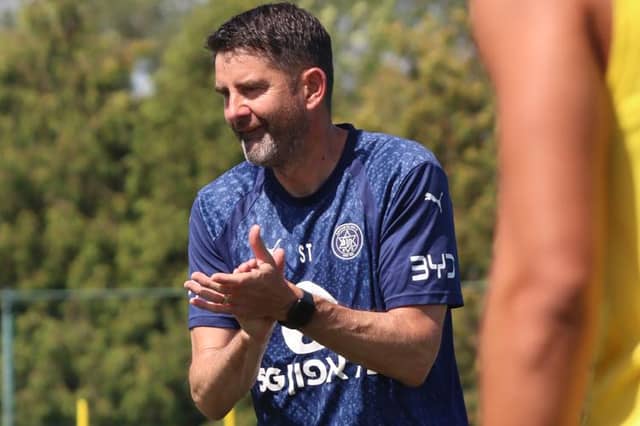

It is nearly a decade since Stuart Taylor arrived at Wolves as assistant head coach to Paul Lambert.
It was his first senior coaching role in England, and followed an impressive spell coaching an Aston Villa Under-23s side including Jack Grealish, Callum Robinson and, later, Callum O’Hare.
It wouldn’t prove to the longest of stays. Little over six months. A dramatic change in approach from Fosun including a huge level of investment and the appointment of Nuno Espirito Santo propelled Wolves to a new stratosphere.
For Taylor, there was disappointment at his departure alongside that of Lambert and much of the rest of the backroom staff at the time. But not an ounce of bitterness or recrimination.
“That’s football,” he admits.
And he was genuinely pleased to see Wolves promoted the following season and go on to establish themselves so firmly in the Premier League and flourish in Europe.
What Taylor does remember and cherish is that time spent at Molineux, a time when Lambert was brought in to steady the ship in the early chaotic days of Fosun, a spell of relentless player movement and the maverick rollercoaster ride under Walter Zenga.
“I can never speak highly enough of the time I had at Wolves, even if it was for such a short time,” Taylor explains. “As soon as Paul arrived and brought me across from Villa, I just remember meeting the staff, people like Rob (Edwards), Tony (Daley), Pat (Mountain), and straightaway they were really supportive.
“Asking how Paul wanted to go about things, how he wanted to work, what they could do to support, and just being so enthusiastic.
“Kevin Thelwell (sporting director) really impressed us with how he spoke about the club and if I had to pick out a culture and environment that should exist within the staff, that was the place.
“It was great to work with the players, even if it had been a bit of a turbulent time before we arrived, and there was a great camaraderie around the training ground.
“It was a fantastic time at such a great club and of course I was really disappointed to leave but was then delighted at how they kicked on the following year.
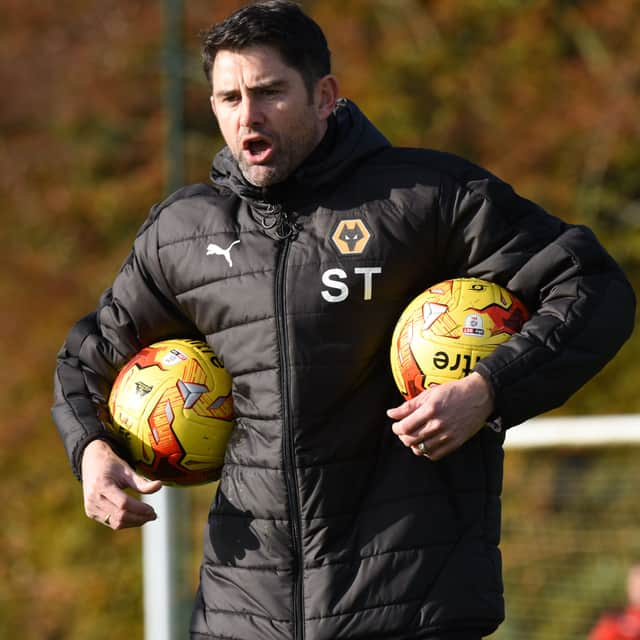
“Some of the backroom staff left with us but people like Phil the physio (now Wolves head of performance Phil Hayward) and players like Doc (Matt Doherty) and Conor Coady were a big part of it, and I really enjoyed seeing the supporters get their rewards as well.”
Nearly a decade on from that time at Molineux, Taylor, now 51, is an assistant head coach again, this time to former Wolves favourite Kenny Miller with Maccabi Tel Aviv in Israel.
It’s the latest chapter in a tale of continual learning and development in the world of coaching, which echoes his career as a midfielder.
Growing up in Glasgow, Taylor was bitten by the footballing bug at a very early age.
With a brother two years older, he would regularly go along to training with his team, and was often allowed to join in, developing an ambition and work ethic which has remained ever since.
“My brother was far more talented than me in terms of touch and skill but I was just a guy who would go after the ball, put the tackles in, do all that dirty work, run through a brick wall,” he said. “And that was what got me through.”
Taylor was given special dispensation to leave school early to join St Mirren and, as he emerged through the youth ranks, made sure he learned from the experienced professionals at the club.
One of those was Lambert, another was another Scot Steve Archibald, and, with thanks to Archibald, one of his former Barcelona team-mates Victor Munoz.
The benefits of their time at Barcelona meant the young Taylor was able to pick up tips and advice around diet, conditioning and the right sort of gym work to accompany time spent on the pitch.
Taylor chalked up more than 300 appearances in a career which took in many different ports of call in Scotland, as well as Drogheda United in Ireland, but always had an eye on moving into coaching as quickly as possible.
“If I am being honest, even though I don’t want to be negative, I would describe my playing career as disappointing,” he admits. “There were times I had opportunities to go to a bigger club which were blocked by my current club, and times when I got injuries which affected my progress.
“One thing that did stick out was that from the start of my playing career I took a really keen interest in coaching and learning how that worked and how managers operated.
“Alongside studying for the badges there was one spell where I had a really bad injury and so I took the time to do a business course about leadership and heading up teams.
“That set me up well and in more recent years I have completed the LMA Diploma in football management and a Masters’ degree in sport and directorship.
“It has always been about trying to develop myself and improve myself whether that’s coaching on the grass or in managing people.”
As a result, coaching opportunities came very quickly, initially under Sandy Stewart at Airdrie and then as assistant to Billy Reid, helping Hamilton Academical to the Scottish First Division title and a place in the Scottish Premier League.
Taylor, as with now, has never been afraid to broaden his horizons and experiences and spent time working with young players at the Al-Khor Sports Club in Qatar, and then, back in Ireland as manager of Limerick.
The team had just been promoted into the League of Ireland’s Premier Division, but under Taylor’s guidance adapted quickly to the higher level and finished the season comfortably placed in seventh position.
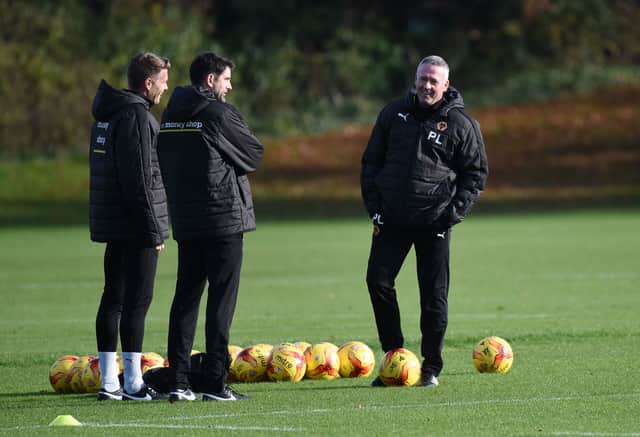
His work with Limerick drew plenty of admirers from this side of the Irish Sea, and he had already spent plenty of time while completing his Uefa Pro Licence visiting Lambert at Norwich, Malky Mackay at Cardiff and Owen Coyle at Bolton.
The opportunity which really stood out among the various possibilities was via former St Mirren team-mate Lambert, who offered him the role of under-23s head coach at Villa.
“I’d stayed in touch with Paul a bit after St Mirren – in fact I was part of an Airdrie team which beat him and Celtic in the Scottish League Cup which I might have reminded him about once or twice,” laughs Taylor. “While I was enjoying being a head coach at senior level, the opportunity at Villa may have been a step down in terms of position and title, but such a massive jump in going from the Irish Premiership to the English Premier League.
“After Paul left I had a couple of short spells supporting the first team set-up in between managers but after moving on, he offered me the chance for my first senior role within English football and was delighted to accept.”
And that was what brought Taylor to Wolves.
That quick unification of staff and players following a challenging few months ultimately helped lead to Wolves stabilising in the Championship, and a finishing position of 15th.
Along the way there were many highlights. Victory against Lambert and Taylor’s former club Villa on an emotionally charged night at Molineux. Five successive wins in March and April.
But most spectacularly, an FA Cup run which featured giant-killing away wins at Premier League’s Stoke City and giants Liverpool, and then pushing Chelsea close, in a season which ended with Antonio Conte’s side as Premier League champions and FA Cup finalists.
Taylor recalls: “I think when you go into a club as a manager or coach the first thing you ask is what is going to be classed as success? At Wolves at that time, it was about stabilising, making sure we stayed in the league, and then maybe a cup run.
“We stayed in the league comfortably, and then had those great days in the cup.
“Stoke were an established Premier League club at the time, but we went there and won 2-0, with Helder (Costa) scoring and then Doc with a great free-kick.
“That was the game when Paul gave Morgan Gibbs-White his debut as a 16-year-old.
“We were maybe ten minutes into the second half when he asked me to get hold of Morgan because we were putting him on, and I was like, ‘are you sure?’
“I’m all for playing young players, and I knew what a talent Morgan is and had massive belief in him, but it was only 1-0 at the time.
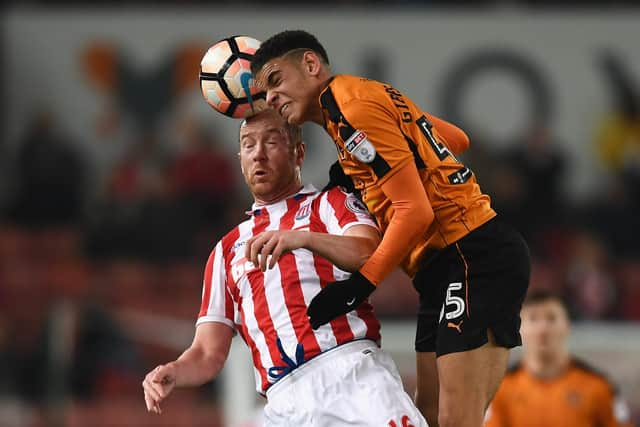
“But Paul was like, ‘yes, definitely’, and that was the start of a fantastic career which is still going strong.
“And then to get Liverpool, the club I supported from when I was young, to go to Anfield and win is something I will remember for the rest of my days.
“The atmosphere that day from the fans was frightening it was so incredible, and then with (Jon-Dadi) Bodvarsson leading the Icelandic Clap at full-time after we had won.
“Even against Chelsea, I remember George Saville hitting the post early on, but they were eventually too good, but it was a great run with so many great memories.”
There were other player-related highlights during Lambert and Taylor’s short stay. The blooding of the likes of Gibbs-White and Connor Ronan, and Helder Costa becoming pretty much unplayable for large parts.
Eventually, however, it came to that quickfire end. Which, as mentioned earlier, brings no complaints for Taylor given what followed for Wolves.
“Everything had been prepared and Paul had players lined up to come in after we finished that season,” says Taylor. “The club actually went on and signed a couple of those players, so it was nice that the new manager still wanted them, and they did well.
“For us, we’d stayed in the league, which was job done, had a couple of big cup wins, and were ready to kick on.
“I was on holiday when I got the phone call, which put a bit of a dampener on the holiday, but these things happen in football.
“Unfortunately, it wasn’t to be, but I will always look back really fondly on that spell at Wolves.
“A fantastic club with fantastic people, I had a great time.”
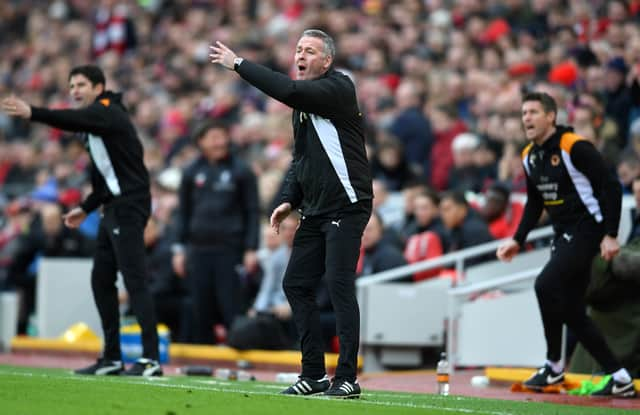
Taylor was assistant to Lambert again with Stoke, initially in the Premier League, and Ipswich Town, before more recent roles as head coach back at Hamilton, assistant at Dundee, and interim assistant with St Mirren.
It was while negotiating a potential permanent role with St Mirren that opportunity knocked again further afield, this time with Maccabi Tel Aviv.
Former Wolves frontman Miller had taken on the manager’s job, and Taylor joined up with a backroom staff already featuring goalkeeping coach Dean Kiely, whose previous clubs include West Brom.
The three had gone their separate ways for the international break ahead of last Sunday’s Black Country derby, so any discussions around Wolves’ victory will have to wait!
Alongside the motivations of experiencing another different type of football, including European competition albeit Maccabi have exited the Europa and Conference Leagues this season, there is also a desire to try and win more silverware, adding to the Scottish Challenge Cup won as a player with Airdrie, and League Championships with Falkirk and Hamilton.
And while Maccabi have already exited the European competitions, they have won the State Cup and are top of the league with five wins out of five.
Taylor says: “When I went out to Qatar early in my coaching career, even though I wasn’t there for very long it taught me so much about learning a new culture, working with people whose English wasn’t so great so improving my own language skills, and putting my ideas across in a very different environment.
“It’s the same situation now with Maccabi, along with the footballing motivation of trying to win something after spending a lot of time fighting against relegation during my time in England.
“The demands and expectations here are high which is what you want, and Kenny, who people will know from his time at Wolves, is very keen to drive those standards and to make sure we do things right and that the environment is right.
“He is someone who was used to winning trophies during his career, and wants to win more, and you can see that in him every day in how he pushes the players and the staff.
“Away from the football it’s also about experiencing another culture and working with a different group of players, which has also involved me taking up learning Spanish again to help with communication.
“I think both in football and in life it is always important to keep improving to get the best out of yourself. And that is what I will continue to aim to do.”
Comment Guidelines
Iconic Media encourages reader discussion on our stories. User feedback, insights and back-and-forth exchanges add a rich layer of context to reporting. Please review our Community Guidelines before commenting.