
Right man, wrong time? The Wolves story of Norway's Stale Solbakken
There has been plenty of past and present Wolves interest in this summer’s World Cup. And will be again in the opposition dugout as England take on Norway on Saturday night. Paul Berry looks back on the Molineux tenure of the Vikings’ boss, Stale Solbakken.
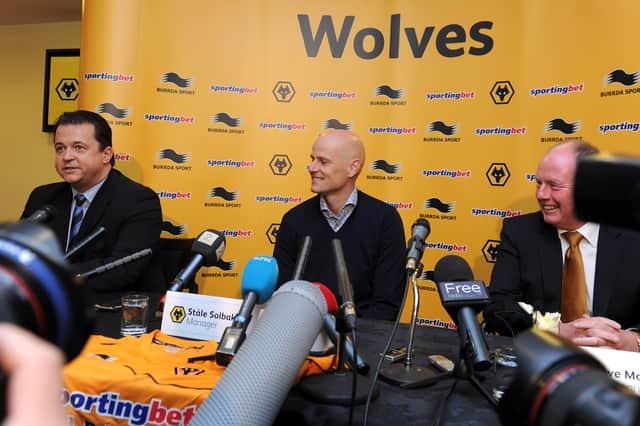
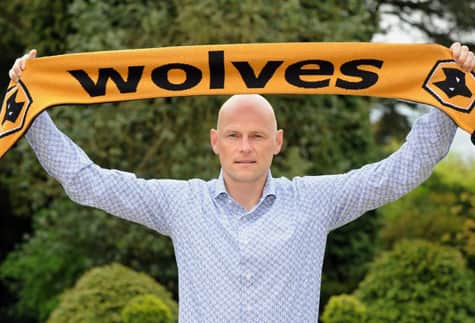
It was during his time as Wolves manager that Stale Solbakken stood in front of a packed media room at an event to mark the club’s Academy being granted Category One status.
He spoke, alongside Kevin Thelwell, with great clarity and passion about the club needing to develop its own DNA, and a way of operating and style of playing which would remain strong and consistent through any changes in the managerial hotseat.
Solbakken was talking just ahead of his first game in charge in the 2012/13 season, and was undoubtedly hoping to be a part of that process, at a time when the club were very much in substantial transition.
A few months later he was gone. The dominos started to tumble. After the relative stability of almost six years with Mick McCarthy at the helm, Wolves went through a period of employing four different managers in little over 12 months.
There would have been few dissenters when Solbakken was given his marching orders, in the hours which followed a dismal FA Cup exit at the hands of Luton Town, then in the National League.
After a promising start to the season, Wolves had won only three games out of 17, and had lost four on the spin.
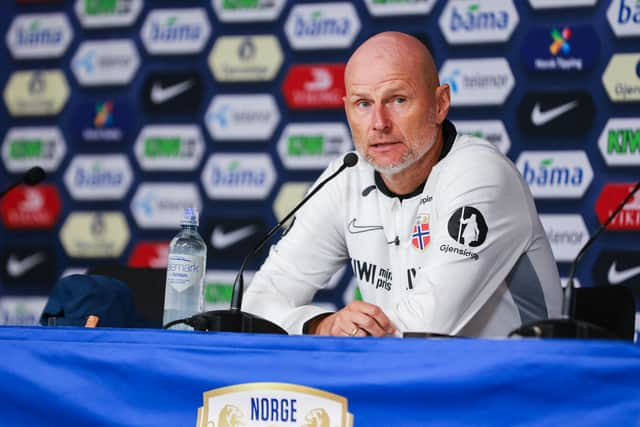
In the Miami Stadium this Saturday evening, Solbakken, now 58, will lead Norway into the quarter finals of the World Cup, the first in their history, against England. Norway had not even qualified for a major tournament since 2000, but now they face the Three Lions for a place in the last four.
His spell at Wolves, and a similar disappointment at Cologne, are the only blips on a managerial CV which included incredible successes during two spells with Copenhagen and now with the national team.
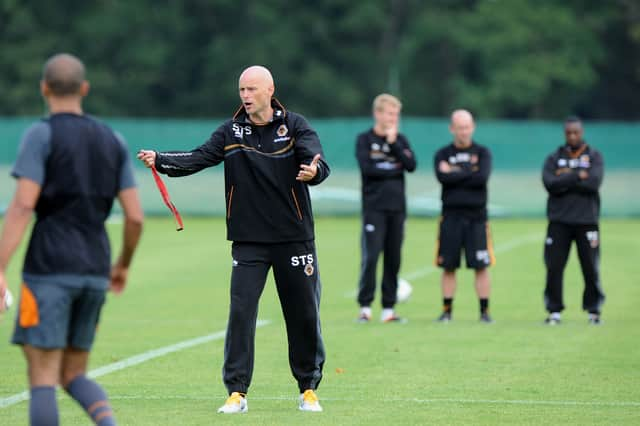

So, what happened with Solbakken at Molineux? Right man, wrong time? It’s a much-asked question, given that his reign ended up being among the shorter in the club’s managerial history.
It’s fair to say that context is important when it comes to the situation Solbakken inherited when arriving in May of 2012.
Those near six years under McCarthy featured their ups and downs, particularly in the Premier League, but were largely founded on a culture of spirit and togetherness, and a fast and exciting on-pitch intensity driven by a ‘young and hungry’ squad.
To head away from that, via a short spell under McCarthy’s assistant Terry Connor, to a more continental style of play, and the change in personnel that required, was always going to bring a need for patience and calm authority.
Solbakken arrived at Molineux with a lofty recommendation. Previous Liverpool Managing Director Christian Purslow had mentioned him to Wolves chairman Steve Morgan as one to watch, and one who could ultimately have moved onto the Reds’ radar had he succeeded at Wolves.
Former Wolves boss Mark McGhee also viewed it as a positive and creative appointment. McGhee had previously tried to bring Solbakken to Molineux as a player, before he opted to join Wimbledon in the Premier League instead.
"Stale will bring new ideas and he will have a very clear picture of how he wants to play, and will carry a very strong message to the players that he has to get his own way,” McGhee said at the time.
“Knowing what I know about him, if players get on the wrong side of him, they will be gone."
Talking of players, the turnaround in personnel that was required to move the club into its next phase also proved tricky.
Protracted negotiations for Steven Fletcher and Matt Jarvis to leave saw Jez Moxey’s negotiating skills land substantial fees, but also prevented a difficult situation - with Michael Kightly also moving on that summer - from settling quicker.
Coming in the other direction arrived a glut of new faces, with very mixed results.
Bakary Sako was to prove a revelation, bringing a flair and excitement which secured cult hero status, and many of those players who remained cited his fellow forward Razak Boukari, as a threat who would have been just as influential had he not been hit by a serious injury.
Loanee Slawomir Peszko had his moments prior to also being injured, and Bjorn Sigurdarson had plenty of potential, but others such as Tongo Doumbia faded after a bright start and Georg Margreitter and Frank Nouble found it tough to make an impact.
Solbakken restored Karl Henry to the captain’s armband, and the midfielder signed a new four-year contract to much supporter acclaim, as the leader and lynchpin to try and knit two very different tactical approaches together.
And for a while, all seemed well. Despite the behind-the-scenes upheaval and comings and goings, Wolves recovered from an opening day defeat at Leeds to embark on a promising run after which, come the second international break of the season, victory at Blackburn took the team third in the table.
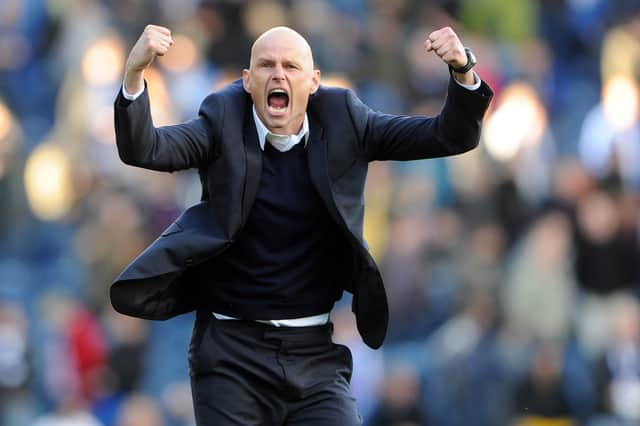
Solbakken celebrated wildly in front of the travelling away fans after Sako’s late winner at Ewood Park, but sadly, that was to prove as good as it got.
For Henry, the more patient possession-based style of football which Solbakken was trying to bring in, would have been more suited to the Premier League than a team expected to be among the front-runners in the Championship.
“Stale’s a good guy and I like him as a person but I don’t think he was suited to what we needed at that time,” says Henry.
“It was tough for us to sit back at home against teams at Molineux, teams we really needed to get on the front foot against and teams we should have been beating.
“There was a frustration that we knew what we were capable of in the Championship and that we didn’t need to be showing the teams the amount of respect that we were.
“We sat back in a low block, getting dominated in possession by other teams, and the crowd were, understandably, getting on our backs.
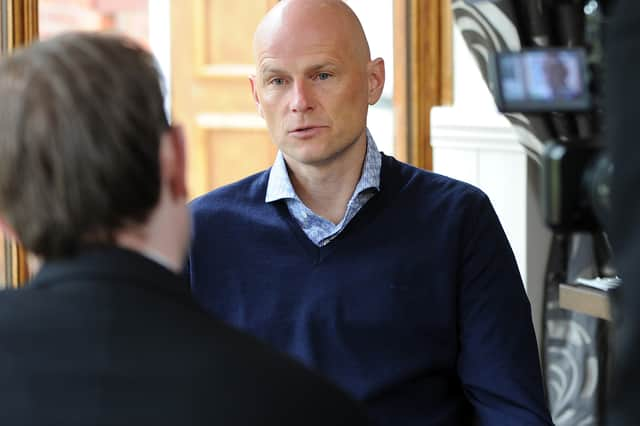
“I have said many times that I think Stale’s style would have been much better in the Premier League, when we would have been fighting relegation, needing to grind out results and points.
“I am sure he would have done extremely well at that level, but the Championship is just not the same.
“Having said all that, once the club decided to go in that direction, I really think they should have stuck with it for longer than they did.
“If the decision was to go down a different route, then it was always going to take more time, and expecting to get promoted back straightaway put too much pressure on Stale coming in.”
Carl Ikeme, who enjoyed his first spell as Wolves’ first choice goalkeeper under Solbakken, had similar sentiments.
“I liked Stale and thought he had some good methods,” he said.
“I could always tell he was a good coach, and he had an eye for a player, but maybe there was a lack of respect of what the Championship was about.
“I certainly enjoyed my time under him, and felt I was doing well, but as a team, the way we tried to play just didn’t suit the Championship.”
And so it proved. After that dramatic three points at Blackburn, Wolves went nine games without a win, and the early season promise soon evaporated.
“I remember quite clearly the first game after that international break was away at Huddersfield,” recalls then Wolves club secretary Richard Skirrow.
“We just got bullied out of it really, I remember Jermaine Beckford amongst others really gave us problems, and we just couldn’t compete physically.
“We lost that game and things just started to unravel to the extent that three months later we were losing to Luton in the cup.
“But yes, we had started the season well and it just seemed that as time went on the bubble burst and maybe the players lost belief in it and somehow the staff as well.
“We reached that tipping point where you lose the collective spirit and the collective thinking.”
The staff makes for an interesting point. Back then, Wolves followed a policy that an incoming manager would bring one assistant, maybe two, but the bulk of the backroom staff remained unchanged. The argument being that they knew the club, could help with the transition, and was obviously far better for the finances.
Wolves boasted some excellent and skilled backroom staff at the time, as was proved both before and after Solbakken’s tenure, but there always felt something of an uneasy alliance during his time in charge. And that came particularly in the form of the ultra-experienced Connor, who could have provided some invaluable support only to effectively be marginalised and ultimately leave.
Who’s to say if Solbakken and assistant Johan Lange – who has since moved into the Sporting Director sphere with Aston Villa and Tottenham - might have done better if bringing in more of their own staff? Another question to remain unanswered.
Having said that, even within a sometimes uncomfortable environment, Solbakken was very much a fan of English culture, perhaps stemming from those playing days with the Crazy Gang!
“I certainly liked Stale as a person,” adds Skirrow.
“He’s a very bright guy, and a likeable guy, with very good English, and a good grasp of English culture and history.
“I remember the once I mentioned I was off to see ‘Helen from the accounts department’ and a voice came from Stale’s office where he started talking about Helen Mirren.
“He did similar when we were chatting about Kevin Thelwell, referencing the Derby and England striker Kevin Hector.
“We went to Steve Morgan’s 60th birthday celebrations at Carden Hall where all the tables had a Beatles theme, and I was on Stale’s table which was called ‘Norwegian Wood’ after one of their songs. He was obviously well aware of that reference!”
There was also a lively sense of humour to Solbakken, even through the tough times.
When his car, parked outside his apartment, was daubed in white paint, presumably by an angry supporter, he announced at his next post-match press conference that he was going to avoid any future issues with the vehicle, by asking Skirrow to drive it instead.
Talking of travel, it was Solbakken’s regular trips home to Norway after games which chairman Morgan believed didn’t help his cause in terms of settling in England.
“Stale’s wife and family didn’t come over with him and the reality was I don’t think he ever bought into living in England,” said Morgan.
Regular trips back home aren’t necessarily a rarity in football. Nuno Espirito Santo and his staff and players used to travel back to Europe when the opportunity arose. But of course, with one major difference. They were getting results. And results are king in football.
For Solbakken however, there was certainly a very different perspective on life. Built out of adversity. Because, towards the end of his playing career spent mainly in Norway and Denmark, he suffered a cardiac arrest in training whilst with Copenhagen.
Aged just 33, his heart stopped beating for seven minutes, but thanks to the incredible efforts of team doctor Frank Odgaard who massaged his heart before the ambulance arrived, he survived.
So, whilst football, and being successful, remains a massive motivation – and he is the most successful manager in Copenhagen’s history across his two spells – he doesn’t sweat the small stuff.
In front of the media, and with opposition managers, he is as straight-talking – and often impulsive - as they come. He once argued vehemently with Pep Guardiola after Copenhagen held Barcelona to a Champions League draw. Referred to Wolves once changing from ‘Kings to the idiots of Wolverhampton’.
Punched a hole in the dugout roof when Wolves played Brighton, later signing the offending piece of glass to be auctioned off for charity. And has already fired some truth bombs during this World Cup, with Scotland – much to the annoyance of John McGinn – and FIFA, for suspending the red card handed to American striker Folarin Balogun – among those in his sights.
The sum total of it all, is that Solbakken has done an incredible job with Norway. Even with the fearsome goalscoring power of Erling Haaland, he has created a strong and successful team, with 21 of the 37 goals scored in their perfect qualifying campaign delivered from other sources than the number nine.
And now, having been part of a Norway team as a player which drew 0-0 with England in 1995, Solbakken is plotting, with past and present Wolves in Jorgen Strand Larsen and David Moller Wolfe, to topple the Three Lions on the biggest stage of all.
He is doing so with the support of the team’s senior performance analyst who was at Wolves for the recent Golden Years under Nuno, Andy Findlay, who first linked up with Solbakken during his second spell at Copenhagen.
“I really enjoy working for him because he demands high quality off everyone but in a way in which you feel valued rather than feeling he keeps coming and saying, ‘I need this’,” he says.
“A lot of it for the players is black and white, no grey areas, but there is also time to relax, and they all really enjoy his leadership style.
“Stale has his values, and he has built a team and staff which has been successful in qualification, and it’s also funny when we speak about Wolves, which we do not just with Stale but also David (Moller Wolfe) and Jorgen (Strand Larsen).
“Because even though it didn’t work out for Stale, he has never said a bad word about Wolves, and even now I think he loved the way the club was, the passion of the fans, being a one club city.”
Indeed so. It may have been just a short spell at Wolves, but it’s one Solbakken hasn’t forgotten.
It was a time when the club not only gained Academy Category One status, but also opened the new Stan Cullis Stand, Megastore and Museum. And he was front and centre at all.
The interest in Wolves’ history was real, recalling a team featuring the likes of Steve Kindon, Kenny Hibbitt, Willie Carr and Derek Parkin visiting his village as a youngster and beating his local team 6-0 in a friendly.
Solbakken’s own interest in the club, and its people, has continued long after he moved on. When Ikeme was diagnosed with leukaemia, he was quick to send a text to see how he was, and to pass on his best wishes. With Strand Larsen, previously, and Moller Wolfe at Wolves, he was always keen to hear updates on how things were going at Molineux. And his own memories of his short stay in Wolverhampton will usually include mention of some of the larger-than-life characters he encountered, including club historian and press officer John ‘Fozzie’ Hendley.
Come Saturday evening England fans will be hoping that Solbakken fails in much the same way as Wolves fans were so desperate for him to succeed when he checked in as an historic appointment in the close season of 2012.
Right man, wrong time? Could he have been the one to shape a new club DNA? Unfortunately, we will never know.
Comment Guidelines
Iconic Media encourages reader discussion on our stories. User feedback, insights and back-and-forth exchanges add a rich layer of context to reporting. Please review our Community Guidelines before commenting.