
'One in a million' - how Kenny Jackett built his Wolves legacy on strong values
Kenny Jackett remains one of the most important figures in recent Wolves history. Paul Berry speaks to those who worked with him to discover how he built his legacy at Molineux.
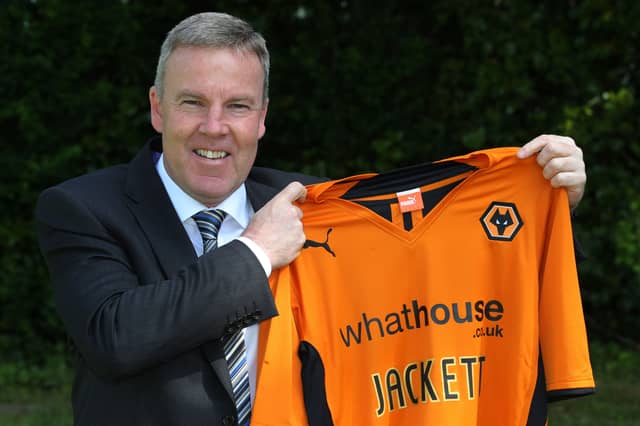

The success of a manager at a football club – and, let’s face it, they are not given very long these days – is often not solely linked to the results during their time at the helm.
Sometimes it is based around what they leave behind – a long-term legacy – be that what happens to players who they might initially have blooded, their relationship with the fans, improvements to the infrastructure.
Even before the dreadfully sad news broke a week ago of former Wolves head coach Kenny Jackett’s passing at the age of 64, his own legacy with the Molineux faithful was already assured.
He was only in charge for three years, the last of which, with the club up for sale, was spent merely trying to maintain the status quo and Championship survival. But for the first two years, especially given the downward momentum which accumulated just before, his impact was considerable. And boy, wasn’t it so much fun?
So, every time his name has been mentioned, whether on social media or in conversations both over the last week and indeed the last few years, there is absolutely no doubt that Wolves fans truly appreciated his meticulous and fortune-changing work within the dugout. There is also a cast-iron argument that Jackett’s immediate reversal of the previous dramatic decline, laid the foundations for the spectacular success at Wolves which followed under Nuno several years later.
The situation which Jackett walked into shortly into the pre-season of 2013 was not quite unique when it comes to Wolves, but it was pretty damned unusual.
Back-to-back relegations had catapulted the club from the Premier League down to League One, and, having benefited from the stability of Mick McCarthy at the controls for almost six years, three successors had been and gone during just 15 months.
At the final home game of the 2012/13 season, when defeat against Burnley effectively condemned Wolves to the double dip, a large number of fans invaded the pitch and caused damage to the dugouts and advertising hoardings. Such were their levels of uncontrollable anger, the doors to the tunnel had to be locked to prevent the unrest developing further.
And yet, by the time Wolves kicked off the following season in August, there were 5,000 fans packed into a sold-out away end, and the roar which greeted the players during their warm-up offered a tangible indication that the Molineux fanbase was ready to forgive. Maybe not completely forget, but certainly move on. They were so desperate to see some shoots of revival that they could cling on to. What a journey they were soon to enjoy under the astute guidance of Jackett and his staff.
Kevin Thelwell was the sporting director who led the recruitment process for Jackett in the early post-season of 2013, putting in the groundwork which was then swiftly ratified by chief executive Jez Moxey and chairman Steve Morgan.

It was Thelwell’s first managerial appointment as a sporting director, and, given the perilous situation at the club at the time, it needed to be right. History would show, it most certainly was.
“I had a bit of time and space from the end of the season to carry out the recruitment, and we saw a lot of very good candidates,” Thelwell recalled this week. “The biggest difference with Kenny to the others was that he came across as extremely caring about the club, he understood the problems that we had and knew exactly the job that he needed to do.
“He also understood that he had to go about the job in a certain way, bringing younger players through with a mix of experience, and also resolving the ‘Group 3’ dilemma of players we needed to move on.
“Right from the start, he was what I’d call a ‘proper fella’, professional, extremely courteous and very knowledgeable – he knew the names and backgrounds of all our young players and what they could achieve.
“Even though Wolves fans might not have known a lot about him after his time with Swansea and Millwall, I just felt people would take to him and he would do a good job.”
Jackett set about that task very quickly, delivering a reset via his calm and unflappable style of leadership, coupled with a ruthlessness in making big decisions which would have major ramifications.
That ‘Group 3’ which Thelwell mentions, colloquially referred to as the ‘bomb squad’, drew an unmistakable line in the sand. Some of those names – Karl Henry, Stephen Ward and later Kevin Foley – had been long and loyal servants at Molineux, enjoying much success, and their inclusion in that group raised plenty of eyebrows at the time.
There will always be questions about some of the treatment they received but, from a football sense, ultimately a major clear-out and fresh approach proved exactly what was needed.
Richard Skirrow, the highly-respected club secretary who spent 20 years at Wolves during a lengthy career in the game, later acknowledged he had never seen anything quite like the change in fan attitudes from the end of one season to the next.
He said: “The transition from the final game of the season at Brighton, so full of bitterness and acrimony, to Kenny coming in and 5,000 fans going to Preston and making so much noise and showing so much positivity, is absolutely one of the strongest memories I have from all the years watching and working in football.
“In that short space of time, Kenny had delivered the reset, and while none of us wanted to be there, it turned into a really enjoyable season.”

Along with the added responsibility handed to existing players like Carl Ikeme, Richard Stearman, Danny Batth and Dave Edwards, re-energising Bakary Sako who many anticipated would leave, blooding youth players and making astute signings such as Kevin McDonald and Scott Golbourne, two other Jackett arrivals were particularly influential.
On the pitch, Sam Ricketts, who Jackett had worked with at Swansea, came in as captain, and imposed his own calm and controlled leadership on the team.
“It was Kenny’s decision to make me captain and, looking back, it was probably a good time in my career for that,” Ricketts said. “When I was younger, I was generally quite quiet in the dressing room but, as I got older, I became more confident and understood the game more.
“By then I felt like I could hold an argument and back it up, and I loved the challenge of doing it and felt comfortable in doing it.”
And as his assistant, just as he did at Millwall before, and Portsmouth and Leyton Orient after, Jackett brought in Joe Gallen.
The pair had first crossed paths when Jackett was a youth team coach at Watford – where he enjoyed so much success as a player – and Gallen was his captain.
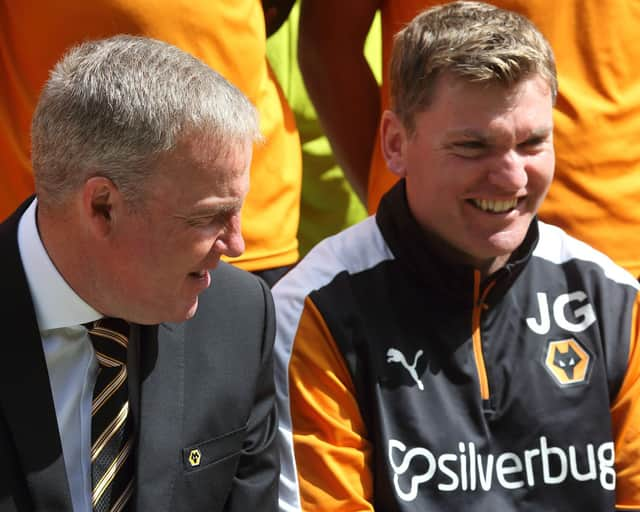
“We had a lot of conversations about football at that time,” Gallen recalls.
With his own playing career cut short due to injury, Gallen progressed to the role of youth team coach with QPR when Jackett was assistant manager, and then back in 2007, with Jackett now boss at Millwall, he knew who he wanted as his right-hand man.
“Kenny asked me to go in as his assistant at Millwall, and I don’t mind saying that to this day, I am still surprised that he did,” says Gallen. “I even said that to him on the phone when he called. ‘Who? Me?’
“He was just so good as a coach and on the training ground, and I’d always remember thinking that if I could get even close to that sort of level, I would be happy.
“So, I just thought, especially with everyone who he played with at Watford, and all the contacts he had, that he would have had plenty of other people to turn to.
“I wasn’t too sure what he saw in me, but I am mighty pleased that he did.”
The partnership between the two seemed almost effortless. While possessing very similar views on the game and the way to approach it, there were also different skills and abilities which ensured they dovetailed so perfectly.
Jackett was very much the traditional manager type figure, with the authority to command respect, while Gallen could get in among a group of players and disseminate his messages. Jackett was the more studious, Gallen, by his own admission, more ‘off the cuff’. Gallen was very much an attack-minded coach, and while Jackett enjoyed playing entertaining football, he was the more organised and pragmatic. It worked like a dream, and one would certainly not have been half as effective without the other.
“I think Kenny worked out what he needed as an assistant, and decided that I fitted that role,” says Gallen. “He has always been so clever with his thinking, and I’m not sure people fully realised how clever he was around people.
“In every meeting, he would be the smartest person in the room. He would make more sense than anyone. Not in any flash way, but just a level of intelligence that was so important.
“And then he was so organised.
“He’d be in at the training ground before anyone else, and there would be a meeting first thing where everyone was able to have their say, and he would set out what was going to happen.
“He was immaculate, in the way he presented himself every day. Always well dressed to come to work, clean shaven, not a hair out of place, shoes shining, his car gleaming.
“I call it management without speaking, he set those standards so everyone knew he meant business and that would rub off on everyone else. He was brilliant on a matchday as well, his messaging was always so clear and concise.”

In that first season in League One, such a memorable season still, Wolves charged to the title, amassing a club record and league record at the time of 103 points, as well as another club record of nine successive wins.
The following campaign, which for the second half included the utterly thrill-seeking and magic front three of ‘Dicko, Afobe, Sako’, saw Wolves agonisingly miss out on the Championship play-offs on goal difference.
And then in the third, Morgan put the club up for sale a month in, and Wolves sold Afobe in January, meaning it was a case of battening down the hatches and preparing the club for a takeover, a task which Jackett again delivered without even a sniff of bitterness or rancour.
That was also the case when relieved of his duties after Fosun’s arrival, a process which carried an air of inevitability spread over several weeks and was officially announced late in the evening before the final pre-season friendly at Molineux. Jackett responded without a moment’s anger or annoyance, and probably not even a hint of ‘I told you so’ when his successor Walter Zenga was dismissed after just 14 league games a couple of chaotic months later.
“Kenny just took everything in his stride and was never bogged down with problems but was all about finding solutions,” Thelwell explains. “We sometimes use these words too loosely, but I would definitely say he was ‘one in a million’.
“In a football environment, with all the pressure and expectation, it is so easy to point the finger at other people when certain things happen, but he never ever did that – he just got on with his job.
“He was a true gentleman, very courteous, very professional and very respectful, and has been a proper inspiration to so many people in the game.
“I regard myself as being very lucky to have worked with Kenny and known him on a personal level.
“Wolverhampton Wanderers should also feel very lucky – and I know people connected with the club do – as being very lucky to have had Kenny as a manager.
“We really did have one in a million.”
And that’s a sentiment that extends to so many of those players who played for Jackett at Wolves. So many different levels of experience, very contrasting personalities, but all united in the impact that he had.
‘Thank you gaffer for giving me my chance in football’, tweeted Jack Price. ‘Forever etched into Wolves history’, said Edwards. ‘Forever grateful for changing my life’, from Jordan Graham. ‘A hero’, said McDonald. ‘I owe him so much’, reflected Ricketts.
The backroom staff too, relished their time working closely with Jackett. They weren’t the biggest in number, but were remarkably close, and remain so, all these years on. And the likes of later Wrexham and Shrewsbury boss Ricketts and Rob Edwards, who up until a fortnight ago had followed in Jackett’s footsteps as Wolves head coach, were both given their first coaching experience during his Molineux tenure.
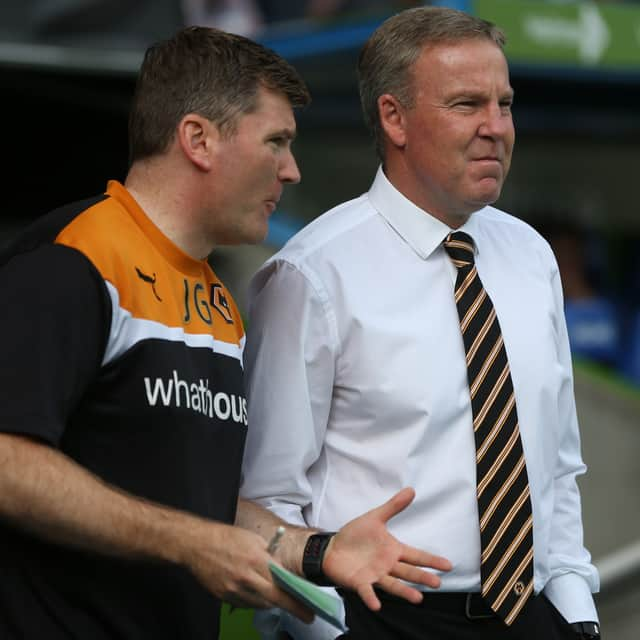
For Gallen, the loss is also deeply personal as well as professional. Jackett’s incredible dedication to duty and professionalism would mean that he rarely let his guard down when at work.
But when he did, a dry sense of humour was always to the fore, not to mention hobbies including music, about which he would speak to Gallen and attend gigs together.
Gallen sadly lost his father Jim last month, and even though by this point Jackett was in poor health, he was straight on the phone to offer his condolences.
“Kenny knew my family well, my Mum and Dad Tess and Jim, and I know his family well, his wife Sam, his boys David and Ryan, his brother Alan,” says Gallen. “We were part of each other’s families, and there was a trust and loyalty between us that was always there, and it’s just so sad he is no longer here.
“When it came to the job, I just had so much respect for Kenny, and when I was given a chance by someone of his stature, believe me I did everything I could to make sure I didn’t let him down, not even for a second.
“And do you know what? If I ever suggested something, be it trying a different player, or making a substitution, and he went with it… even if it went wrong, he would never breathe a word about it.
“He would never ever blame me for anything, which is amazing really, in the heat of the moment and the emotion of everything in football, especially when the pressure was on.
“He was a man of such high integrity and he has helped so many people in football over the years. A hell of a lot of people.”
When a manager takes on a new role and challenge, he also has that responsibility of being the public face of the club, of representing everything that a club stands for.
Some will naturally carry that responsibility better than others, especially as for fans, to a large extent, results mean everything.
Jackett achieved both. Representing Wolves with distinction and delivering the results which paved the way for the club to later embark on an incredible journey, one which made him just as happy as the thousands of fans who cherished it.
He was incredibly proud to have managed Wolves, just as Gallen was to support him. “This is a proper club,” was a regular Jackett refrain. And nothing that happened in those final weeks ever changed his opinion.
In a sense, it feels a shame that he never got the chance to return to Molineux for a game and enjoy what would have been the incredible reception which fans would have afforded him.
In truth though, he would never have chased that moment, or that adulation. Instead, happier in the shadows, comfortable in his own skin that he did everything that he could in building a team, on and off the pitch, that was so tight-knit, and so successful. That is the mark of the manager, and of the man.
His legacy, however, will continue to shout from the rooftops about the impact that he made, and at such a crucial point in Wolves’ recent history.
The Molineux faithful never forget those who made a difference.
Rest in peace Kenny.
Comment Guidelines
Iconic Media encourages reader discussion on our stories. User feedback, insights and back-and-forth exchanges add a rich layer of context to reporting. Please review our Community Guidelines before commenting.