
Magic! How Mick McCarthy cast his spell on Wolves
Mick McCarthy knows a lot about the World Cup, both as a player and manager. But after his international days, he became an excellent club manager. It’s 20 years since he checked in at Wolves...
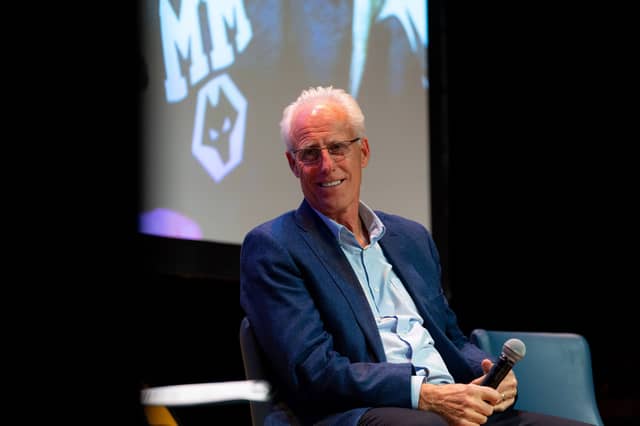

Even 20 years on, it remains one of the most iconic quotes ever uttered by a Wolves manager.
Mark Douglas, then the Express & Star’s Wolves correspondent, had asked new boss Mick McCarthy if he believed Wolves could make the Championship play-offs.
In front of a packed media conference at the Compton Park training ground, McCarthy turned the tables, asking Douglas what he thought.
“Yes, I think you can,” Douglas replied.
At the time, Wolves were a few days away from the start of the 2006/07 season having seen Glenn Hoddle walk out a couple of weeks earlier due to a lack of players and lack of finance.
“Let me tell you something,” McCarthy came back. “The initials MM stand for Mick McCarthy, not Merlin the Magician.
“So, let’s see if we can get some players in, crack on with some work on the training ground and I look forward to sparring with you all in the coming months.”
As was documented within these pages around the 20th anniversary of Hoddle’s departure a few weeks ago, Wolves weren’t in the best of shape when McCarthy checked in.
After a couple of years back in the Championship, the loss of the parachute payments and impending departures of several big hitters was going to leave the squad shorn both in numbers and experience.
That was what prompted Hoddle to decide enough was enough, and leave Wolves searching for a replacement at a particularly precarious time. Speed was of the essence.
History would tell you that they got their decision right. McCarthy would eventually spend more than five-and-a-half years in the hotseat, the sixth longest managerial spell in the club’s history behind Jack Addenbrooke (37 years), Major Frank Buckley (nearly 17 years), Stan Cullis (16 years), Bill McGarry (nearly eight years) and Graham Turner (seven-and-a-half years).
For context, Wolves have employed seven different managers in the last five years. McCarthy’s longevity certainly stands out.
And, when he did depart, on an emotional day at Compton in February of 2012, he did so having taken the club into the Premier League, and stayed there for two seasons.
A crushing 5-1 home defeat to West Brom, at the end of a run of just one win in 11, had certainly given the board a decision to make. And make it, they did.
But hindsight would strongly suggest that particular call was the wrong one. McCarthy’s departure signalled a quick and dramatic decline that took Wolves not just into the Championship, but also League One. Quite the rollercoaster ride. Downwards.
Having to leave Molineux by the back door after the Albion defeat due to fan feeling was of particular sadness for McCarthy. That evening, he wondered, for the first time, if his Wolves days were over.
Next morning however, he felt different.
He was, as ever, up with the larks, back at the training ground watching a rerun of the Albion game on video while exercising on Watt bikes with his staff, and straining at the leash to put things right.
Then CEO Jez Moxey arrived, with whom McCarthy enjoyed an excellent working relationship.
“I knew he wasn’t there just to say hello,” was the McCarthy take. “It was like the arrival of the ‘Dark Lord’, and there was only one reason he was there at eight in the morning.
“I think Jez was also sad and upset to have to break the news, he had supported me so much.
“Obviously I was sad about it too, but when you lose 5-1 to your nearest and dearest, and are struggling in and around the bottom three, you can’t really complain about getting the ‘tin-tack’.”
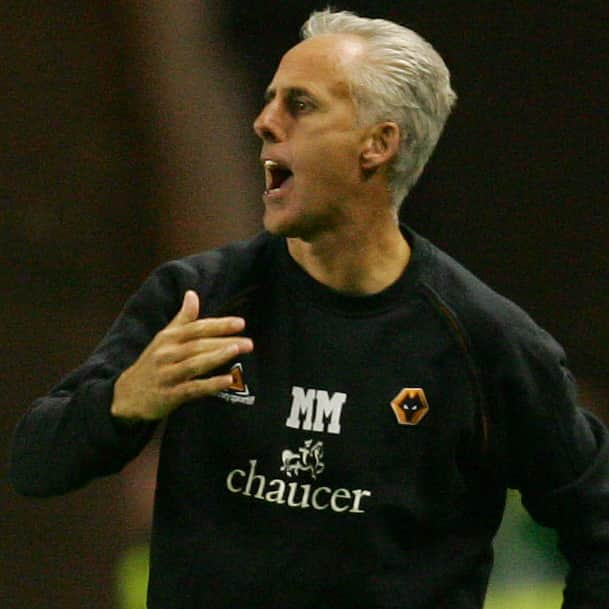
Having broken the news to the squad, McCarthy spent several hours at the training ground clearing his office, as a procession of players - individuals and in groups - headed up to see him to say their farewells, and offer their thanks.
It’s fair to say tears were shed. For many of those players, McCarthy had taken a chance on them in the fledgling stage of their careers, and guided them into the Premier League. Not to mention presided over such success, and helped them make some unforgettable memories.
After those warm goodbyes, McCarthy then headed off to Molineux to offer his own appreciation to the stadium’s office staff before his departure. Another mark of the collective spirit and togetherness he had brought to the job. His thanks were very much reciprocated.
But hey, that was the ending. What of the middle, and the beginning, and why next Tuesday, July 21, the day of his appointment, is most definitely a 20th anniversary worth celebrating. And how the McCarthy reign revitalised not only a club, a group of staff and players, but also a fanbase and whole city and community.
For all the ups and downs on the pitch, it was a managerial spell which offered supporters a team to identify with, to get behind, and once more to puff out their chests and have some pride in their club. Many still have him at the very top of their favourites in terms of bosses.
So, at this stage 20 years ago, McCarthy was locked in talks about the vacancy. Those talks were pretty straightforward. And ultimately fruitful.
After Hoddle’s pre-season departure, which he announced on the morning of England’s World Cup quarter-final with Portugal, three main candidates emerged.
Stuart Gray, Hoddle’s assistant at Wolves, who had also done the job under Dave Jones and, as proved by the longevity of his own coaching career having only left Fulham last year, would have been a very safe pair of hands.
Former England skipper Paul Ince, Hoddle’s captain at Wolves, who had been such an inspiration as a player and captained the team to play-off glory, who was ready to get into management and very keen to do it at Wolves.
And McCarthy, who was also available having already tasted success at the helm of Millwall, the Republic of Ireland and Sunderland.
Ince particularly impressed the hierarchy during the interview process, but once they had spoken to McCarthy, their minds were made up.
“I was on holiday in Portugal at the time, and got a call from my representative asking if I would be willing to speak to Wolves,” McCarthy recalls. “Well yes, I said I would definitely be interested, this was Wolves after all.
“I flew back and met Sir Jack (Hayward) and Jez at an apartment in London, not far from where my old Millwall chairman Reg Burr used to have his office.
“We had a good chat for a couple of hours, and as I left, I said I was heading back on holiday but to let me know if they were interested.
“I was pretty much only back at the airport when my representative called to say that Wolves would like to offer me the job, and that was that - it seems I had made an impression!
“I went back and met the family to finish off the holiday while the deal was being finalised and then returned a few days later – I couldn’t wait to get started.”
Moxey recalls similarly positive vibes about the interview, having admitted he had thought of McCarthy as soon as Hoddle had effectively handed in his notice.
“It was one of those situations where I just knew within the first five minutes of the meeting that we were going to want to offer this man a job,” recalls the Wolves CEO at the time. “And I know Sir Jack felt the same.
“It was a very pleasant hot and sunny day, and we did the interview in the lounge, with Mick asking what our plans were and then outlining what he wanted to do.
“We knew we were going to get a manager with real character and good communication skills, which was just what we needed.”
As McCarthy completed his holiday, he remembers calling his trusted assistant Ian ‘Taff’ Evans, a former team-mate when he broke through as a young player at Barnsley, who had been his number two with both the Republic of Ireland and Sunderland.
He asked Evans to go and watch the team play a friendly at Swansea, and report back with his findings.
For many years, McCarthy kept the notes he took from that phone call.
“Taff gave a pretty damning report to be honest,” McCarthy admits. “All the players who did OK were the ones who were going to leave, and it felt like the club was in disarray.
“It just needed some new leadership and fresh direction, and we set about getting some players in and getting organised with some form of structure.”
Recruitment had to follow swiftly, but with scant resources. High-profile departures from the team which finished the previous season included Joleon Lescott, Kenny Miller, Lee Naylor, Colin Cameron, Mark Kennedy, Seol Ki-Hyeon, and Ince.
Wolves had little choice but to travel down the ‘young and hungry’ route, bar the experience of Gary Breen and Jody Craddock.
McCarthy’s skilled and dependable chief scout Dave Bowman was soon into his stride, and so many of the relatively low-cost signings made over the next three years, culminating in winning the Championship title, paid dividends.
Some highlights? Karl Henry, who arrived for a trial game as part of Steve Bull’s 20-year anniversary testimonial against Aston Villa. And convinced McCarthy within minutes he deserved a contract and a move from Stoke. Michael Kightly, picked up for a paltry £25,000 from Grays Athletic in non-league who ended up not only having a huge impact at Wolves but representing England Under-21s.
Stephen Ward, Andy Keogh, Kevin Foley, future England international Matt Jarvis, Richard Stearman, David Jones, Dave Edwards, Wayne Hennessey, Sylvan Ebanks-Blake, George Elokobi. Names who maybe few Wolves fans had heard too much about before their arrivals, but who are now etched into the history books as they stormed to promotion in McCarthy’s third season in charge.
While Evans had taken a step back and moved into the world of scouting, Terry Connor moved up to that assistant role and proved just as much of a perfect foil to McCarthy that you could barely see the join.
Wolves had reached the Premier League, and more golden memories, amid the over-achievement of consecutive survivals against the big boys. And of beating the likes of Manchester United, Manchester City, Chelsea, Liverpool at Anfield, a double over Tottenham.
Bigger money signings such as Kevin Doyle and Steven Fletcher did arrive and deliver an impact, but for so long McCarthy and his staff were able to keep the sense of togetherness and close-knit spirit not just among the squad, but throughout the club.
“Mick assembled a squad of young and hungry players, many without any Premier League experience, and created an atmosphere and a development culture where we all thrived,” recalls Henry, who became McCarthy’s captain and on-field lieutenant for several seasons. “Mick and TC worked tirelessly with all of us, and I was never at a club, either before or after, where there was so much emphasis on the players who were on the periphery.
“There was a real focus on developing players and ensuring that the starters respected and worked to help the players who weren’t starting.
“This created an atmosphere and a spirit within the group where we all felt equal, and nobody was above anybody else.
“We all had a say, and all demanded from each other, and that attitude came from Mick and all the staff.
“Those years created memories for all of us that will last for life.”
Football being football, all good things must, eventually, come to an end.
Henry, very much a player’s captain, put his head above the parapet with McCarthy once too often, and lost the armband to Roger Johnson, but the defender, who arrived with much fanfare, admits he never hit the levels of form that he needed.
Other signings replaced the more tried-and-trusted personnel, and many just didn’t work, and the problems had grown long before the devastating derby defeat at the hands of the Old Enemy.
For several seasons McCarthy, Moxey and chairman Steve Morgan enjoyed a very positive working relationship. Morgan was investing into the squad, and all three were never anything but painfully open and honest with their dialogue. Not to mention a sense of mutual respect which has continued to this day even though McCarthy’s Molineux journey ultimately reached its final destination. And even taking into consideration Morgan charging into the dressing room after a home defeat against Liverpool to show his anger and annoyance, a decision he later admitted he regretted.
“I am a very loyal person, and Mick had done a great job for us in the seasons after I arrived,” said Morgan. “It is easy to look back and say we should have done this or that at certain times, but I can categorically say that all the decisions were made with the best intentions.
“It is very difficult to part company with someone you really like, but reluctantly, with the position we were in, I felt we needed to make the change.”
It was a split decision among the board, and Moxey was one who would have preferred to keep McCarthy, insisting that if Wolves had been relegated – as they ultimately were – he would have been best placed to try and bring them back.
For the man himself though, there have never been any hard feelings.
He was back in the city earlier this year, continuing his long-standing tradition of positive work in the community which underpinned his tenure at Wolves and always set an example to staff and players.
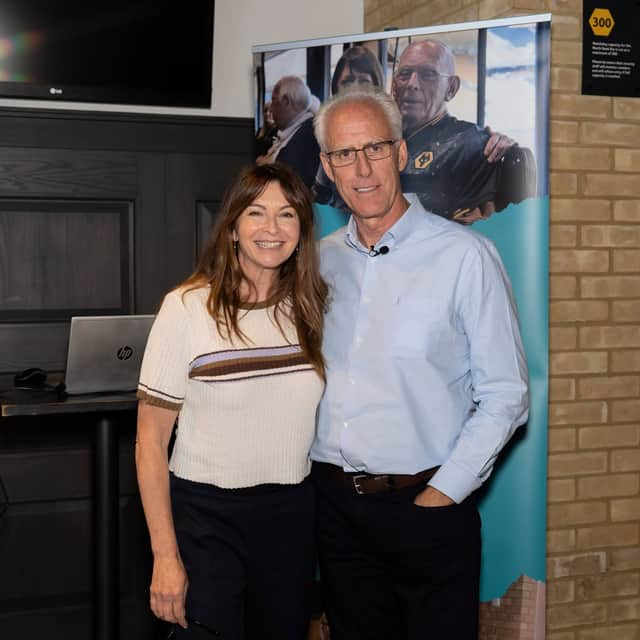
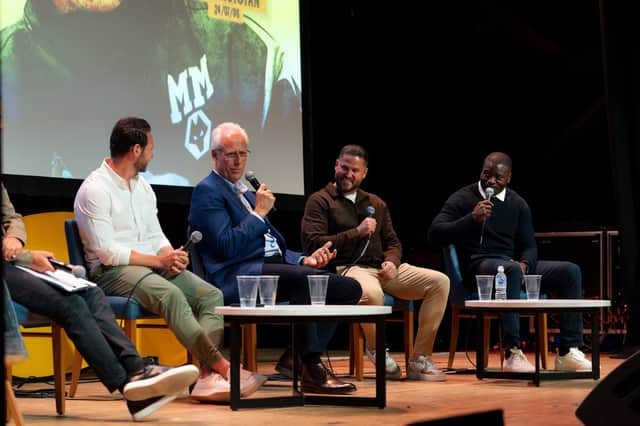
A visit to Wolves Foundation’s Molineux Memories project, delivering a Q&A session with Foundation ambassador Suzi Perry, was followed by an evening’s event at The Halls with Kightly, Elokobi and Jarvis, at which he was left in no uncertain terms how fondly he is remembered by the club’s support.
“As I have said I have always got on really well with Jez, who gave me great support, and Steve as well,” says McCarthy. “I’d go and have dinner with him and he was always completely frank and open, and I’m not shy about saying things so we always knew where we stood.
“He had gone into Wolves and was prepared to put his hand in his pocket and we worked well together and made it to the Premier League where we stayed for two seasons.
“We had football quality and quality people for so long, but in trying to get better and bring in what I thought were better footballers, in some way we weakened the team spirit.
“We ended up with a team that wasn’t as good as what we had before and that ended up with me getting the sack which is what so often happens.
“Like everything, all good things must come to an end and that was such a shame because it was such a great five-and-a-half years.
“I loved my time at Wolves and had such a great time there – everyone at the club worked so well together.
“I’d also like to think I got on well with the fans for the most part, and I certainly get a lovely welcome when I go back, which is always really nice.”
Fans will remember the promotion, the big wins, the straight talking, the 10 changes at Old Trafford, the passion and the lively press conferences.
Staff will remember the feeling of togetherness, the daily handshakes, the effort to get to know everyone whatever their role or rank, the visits out in the local community, and always attending the annual Molineux Christmas parties – in February!
And former Express & Star reporter Douglas, now Northern Football correspondent with the i Paper, will remember that his opening day prediction, of reaching the play-offs, did actually come true.
Maybe MM did stand for Merlin the Magician after all.
Comment Guidelines
Iconic Media encourages reader discussion on our stories. User feedback, insights and back-and-forth exchanges add a rich layer of context to reporting. Please review our Community Guidelines before commenting.