
John Ward: A foot in the camp of both Wolves and Aston Villa
Of the distinguished career enjoyed by John Ward as player, coach, assistant manager and manager, his spells at Wolves and Aston Villa were very much among the highlights.
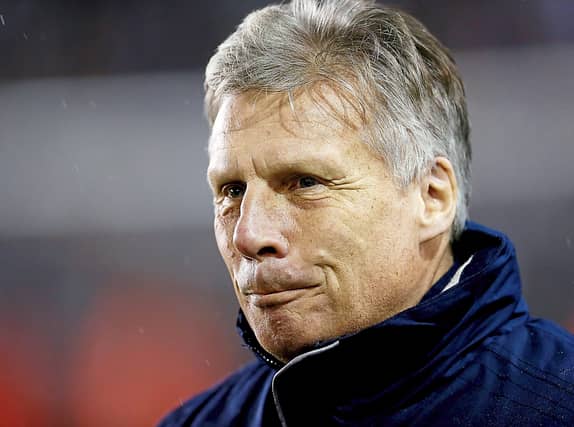

A career which spanned all the divisions, and all those different roles, but one in which his assignments with Saturday’s derby day opponents in the West Midlands were both cherished and enjoyed.
“I obviously have a soft spot for both clubs following my times there with really fond memories,” Ward recalls.
“They have both changed massively over the years but, when you look back, at Villa we were taking part in European competition back then as well and at Wolves I got to work with some great players such as Steve Bull.
“I really respected those opportunities to work at two brilliant clubs which not too many people get the chance to do, and something I look back on and feel very fortunate to have experienced.”
There is that famous quote from the American civil rights activist Maya Angelou that ‘people will forget what you said, people will forget what you did, but people will never forget how you made them feel.’
Ward was always a coach or manager whose style of leadership and one-to-one guidance and support left players with absolutely no doubt how to feel. And, for those players, for the overwhelming majority of the time, it would be a positive experience.
Ward was always a hugely respected figure among players and fellow staff. Those in the dressing room knew what to expect of him. Open, honest, approachable, loyal, but also demanding of high standards and utmost professionalism, to the mutual benefit of everyone.
In the case of the then young Wolves defender Joleon Lescott, himself someone who experienced life at both Molineux and Villa Park, it was a case both of what Ward said, and also how he made him feel.
In an interview with Wolves media team almost 20 years after the event, Lescott recalled his first Wolves goal when, having seen the man he was marking - John Hartson - open the scoring for Wimbledon, levelled with a goal of his own and went over to celebrate in front of fans, pointing to the name on the back of his shirt.
Lescott reflected: “After the game I was ‘talking off’ and our coach John Ward, who was a good guy, said: ‘You don’t need to show them your name, son. They already know that.’
“I was a bit embarrassed, so I never did it again.”
Remembering how it made him feel. Almost two decades later. One of so many stories which people could tell about the enduring influence of John Ward, continuing now with his part in the League Managers’ Association including acting as a mentor – when needed – to managers of the modern day.
“I wasn’t aware that Joleon had said that but it’s really nice to hear, especially from such an honest and straightforward person as he is,” comes the Ward response.
“And what a very good player he was as well.
“I always felt that an important part of being a manager or coach is that you have to be honest with people and tell them what you think, especially in those sorts of situations.
“There are ways to talk to people, and to pass that information on, but you shouldn’t keep things from them.
“In that example with Joleon I am sure it would just have been a case of reminding him that he was doing brilliantly, and that he was a good lad, but just to be careful.
“A reminder that there will be days to follow which wouldn’t have been as good as that one and then there would be people pointing fingers at him instead.
“Joleon is obviously a player who will have taken everything on board from all his managers and coaches and went on to enjoy a brilliant career.”
Much of that leadership and empathy no doubt stemmed from Ward’s own experiences and DNA, but was also influenced by Graham Taylor, with whom he shared so many footballing memories over a considerable length of time.
Ward, while very much his own man, was, by his own admission, both influenced by and indebted to the guidance and counsel of Taylor on so many different occasions during his career.
It all started when as a striker with his hometown club, Lincoln City, for whom he would go on to score 99 goals in 263 games.
Ward arrived late into the professional game, but any sense of trepidation soon disappeared when, on his first day with the Imps, he was shown to his peg in the dressing room, and it was next to Taylor.
“As I look back now, that was one of the biggest things that ever happened to me,” Ward explains.
“I was very nervous on my first day at a professional football club and Graham was the captain of the team, and immediately made me more relaxed.
“’Come on Wardy, let’s get on with it,’ he said. From that moment on, I was Wardy, which was great.
“I could sit and talk to him about anything and everything – he was our captain and leader on the pitch and would go on to have a major influence on my career.”
Taylor had completed his coaching badges by his late twenties, and became Lincoln manager after hanging up his boots, leading the team to the Fourth Division title before moving on to Watford where he took the team from Fourth to First Division in the space of just five years.
He signed Ward as a player for the Hornets, albeit by that stage an experienced striker who was used more as cover, especially given the talent at Taylor’s disposal of the calibre of Luther Blissett and Ross Jenkins, and later, John Barnes.
Indeed, Ward’s perennial status as a first team reserve or substitute led to him earning a new nickname within the Watford dressing room.
“Every Friday the team would go up on the list, one to eleven, and then underneath, it would say: ‘To Travel – Ward’,” he says.
“It quickly became a standing joke that my first name had been changed from John to ‘To Travel’.”
Ward didn’t mind though. He tried to contribute whenever given the opportunity and, perhaps equally as importantly, was learning. Learning all the time from Taylor, safe in the knowledge that he, too, had gained his coaching qualifications fairly early in order to pursue that second career once his playing days came to an end.
Having moved on to Grimsby, and then a short spell back at Lincoln, Ward was then asked by Taylor to become a coach at Vicarage Road, where he would be part of establishing the club in the top division and reaching the FA Cup Final in 1984.
It was to prove the start of nine years working alongside Taylor as coach or assistant manager – Steve Harrison who was later Taylor’s number two at Wolves was also part of the backroom staff – in a spell which Ward very much treasures to this day.
Ward went with Taylor to Aston Villa later as the team won promotion to the top division and then finished second, and would also stay on for a further 18 months under Josef Venglos and Ron Atkinson after Taylor moved on to manage England.
Although the Venglos era wasn’t a particularly successful one at Villa Park, again Ward learned much from his role with a manager who was one of the first from overseas to try his luck in the Premier League, and whom he describes as ‘an absolute gentleman’.
With Taylor in particular, he enjoyed special times. But why was it a partnership that worked so well?
“In a word, I’d say trust,” is Ward’s reply.
“We probably complemented each other in how we did things but that trust is the most important thing.
“When people ask me about the success of those Watford and Villa teams, I can say without any doubt that it was due to the quality of Graham Taylor.
“He helped me a great deal, as he did everyone else, and it was one of those situations where if you worked hard, and gave your best, he was always happy to help you and work with you.
“He brought in so many good and honest hard-working people around him, and that sounds simple, but it makes such a difference.
“He was also great fun socially, which some people find difficult to believe given how intensely he worked, but it’s true.
“And then there was the analysis.
“It’s obviously massive in the game now but back then, Graham was all over it in having someone watching games and reporting back and giving information that helped players to improve.
“He was ahead of his time in that respect.
“I remember when he first got me involved on the coaching side, he took me to his house and went through a load of different information with me over four or five hours.
“It was amazing, I’d never seen anything like it, the amount of information and detail, and the knowledge that he had.
“I knew he was a good manager, but that was where I was able to see how and why, and it was such a positive experience for me that was probably a turning point in my own coaching career.”
Ward had loved working alongside Taylor at Watford and Aston Villa. From sharing a post-match fish and chip supper with rock legend Elton John who was Watford chairman and their families, to sharing a Fiat Panda for all club duties which they decided looked like a washing machine.
But at some point, Ward knew he always wanted to be the main man. To have his name above the door. To be a manager himself.
“Graham would have been surprised if I didn’t want to do that,” says Ward, who believes Taylor helped him land his first opportunity within management by recommending him to York City, whom he set on the road to Third Division promotion in the 1992/93 season, a job finished with play-off success by former Villa midfielder Alan Little, who sadly passed away last month.
Ward had moved on to Bristol Rovers, and then Bristol City whom he guided to promotion into the Championship in 1997/98, finishing as runners-up to Watford, where Taylor had returned for a second spell as manager following his own spell in the Molineux hotseat.
Ward also later guided Cheltenham into League One, with Keith Downing as his assistant, before going on to manage Carlisle, Colchester, Bristol Rovers (again), and a short time in interim charge during a spell coaching at Walsall.
It was in between those various postings that Ward arrived at Molineux, brought in by Colin Lee to assist him when he took over in late 1998, and he remained until the close season which followed the dramatic play-off success in 2003.
During that time, he was both an assistant to Dave Jones and also a coach, working with Terry Connor whom Ward had recommended to Lee having worked with him previously, with all three facing the challenges of a lively dressing room packed with experience, desire, and not being shy in voicing their opinions!
“Colin was going into his first job as manager and to be asked to help him was great as it made me feel there was some respect for what I had been doing previously,” Ward explains.
“I really enjoyed doing that, as Wolves was such a good club with good people.
“There were ups and downs, as there always is, and you can only start 11 players every week so there are always going to be some grumbles.
“But I got to know the players well and just tried to help Colin and Dave along with that.
“There was some real talent in that group over the years, and sometimes they had a lot to say!
“Some of their views were very good and helpful, and at other times it was more a case of ‘just leave that one for now!’
“My job was to try and keep things on an even keel and especially with those that weren’t playing, to make them realise that they would always get their chance.
“That if they were a sub on the bench, they would have the opportunity to come on and do something, or, if they wanted, they could see the manager, although he probably wouldn’t say anything different to me.
“I really enjoyed my time at Wolves along with many excellent moments and top people to work with, including of course promotion to the Premier League.
“There was a lot of pride for everyone involved at that stage, and I still think about the bus trip around the city, which was incredible.”
Ward also enjoyed a caretaker spell in charge between the tenures of Lee and Jones, winning three games out of four, utilising the fact that he was always involved in the day-to-day work on the training ground.
There are, of course, many differences between the roles of assistant and manager, some quite subtle, others more obvious, and Ward is certainly well placed to compare and contrast the two positions.
“Being a manager is obviously very different to being as an assistant,” he replies.
“As an assistant, I always felt my job was to chat to the players if I could see something coming – almost like a ‘don’t let the gaffer see you do that as it could get you into trouble’.
“I would mention things to the manager if I could see challenges ahead, or at other times the manager might ask me to speak to a player to see what was going on.
“The main thing was to always be honest and upfront about it, whether it was talking to the manager or a player, and always letting them know about passing the information on.
“As a manager you are taking the lead and you have to take action in certain situations particularly as there are always so many eyes on you in terms of the rest of the squad.
“And you need to be decisive and make big decisions because otherwise you’re going to get the sack!
“With both jobs though, the main thing is honesty, being able to develop relationships built on trust, and always being open and fair.
“If as a manager I was leaving someone out, I would always try to have a word with that player before revealing the team, to explain what was happening.
“At least that way, whether he agreed with me or not, he felt he had been treated properly and he wouldn’t be kicking off at 11.30am on a Friday and affecting the rest of the group.
“Building those sorts of relationships and dealing with different situations is always a challenge I enjoyed, whatever position I was in.”
And building those relationships wasn’t just work, work, work either. Another trait Ward learnt from Taylor was the benefits that could be gained from meeting up socially and spending time together away from the day-to-day pressures of securing results.
The staff parties he threw during his time at Wolves achieved legendary status, not least as many different rooms contained singing fish models on the wall which would make all sorts of different noises when someone entered!
“I learnt that from Graham, that it was important to try and get together at a social level, to build that sense of team and to make it clear that everyone – whether a player, coach or kitman – was equally important,” he insists.
Whilst Ward, now 73, is enjoying retirement in Tamworth without any direct involvement in coaching or management, all this knowledge and experience isn’t going to waste.
His work with the LMA includes acting as a mentor to six or seven managers, with whom he is in regular touch, is available to offer help and advice when needed, to act as a sounding board which can be particularly invaluable if a boss is more comfortable speaking to someone away from his club.
It’s a knowledge that was also added to when Ward was supporting Taylor during his time in charge of England, sometimes taking different squads including leading an England Under-21 squad on a summer tour.
At whatever level, and with whatever ability and calibre of players he worked with, from the cream of England’s youngsters to the muck and nettles of League Two, Ward always set out with that mantra of being honest and straightforward, and it certainly served him well.
“Wherever you are working you are dealing with human beings who sometimes need help and support and need decisions to be made,” he insists.
“If anyone is asked what I was like as a coach or manager, and they said I was honest and straightforward to work with, then that is how I would like to be remembered.”
Comment Guidelines
Iconic Media encourages reader discussion on our stories. User feedback, insights and back-and-forth exchanges add a rich layer of context to reporting. Please review our Community Guidelines before commenting.