
Jim McCalliog always one for the big occasion
Southampton’s visit to Molineux is quite the game this coming Saturday, with Wolves striving for the three points which they hope can kickstart their season.
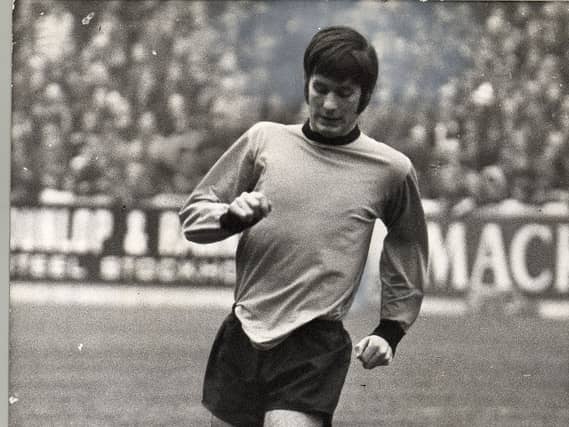

And if either team could roll the clock back, then having Jim McCalliog in the centre of midfield would provide a hugely positive option.
Because McCalliog, who represented both clubs with much distinction, was always a man for the big occasion.
Even the title of his popular autobiography – Wembley Wins, Wembley Woes – is a nod to the sort of footballing showpieces the proud Scotsman graced during his memorable career.
Even when losing an FA Cup Final, he was on the scoresheet. When winning an FA Cup Final, with Southampton, he provided the assist for the game’s defining moment.
At Wolves, he scored in a UEFA Cup Final quarter final at Juventus, and in the final against Tottenham, when he was captaining the team.
On a similar theme, more often than not, he scored when playing against his former clubs.
Pretty much all of them steeped in footballing history when you add Chelsea, Sheffield Wednesday and Manchester United to the illustrious list.
So yes, the greater the occasion, the greater McCalliog’s impact.
And that was a handy trait also noticed by his great footballing hero, Denis Law.
“Denis has always been my hero, and I remember ringing him up to see if he would do the foreword for my book,” McCalliog explains.
“When he said yes, I just burst into tears, and he said, ‘are you o-k Jim?’ I was just so thrilled.
“For so many young players in Scotland, Denis was a hero, because he was everything you wanted in a footballer from the skills, being a good header of the ball and having that feisty edge – he was a class act.
“For me, when you look through my career, I always did well on debuts, and that’s something that Denis also mentioned in interviews, when he talked about me being the most exciting arrival on the scene.
“He said the thing he loved about me was that I always produced a big performance for the big games on the big days.
“And when it comes to scoring against my former clubs, I used to get some proper stick!
“But my reasons for that were always that it was only fair to the clubs I played for to celebrate my goals.
“You watch players now who say they won’t celebrate and that’s up to them and is fair enough – but for me it’s a load of rubbish!
“When a club is paying your wages, you owe it to the club, the supporters and definitely team-mates to do your best and enjoy it if you score and that will always bemy thoughts.” Honest, direct and straight-talking. That’s McCalliog.
There are very few grey areas and that’s exactly how he likes it.
It was a similar focus and single-mindedness which laid the foundations for such a successful life in football, and indeed a second career since in the hospitality sector, running an award-winning bed and breakfast with wife Debbie in the quiet conservation village of Fenwick in Ayrshire.
The ambition was evident from the very start.
“From a young age I loved football, and was totally dedicated to football,” he recalls.
“A lot of my pals were going here, there and everywhere, but I would always be playing football.”
Having featured in a 4-3 win for Scotland Schoolboys against England at Ibrox, McCalliog attracted the attentions of Chelsea boss Tommy Docherty, who visited the family home in Glasgow to make a pitch for his signing.
Despite being honoured to receive such an invitation from a former Scottish international, McCalliog had already given his word to Don Revie that he would join Leeds United. He was flattered to have been courted by both.
Ultimately it was a fairly short stay in Yorkshire and McCalliog left on a point of principle, returning back home where both Docherty – still at Chelsea – and Celtic, were now pushing for his signature.
This time he decided to make the move to London, and it was 60 years ago this month that he notched his first Chelsea goals, as an 18-year-old, a brace in a 6-1away win at Birmingham.
It was from Chelsea that McCalliog moved on to Sheffield Wednesday, for a then British record transfer fee for a teenager of £37,500. Pressure? Not for McCalliog.
“I remember a reporter asking me if I thought it was an awful lot of money and whether I had that fee around my neck,” he responds. “But my answer, in all seriousness and without any complacency and avarice, was this.
“Tommy Docherty was a great international footballer, running a great club in Chelsea, and he wanted top dollar for me, and wouldn’t let me go because he had refused my transfer request twice! “He finally agreed to let me go, and Alan Brown, the Sheffield Wednesday manager, was another very well-respected figure in football.
“If Tommy had pushed the transfer fee up, and Alan had the confidence to pay it to sign me, it only made me feel better about the situation. “It wasn’t a worry, or added pressure, it was a positive, and I just had to enjoy it and carry on playing my football.”
And that’s exactly what McCalliog did. He played his football. In 1966, a great year for English football, he scored in the 2-0 FA Cup semi-final win against Chelsea – a former club – at Villa Park, and also in the early stages of the final against Everton as the Owls moved into a 2-0 lead only to be pegged back to eventually lose 3-2. Everything comes to he who waits, and, a decade later, by now at Southampton, after spells with Wolves and Manchester United, McCalliog was back in the FA Cup Final, against United.
There wasn’t a goal this time, but a pivotal assist, delivering the through ball which was inch perfect for Bobby Stokes to dispatch beyond Alex Stepney for the only goal of the game.
The Saints went marching in and, some 48 years later, only West Ham have matched the achievement of lifting the famous trophy as a team from the Second Division. Not a goal against a former team this time, but an assist, and McCalliog had certainly done his homework.
“Being back in the FA Cup Final with Southampton ten years after missing out with Sheffield Wednesday was incredible, and, having only left Manchester United 18months or so earlier, I knew a lot about their team,” he explains. “I remember telling our manager a few ways I thought we could capitalise against them, and the goal was a prime example.
“What United used to do, whether they were attacking or defending, was to move out and play offside quite a lot. “Micky Channon had laid the ball off to me and, weighing the situation up, and knowing that United would be coming out, I lifted the ball into the inside left position.
“Bobby Stokes ran onto it and hit it quickly which caught out Alex Stepney – it was a lovely strike from wee Bobby and that’s what won the cup.”
Incredibly, those two major cup final contributions, a goal and an assist a decade apart, weren’t the only occasions in which McCalliog lit up the national stadium.
In April 1967, he notched what would prove to be the decisive goal past Gordon Banks as Scotland ended World Cup winners England’s 19-game unbeaten run, with a 3-2 victory in the Home Championship, in front of a Wembley crowd of 99, 063.
It was a dramatic finish to the game, with four goals in the last 11 minutes, and many of England’s World Cup heroes were in the team that day as well as Banks – Bobby Moore, Jack and Bobby Charlton, Geoff Hurst and Martin Peters among them.
“That was such a magic moment, and I can still remember now running to the left of the goal at the tunnel end to celebrate because I knew my Dad was up there in the crowd, even though I had no clue where! “And then when I turned around, who was the first person there to embrace me? Myhero, Denis Law.
“I know there is a massive footballing rivalry between Scotland and England, but, for me, I was glad that England won the World Cup. “Maybe I was one of the few Scotsmen who thought that way, but, as a young player at the time, I just felt it would be good for the game, which it was.
“From a young age I had always decided that I wanted to play in England if I got the chance, and all those England players that won the tournament, I had played against most of them.
“Going up against them at Wembley that day and getting a goal just gave me added motivation that this was the level I wanted to be at – it was fantastic.” In between all of those numerous achievements came the Wolves years.
Which, for McCalliog, will always be remembered as a very special time. He spent five years at Molineux, making 210 appearances and scoring 48 goals, and made sure he ingrained himself into the community as much as possible.
Having a friend who ran a Sunday League team for the Three Tuns, McCalliog took training on Tuesday and Thursday nights, and, with his parents moving to Wolverhampton, opened a garage on the Penn Road which was run by his father, a motor mechanic.
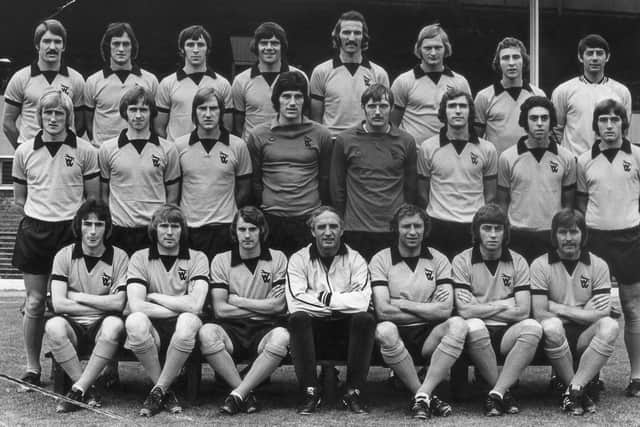
On the pitch, there were plenty of highlights under boss Bill McGarry, most notably that run to the final of the UEFA Cup in the 1971/72 season, where McCalliog was captain in the absence of the injured Mike Bailey from the quarter finals onwards, scoring in those games at Juventus and the second leg of the final against Spurs where Wolves were edged out after two tight contests.
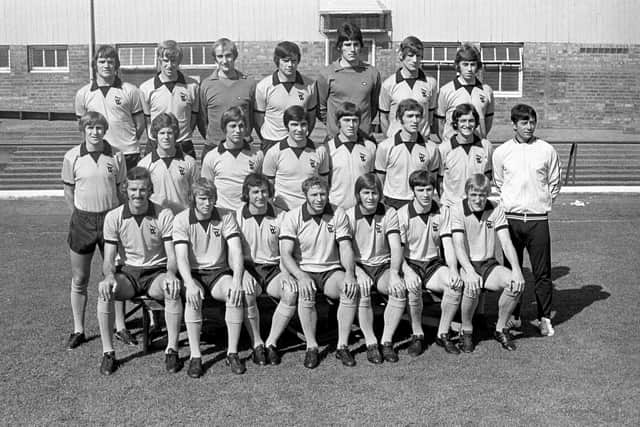
There were also runs to the semi-finals of both the FA and League Cups in 1972/73,the Texaco Cup triumph of 1970/71, and the League Cup success of 1974, although by that point McCalliog’s Wolves race was run.
More on that shortly! And that’s even without the fond memories of his team-mates, of playing alongside the likes of Bailey and – all too briefly - Peter Knowles, and so many special games, including being among the scorers in a 5-1 thumping of double winners Arsenal, at Molineux in late 1971.
“I love being at Wolves and was always really settled there,” McCalliog explains.
“I bought a house, my parents lived in the town, and there were so many lovely people who made me feel so welcome.
“We had such a great team as well, and swear to goodness, we were afraid of nobody. “We played attacking football, none of this getting nine or ten men behind the ball, we attacked. “As soon as we had the ball the opposition defence had to wake up, because Phil Parkes would throw it out to Waggy (Dave Wagstaffe) and within a few seconds we’d be at the other end of the pitch. “Bill McGarry was a good footballer, an England international, and he knew the game.
“He hadn’t the greatest personality but that’s one of those things – he was fantastic for Wolves and built a great team. “That game when we absolutely ‘gubbed’ Arsenal who were the reigning double holders just showed what we could do, and what people sometimes forget is that the year before that great UEFA Cup run, we had played in the Anglo-Italian Cup and gone away and beaten teams like Fiorentina and Lazio. “So, we’d got that European experience, and McGarry, to his credit, never changed our style of play which was so effective.
“For a lot of those UEFA Cup ties we had the away leg first, so we’d go and get a result and then come back to Molineux, with our fans so close to the pitch creating an incredible atmosphere. “We were following in that great tradition of Wolves starting off all those European nights with the floodlit friendlies of the Fifties, and I was so thrilled to be a player ,never mind the captain.”
Sadly however, McCalliog’s time at Wolves was to come to a quickfire and unsatisfactory end. Dropped by McGarry for a game at Everton, without any prior warning or explanation, the two never really spoke again, and although he came back for a couple of further appearances, a goalless draw at Manchester United just over a week before the League Cup Final of 1974 proved McCalliog’s last stand, before moving to Old Trafford on transfer deadline day.
“We were in the hotel for our pre-match meal and Bill McGarry read the team out and wasn’t in it,” McCalliog recalls. “I had never been dropped before, but it was also the way it was done. I had no reason to think it was coming and I was sat there fuming but, out of respect to the players, didn’t kick up a fuss.
“And we never spoke again! “At first, I wanted to go in and demand an explanation but, in the end, I decided it was his decision, and not my problem, and that he would tell me if he wanted to. “I would walk past him, and he would walk past me, and we never spoke, which was very sad really.
“There was no way I was ever going to get picked for the League Cup final, but I went down to support the lads without any bitterness and was absolutely thrilled that they beat Manchester City. “My time was up, and I nearly moved to Aston Villa before going to Manchester United, and yet even with how disappointed I was with how it ended, I will only ever have such fond memories of my time at Wolves.”
After United and that cup success with Southampton, McCalliog had spells in America and Norway, and as a player coach with Lincoln and player manager with Runcorn. But, after mulling over a potential career in management, he ultimately decided to move in a different direction.
He spent two happy years working for the PFA’s Football in the Community programme before heading into the hospitality industry, initially as a publican in Yorkshire and Fenwick before, in 2007, setting up Langside Bed & Breakfast with Debbie.
Seventeen years later they are still going strong, with regular rave reviews and repeat guests, as well as winning Channel 4’s ‘Four in a Bed’ competition, which pitted bed and breakfast owners up against each other, as well as being named in the top ten per cent of hotels in the world. On top of that, he penned his autobiography, which also involved plenty of enjoyable times travelling around his former clubs.
Life, for McCalliog, has never been quiet. “We both totally love running the bed and breakfast, and get a lot of Wolves and Southampton fans and football fans in general who come up and stay,” he reveals. “It’s great to meet new people and have different conversations and learn about different cultures, and they end up not just as guests, but become friends.
“As regards the book, there were different journalists connected with the clubs I had played for who had asked if I would tell my story, but I was never really ready. “Then when Covid came, we had to close down for 18 months, and so, for a couple of hours a day, I took myself off to my snug with a pen and paper and started writing.
“As a young kid at Leeds, when I met up with Don Revie, he told my mum that his mum had kept scrapbooks of all the cuttings from his playing days, and so my mum ended up doing the same with mine!
“That gave me a great reference point, and I had some help from a couple of journalists David Instone and Alex Gordon, and I loved it!” It is certainly quite a story with so much achieved amid the usual ups and downs of life in professional football. And for ‘Jimmy Mac,’ – as per the Martha Reeves and the Vendettas classic – which was regularly reprised by the North Bank, a reminder, of just how far he progressed.
“I was just a young lad from the Gorbals in Glasgow who wanted to play football, and could never have imagined the career that I had.” Jim McCalliog’s autobiography – Wembley Wins, Wembley Woes – is still available by visiting this website, https://legendsof-football.com
Comment Guidelines
Iconic Media encourages reader discussion on our stories. User feedback, insights and back-and-forth exchanges add a rich layer of context to reporting. Please review our Community Guidelines before commenting.