
Arsenal has never been a happy Wolves hunting ground - except for the Molineux class of 1979
It doesn’t get any easier for Wolves’ ambitions to get off the mark this season – with a Saturday night trip to Premier League leaders Arsenal.
It’s not been a happy hunting ground over the last half a century, with some notable exceptions. Paul Berry looks back, with the help of a couple of club legends.
It’s just over five years since the surreal and nearly horrific night at the Emirates Stadium when Raul Jimenez suffered a sickening injury after a clash of heads with David Luiz.
Time seemed to stand still as Wolves’ Mexican frontman was knocked unconscious and, in the concerned and almost distressed silence of a Covid-affected fixture played without supporters, was treated on the pitch for ten minutes before being whisked off to hospital.
Thankfully Jimenez went on to make a full recovery, returning to score goals for Wolves, Mexico and now Fulham, still going strong in the Premier League at the age of 34.
Somehow the Wolves team that November night overcame the trauma of what happened to their hugely popular talisman to win the game 2-1, thanks to goals from Pedro Neto and Daniel Podence.
That took the team into seventh in the table, with five wins from their first ten, whilst Arsenal sat 14th, speculation growing over Mikel Arteta’s future after just a year at the helm. It was their worst start to a season since 1981. And one of Wolves’ best. How times have changed. Arsenal now sit astride the summit of the Premier League table, with Wolves propping things up at the bottom.
That eerie November night provided a rare win for Wolves in the red and white corner of North London. Their only one of the last 16, a run which also featured four draws and 11 defeats.
To be fair, Wolves run at Molineux hasn’t been much better, a Mel Eves winner in 1978 the prelude to a sequence of 10 winless fixtures on home soil, of which only one was drawn, until a 3-1 success in 2019.
“I remember meeting Joao Moutinho after that game as Wolves had finally won again at Molineux – what a lovely guy,” Eves recalled this week.
Back then to life on the road. And Wolves’ trips to Arsenal.
Given that the win five years ago came during footballing lockdown, it remains a very long time since Wolves downed the Gunners away from home in front of any supporters.
Forty-six years to be precise.
But if the current Wolves crop need any inspiration to try and produce a seismic shock at the Emirates on Saturday evening, then maybe it can be found in the class of ‘79.
Wolves had won once at Arsenal in the decade up until 1979, in one of just five third place play-offs for the FA Cup, a fixture at Highbury at the start of the 1973/74 season after both had been beaten in the semi-finals of the competition the previous campaign.
That was a game which provided a debut for a certain young full back by the name of Geoff Palmer, who would later become one of the gang of four – along with John Richards, Kenny Hibbitt and Derek Parkin – to win both the 1974 and 1980 League Cup finals with Wolves.
“I’ve still got the little tankard we received for winning that play-off,” Richards recalls.
But sitting around a table at Oxley Park Golf Club, it is clear that as good as that Wolves team was in the 1970s, they knew Arsenal - who won the league and cup double at the decade’s start - were always such a strong force in opposition.
“They were one of the big teams of that period with some fantastic players,” Richards explains.
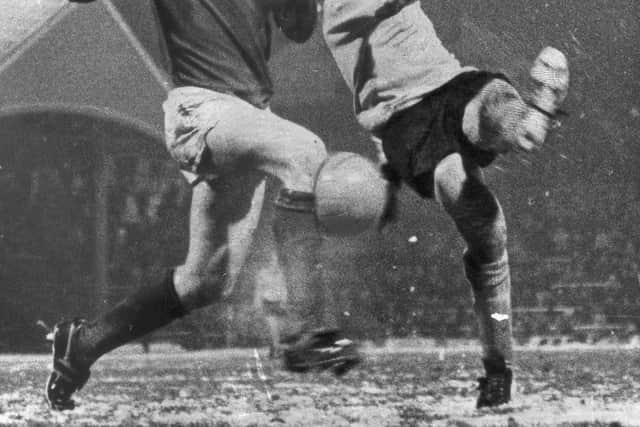

“Players such as Peter Storey, Liam Brady, Pat Jennings in goal – they were such a strong outfit especially in the cup competitions.”
“Arsenal were one of the best sides around at the time,” added Hibbitt.
“To be honest, they were a pain in the butt, just like Tottenham, for some of the results we had against them.
“We had some great games against them and they were a very good team, just like us, so there was a lot of mutual respect there.
“When you look back and analyse their team throughout that period it was always very strong.”
On then, to the games in question in the last year when Wolves won at Arsenal in front of a crowd.
In the February of ’79, Wolves won 1-0 thanks to a goal from Richards. Five weeks later they were beaten 2-0 in the semi-final of the FA Cup at Villa Park. And then, in the September, goals from Hibbitt and Andy Gray (2) secured a dramatic 3-2 victory.
For Richards, that winner, set up by captain Hibbitt, came in his first game in five months after a third operation on a troublesome knee. For Wolves, it arrived after many fixtures had been postponed due to the big freeze of that Winter, including several potential dates of an FA Cup fourth round replay against Newcastle which finally got played 48 hours before heading to North London.
In the Express & Star at the time, Richards admitted his headed winner was, psychologically, one of the most important goals he had scored given his lengthy absence.
“It was a cruclal game and one I shall always remember, particularly as we went to Highbury as underdogs,” he said after the game.
“I think Arsenal underestimated us from a playing point of view, and from the fact we are more confident now than we have been all season.”
All these years on, the memories have understandably faded, but the significance has not.
“I can’t remember much of the specifics of those games but I do remember how we beat them twice either side of that cup semi-final, which was an extremely disappointing afternoon,” says Richards.
“Scoring that winner past Pat Jennings was definitely memorable mind you, as he was one of the best goalkeepers around at the time.”
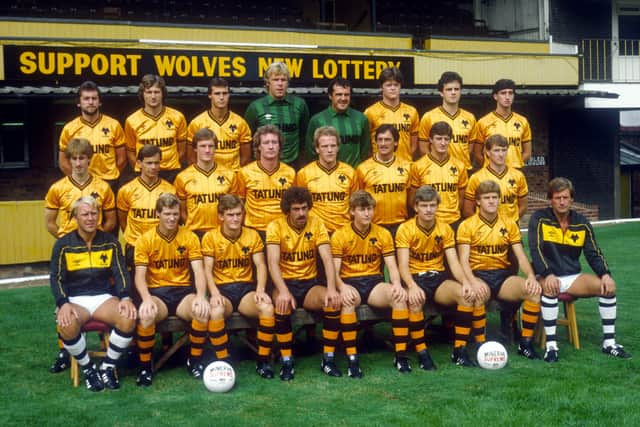
That win in the February, securing a league double thanks to the Eves’ winner earlier in the season, saw Wolves into 18th in the first division table at a time when Arsenal were in second.
But then came the cup semi-final little over a month later. Just 90 minutes away from heading to Wembley. Incredibly, one of seven semi-finals Wolves played in FA and League Cups in a span of eight years. Unfortunately, it proved one of the four which they lost, as goals from Frank Stapleton and Wolves’ old boy Alan Sunderland fired the Gunners to a 2-0 win.
“That game was a disaster,” is the Richards verdict. “One of those games where it just didn’t work and we didn’t perform at all.
“We came off so disappointed not just because we had lost, but because of putting in that sort of performance in such a big game.
“We had all been so motivated and excited about the opportunity of reaching an FA Cup final, but it turned into a non-event.
“I can remember when we got back, we all went to Romagna’s, the Italian restaurant that was there in Tettenhall, with our wives.
“We were so disappointed and needed to go out and have a few drinks to get it all out of our system.”
“We never played that day,” echoed Hibbitt.
“I didn’t think I did that well but got Wolves Man of the Match in the Sunday papers – and that tells you all you need to know!”
Writing in the Express & Star, Wolves correspondent John Dee described how Wolves ‘froze’ on the day, with Richards and strike partner Billy Rafferty enduring ‘one of the most barren afternoons they are likely to experience.’
“They have got to get over the disappointment,” boss John Barnwell said at the time.
“If you don’t learn from defeats then you are a fool.”
Wolves did hit back quickly, three days later coming from behind to defeat Spurs 3-2 in the league, goals from Hibbitt, Richards and Steve Daley effectively securing topflight status for another season.
And boy, that topflight status came up trumps. The following 1979/80 season saw Wolves clinch their most recent major trophy, the League Cup, and a sixth place finish in the league which they haven’t managed to surpass since.
Part of that was thanks to a flying start, with the 3-2 win at Arsenal the fifth of seventh victories with which Wolves kicked off the season.
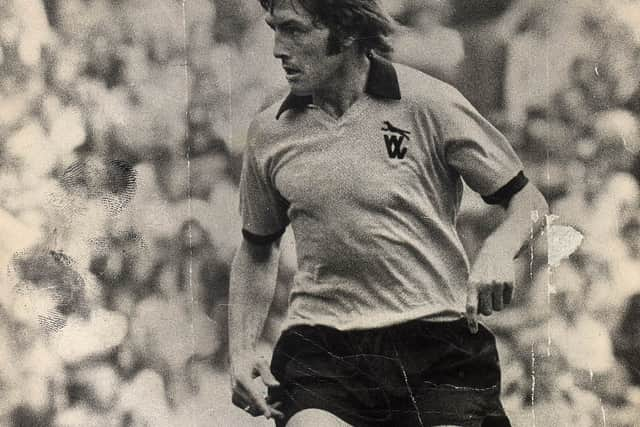
It was also Wolves’ fifth successive win in the capital, following on from the triumph at Highbury the previous season and including wins at Crystal Palace (in the FA and League Cups) and Chelsea.
Hibbitt broke the deadlock in the 19th minute before Gray, just over a month into his Molineux career after moving for a British record transfer fee, notched his third for the club. Gray was also on target in the second half, either side of goals from Stapleton and John Hollins, as Wolves ran out winners by the odd goal to complete a memorable calendar year double at Highbury.
“It’s a good job Gray and Richards are only supposed to be half-fit,” lamented Arsenal boss Terry Neil.
“I shudder to think what they will do when they are 100 percent. They will be magnificent.”
Prior to the game, Barnwell had spoken of trips to Arsenal and then European Cup holders Nottingham Forest as crucial in deciding the extent of Wolves’ ambitions that season. Ultimately, they lost at the City Ground the following weekend, also 3-2, but overcame the continent’s champions when it perhaps mattered more, Gray’s goal clinching the League Cup final at Wembley the following March.
“We knew at that time we could beat anyone on our day,” adds Hibbitt.
“We had a good squad of players, we all got on really well, and we were confident.
“It was great for me when I first came in as a young player, alongside the likes of Derek Dougan, Mike Bailey, Frank Munro and Waggy (Dave Wagstaffe).
“I was very fortunate to learn from so many of those great players.
“When you think about it, with those semi-finals that we lost, and the final of the UEFA Cup, we could have won so much in those years.
“The Seventies was such a great period for me, with my career taking off, and for Wolves as well.”
Talking of ‘taking off’, there was one notable moment during that 3-2 win against Arsenal which caught the attention when the players changed their shirts at half time.
Diving into the pile of shirts on the table, centre backs Emlyn Hughes and George Berry both pulled out a number six to wear for the second half, when Hughes should have continued to wear five.
An issue then spotted by the referee, Hughes was sent back to the dressing room to grab the correct number for the second period. Not so much the current craze of ‘6-7’, but a mistake around ‘6-5.’ It was swiftly rectified.
Bringing it back to the current, what then are the chances for the current crop to become the first Wolves team to win in front of a crowd at Arsenal since 1979?
It’s the tallest of tall orders, but Hibbitt, for one, is hoping for an upset.
“Arsenal are, once again, a fantastic team, and we’ll have to defend really well and when we get the ball try and keep it as long as we can,” he says.
“I hope the manager Rob Edwards does well, he did a great job at Luton and then took Middlesbrough into the top three of the Championship.
“He used to play for us, he’s one of us, and knows how the club works and what the fans want.
“It’s a massive task to get something from Arsenal, but anything can happen in football.”
Just as it did, twice, back in 1979.