
When Derek 'Dodger' Ryan was the Wolves’ TV star
Of all the weird, wild and not so wonderful events to have afflicted Wolves in the early to mid 1980s, having a TV crew sat on the bench next to a wide-eyed apprentice preparing to make his first team debut, has got to be right up there.
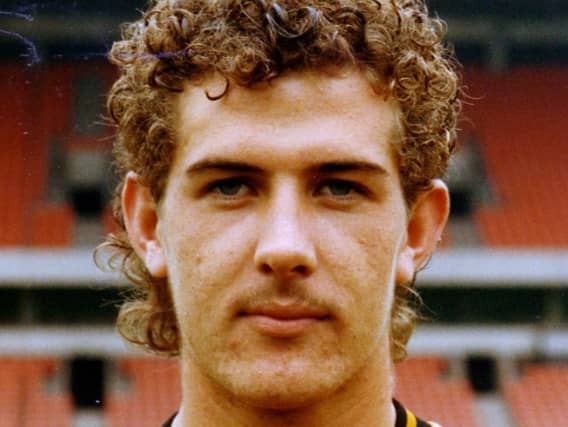

That’s the fate which befell then 17-year-old Dubliner Derek Ryan, ‘Dodger’ to his mates, as he made his treasured Molineux bow against Sheffield United.
It is 40 years this week since Wolves welcomed the Blades on the opening day of 1984/85, a first game at the helm for new boss Tommy Docherty.
Ever the maverick, even as he approached the end of his career, the former Scottish international player, and Chelsea, Aston Villa and Manchester United manager, had agreed to a request from BBC Manchester to grant exclusive behind-the-scenes access to Wolves’ youth team squad.
And in particular, to Ryan, over from Ireland to pursue his footballing dream, and Steve Blackwell, a Wolverhampton-born striker also looking to make his name, to see if either, or both, would progress to the professional ranks.
It was Ryan who made it onto the bench as the only substitute for the seasonal Second Division curtain-raiser. Accompanied by reporter and cameraman.
Imagine how much broadcasters would pay for such access today!
“Forty years – wow – I’d never have thought it had been that long,” Ryan, now 57, reflected this week.
“I wouldn’t say we were approached about doing the programme - we were told - although had we not wanted to do it, I am sure it would have been fine.
“Tommy Doc had come in and the profile of the club was raised because of him, and that’s why the documentary was done.
“I remember we were told what was going to happen both as a group, and individually, with myself and Steve becoming the focus in terms of being the two who would meet the Doc to find out about our contracts at the end.
“And we were both offered deals as it turned out.
“At that age, it was a nice bit of fun, there was a novelty around the place, and we had a really good group of around 14 lads at youth team level.
“They were happy days I have to say.”
Happy days indeed. A total of 40 Wolves appearances for the young and ambitious forward, which featured five goals.
Converted initially from a striker to a right winger, and then back to a striker, Ryan’s spell at Wolves followed the typical rollercoaster ride of anyone connected with the club during those turbulent times.
For him though, it was all positive. It was exciting. This was the sort of opportunity he grew up dreaming of. And then it became a reality.
As a youngster he played for St Kevin’s, his local team in Dublin, from Under-14 level, and soon started to impress.
Wolves had an excellent scout operating in the area, Eddie Corcoran, who would later spot the talents of Robbie Keane, and Ryan’s direct running and ability on the ball caught his eye.
After travelling over for several trials during the school holidays, in January 1983, Ryan put pen to paper on a two-year YTS apprenticeship.
The adventure had begun.
“Since I was knee high to a grasshopper, I just wanted to play football,” Ryan explains.
“So, to move over from Ireland to England was a natural progression, it wasn’t a huge thing.
“If you wanted to become a professional footballer, you had to leave home.
“It was strange that in the first year I didn’t feel homesick at all, but in the second I did, maybe because things weren’t going so well.
“But I was always settled in Wolverhampton, I was in digs with a couple who looked after me really well, who made it home from home, and that’s why I was able to do so well in my second pre-season ahead of getting my debut.”
There were none of Ryan’s family or friends at Molineux on that breakthrough afternoon four decades ago. The decision to include him as substitute came too late to be able to sort any travel arrangements.
He did, however, have plenty of company in what accounted for a dugout at a decaying Molineux back in those days. Docherty on his one side, and the BBC reporter on the other.
“It was obviously a big day but I have to say, I don’t remember too much about it,” Ryan recalls.
“But because of the programme, I can obviously see that I had the camera there in my face, and Tommy Doc was talking to me about different things going on during the game.
“I’d had a good pre-season, he’d moved me from striker to the right hand side and I’d been flying, scoring a few goals.
“And I remember there being a really lively atmosphere at Molineux that day, Tim Flowers was also making his debut in goal, and I got on for the last 20 minutes or so at the end.
“It’s obviously a good memory, but one I think I can recall mainly because it’s all still there on the programme rather than from my actual memories!”
What Ryan can remember more clearly is his first goal, which came at the opposite end of the campaign, and what ultimately proved the decisive strike in a 2-1 win against Huddersfield on May Bank Holiday Monday, the final home game of the season.
Still only 18 at the time, his breakthrough was perhaps also the result of the efforts of Frank Upton, such a highly-rated coach among apprentices of that era, although one who eventually lost his job not long after Docherty took the helm.
“Frank was always hard on us at times, but he was also fair,” is Ryan’s verdict.
“Some of it was an act I think, making sure we knew our place, in the sense that we were 16 and 17-year-old kids who had the world at our feet and probably thought we were going to be superstars.
“Frank knew only too well that there was actually a big, wide world out there that the majority of us were going to end up in.
“He was just making sure we were aware of that and how lucky we were to have the opportunity to be a footballer.
“And that first goal is a really good memory for me.
“I remember it being a Bank Holiday Monday, and I came off the bench, I think at half time.
“I had John Humphrey playing behind me at right back, which I always really enjoyed because he was such a good player, and while unfortunately we were well on the way down at that point, scoring my first goal was still special.”
The documentary which featured Ryan and Blackwell, entitled ‘Moment of Truth, showed the life and times of those young lads aspiring to become professionals, from carrying out all their daily chores in the dark and dingy stadium corridors, to training at Castlecroft and other venues and travelling to a reserve game on a midweek night at Scunthorpe and promptly getting beat 6-2.
The complete chaos that was about to envelop the club, which had already nearly gone out of business in 1982 and would go close again in 1986, wasn’t completely there for all to see, and Ryan admits, that even as the team suffered their second of what would prove three successive relegations, the more youthful element were blissfully unaware of the club’s downward trajectory.
“For those of us young lads at the time, I don’t think we had any real idea of the chaos that was going on in the background,” he says.
“We were all living our life to a certain degree, just concentrating on trying to get into the first team squad, and all the stuff with the ownership and the financial problems weren’t really a part of our day.
“It might have been different for some of the older lads who came in, like Andy King and Tommy Langley, or Geoff Palmer who was still there – with their experience and knowledge of the game they could probably sense the issues the club were facing.
“It was only when I looked back later and read all the articles that I realised how many problems there actually were.
“I suppose the only thing that should have given it all away was the turnover of managers at the time.
“I was there for four-and-a-half years and must have had about seven managers which was ridiculous – even some of the more chaotic clubs in the modern game don’t reach those sort of numbers.
“In that sense, I probably should have realised that things weren’t looking great.”
Of those managers, Ryan flourished most under Docherty, and then the short-lived return of former League Cup winning boss, Bill McGarry.
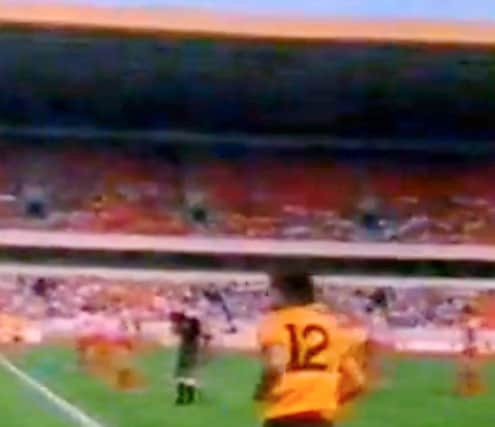
Under McGarry, he reverted back inside from the wing to ‘number nine’, enjoyed another consistent run in the team, and went on to enjoy his finest Wolves hour.
It was a Wednesday night in late October of 1985 when Wolves travelled to face Reading in the old Division Three as a crowd of 11, 500 – the second largest Ryan and company played in front of that season – packed into Elm Park with the Royals on the brink of making history.
They had won their first 13 league games of the campaign, putting them 14 points clear at the top of the table, whilst Wolves were a miserable second bottom, having won two, drawn two and lost nine of their baker’s dozen.
One more win would equal the English record of consecutive victories, but Wolves were ready, despite all their problems, to spoil the party.
Ryan opened the scoring in the fifth minute, Trevor Senior and Kevin Bremner struck in quick succession around the hour mark to put Reading in front, before, in the closing stages, Ryan broke away again to fire past keeper Gary Westwood to secure a draw.
“That was such a great night,” he recalls.
“I don’t think anyone expected anything from us, but we went down there, I couldn’t do anything wrong, and scored two goals.
“Bill was an experienced manager who obviously really knew his stuff, and I benefitted from my time playing under him, but unfortunately, he didn’t hang around too long.
“After he left, I probably never really reached the heights that I had done with him and Tommy, and that Reading game would prove the highlight of my entire time at Wolves.”
Under Sammy Chapman and then Graham Turner, Ryan’s form dipped, although he was still keeping his place in the team due to the threadbare squad, ultimately to his detriment.
And when Turner’s arrival preceded the acquisition of a certain Stephen George Bull, it’s fair to say the affable Irishman was well aware his days were numbered.
“I hadn’t been playing well, but it was a numbers game at that stage because there were so few first team players or players capable of playing at that level,” says Ryan.
“Then Graham came in, and not long after that he brought Bully as his number nine, and the rest is history.
“I would have loved to have played on the right wing with Bully up front, but I never really had a shot at it, and that’s football, it happens.
“Managers come in and have certain ideas on players and who they want to bring in, and I just wasn’t part of his plans.
“For the next six or seven months it was just a case of winding down my contract before I ended up being released the following summer.”
Among Ryan’s final appearances were coming off the bench in the infamous FA Cup second replay defeat at Chorley, and in the league game against Wrexham when Bull made his debut.
But, as the spectacular Wolves revival started to gather momentum, Ryan’s Molineux journey had reached its final destination.
After being released, he would never play top level football again, albeit more through choice than opportunity.
He headed out to spend 18 months in Australia with several friends from back home, working in a sports shop and training three times a week whilst turning out for a local team from Sydney in the New South Wales League.
“It was a non-league set-up but I didn’t go to Australia for the football – I went for the experience – and had an absolutely great time,” he reflects.
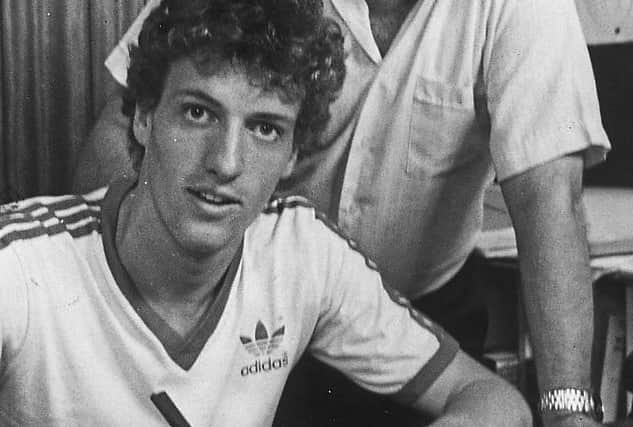
From there Ryan returned home to Ireland, and started working in the post room of the major health company – VHI Healthcare - where he now remains, delivering IT services, three decades or so later.
He needed to go ‘back to school’ to progress to his current role, studying at college in the evenings for the Leaving Certificate, the Irish equivalent of A-levels, which he had missed out on by leaving school early to cross the sea to join Wolves.
And once he’d got that qualification he carried on, spending many more years at ‘night school’, or college, to complete a degree.
Football then became more of a hobby, featuring in the Leinster Senior League, the Irish version of non-league, below the League of Ireland.
His professional football career was effectively over by the age of 23, but he looks back only with fondness. Any regrets? Well, maybe just one.
“I sometimes think about whether I tried hard enough to stay in the game and go to another club after leaving Wolves,” he explains.
“I had a couple of offers, including one from the former Ireland international Jimmy Holmes, who was managing Nuneaton Borough, but it was part-time in non-league, so I didn’t really want to do that.
“Believe it or not I also had a chat with Harry Redknapp, who was managing Bournemouth who Wolves had played against and he had asked Graham what the situation was with me and whether I’d be interested in a loan.
“I didn’t find that out until a few months later and I did call and have a conversation with Harry, but nothing came of it.
“It was a lot different back then, nowadays even lads of 16 and 17 have agents and with the internet it’s far easier to get your profile out there.
“I sometimes wonder if I should have done more but it’s easy to look back, isn’t it?”
Ryan was christened ‘Dodger’ by Upton after just a couple of days of reneging on the jobs and chores that apprentices needed to carry out in those very different days, and it stuck to the extent that some of his friends back home still use the nickname even now.
His time with Wolves has also gained more respect and appreciation given how well the team has been doing in the recent Premier League era, certainly chalk and cheese from when he and Blackwell – who went on to make one appearance for the first team after also turning pro - were the starry-eyed stars of small screen.
“I do remember a couple of the local lads at Wolves who said all they wanted to do was play one game in the first team, just to say they had played for Wolves,” Ryan explains.
“It was probably different for me going across from Ireland and I only realised later on how much of a big deal it all was.
“I’m a big Gaelic Football fan, and when I go and watch Dublin play, I understand the feeling of what it must be like to represent your county in front of so many people – I’d have loved it!
“And I loved my experiences at Wolves, especially the first three-and-a-half years when things generally went well for me, even if it was up and down for the team.
“It’s crazy to think it was 40 years ago that game against Sheffield United when I was stuck right in the middle of it all – a fair bit has changed since then!”
Comment Guidelines
Iconic Media encourages reader discussion on our stories. User feedback, insights and back-and-forth exchanges add a rich layer of context to reporting. Please review our Community Guidelines before commenting.