
Matt Maher: Welsh Cup wonders remembered
Ever heard about the football team from the Black Country which nearly won the Welsh Cup with a Worcestershire cricket hero in central defence?
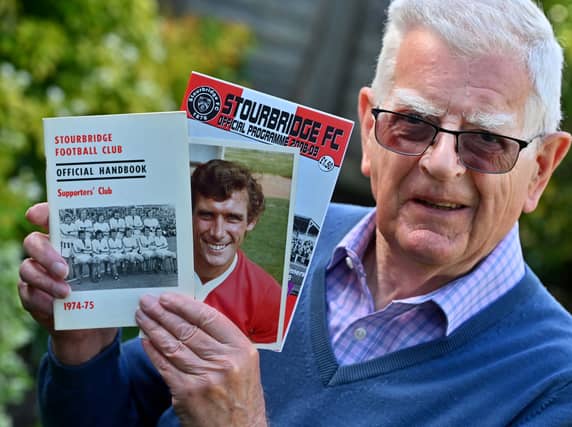


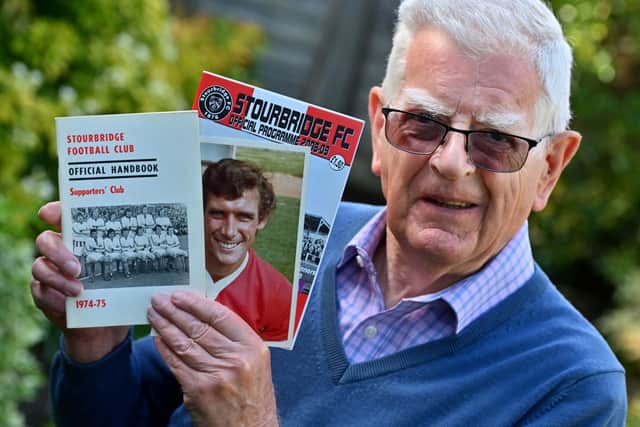
They certainly have at Stourbridge, where tomorrow they will mark the 50th anniversary of a season which put the club on the footballing map.
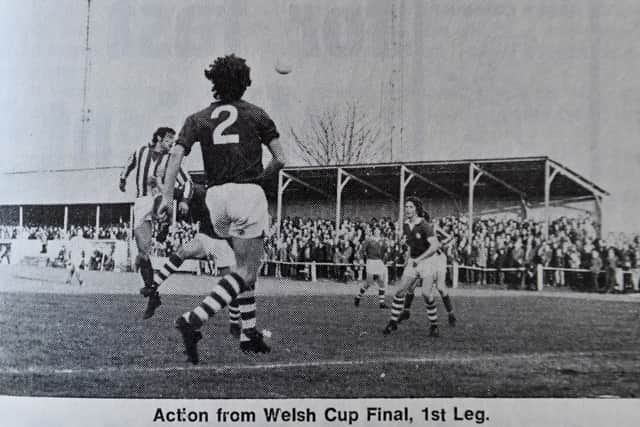
The Glassboys, then playing in Division One of the Southern League, stunned both Swansea City and Wrexham en route to a two-legged final with Cardiff City, when nearly 6,000 supporters crammed into the War Memorial Ground.
“It was just a wonderful time,” says Hugh Clark, now club president but then treasurer. “One football magazine labelled us the top giant-killers in the country that year.”
“It is ridiculous to think it was 50 years ago,” adds defender Paul Pridgeon. “It only seems like yesterday we were playing the games.”
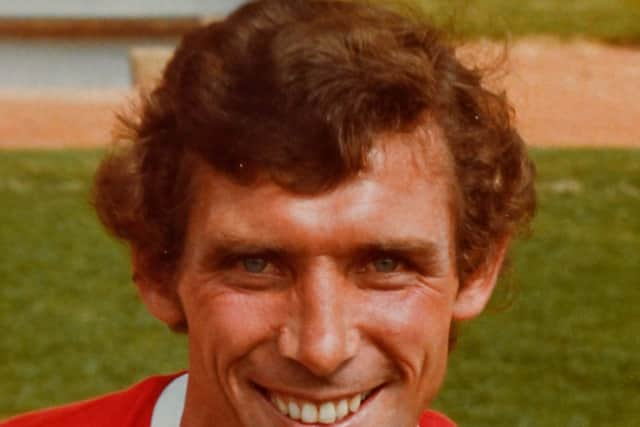
Pridgeon’s name may be familiar to followers of cricket, the sport with which he is more commonly associated. A right-arm seam bowler, he took more than 800 wickets in a career which spanned more than two decades and included 240 first-class appearances for the Pears. More recently, he has served on the club’s board and for many years was cricket professional at Shrewsbury School.
Yet in his playing days he also briefly signed as a professional footballer for Hereford United after five seasons with Stourbridge, which included the famous 1973/74 campaign.
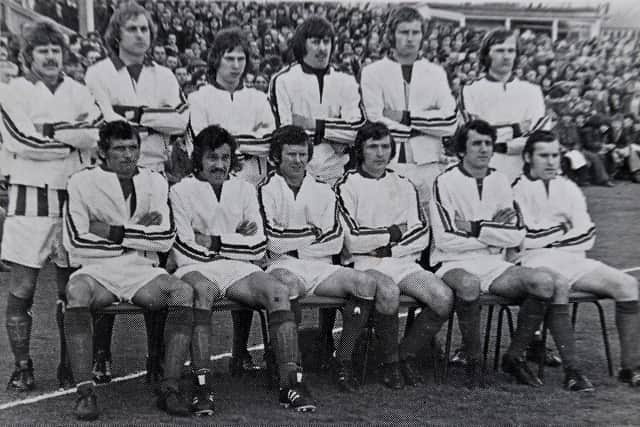
Neither is Pridgeon the only recognisable name in the Glassboys line-up. Forward duo Chic Bates and Ray Haywood scored 50 goals each and were sold to Shrewsbury Town at the end of the season. Bates would go on to manage the Shropshire club and was inducted to their Hall of Fame in 2013.
“It was simple, really. We just had a really good team,” says wing-back Bob Taylor.
Obviously, the first question anyone under the age of 40 would ask is what an English club was doing playing in the Welsh Cup in the first place?
The answer is English clubs within a reasonable distance of the border were involved in the competition every year from its inception in 1876, until as recently as the mid-1990s when the rules were changed.
Shrewsbury, with six wins, are the cup’s most successful non-Welsh side, while Kidderminster Harriers were twice beaten finalists and Hednesford Town once, when they were beaten by Cardiff in 1992. Such achievements could never be taken lightly. Welsh clubs could qualify for Europe by winning the cup, meaning they would typically put out their strongest line-ups.
What perhaps makes Stourbridge’s story that bit more special is that they reached the final in the first season they were invited to take part. Their fourth-round tie at Fourth Division Swansea City, meanwhile, was their first ever competitive match against a Football League club. Bates scored twice in a 2-0 win.
“That was a real red letter day,” recalls Clark. “We took about five or six coachloads down to south Wales. We were all so excited just to be going there. To win really was remarkable. After that, everything just seemed to fall into place.”
It was not only in the Welsh Cup that Stourbridge were making headlines. The team put together by manager Alan Grundy was challenging at the top of the league and would eventually pip Burton Albion to the title and promotion to the Southern League Premier.
It marked a sharp turnaround from when Grundy had first arrived and inherited a team struggling near the bottom.
“He was largely unheard of at the time,” says Clark. “But he developed a strong team very quickly. After Stourbridge he went on to manage Kidderminster and Bromsgrove before giving up on football completely and going to play bowls.”
Pridgeon’s arrival came through a family connection.
“I had trials at Wolves and Walsall as a kid but didn’t get anywhere,” he explained. “My uncle was groundsman at Stourbridge at the time and told Alan Grundy he had a nephew who he thought was a decent player. I got invited down to training and in my second session, on the Thursday night, one of the centre-backs got injured. On the Saturday I was in the team.”
Strange as it may seem now, cricketers playing football during the winter months was hardly uncommon. Pridgeon’s Worcestershire team-mates included Villa goalkeeper Jim Cumbes, while Phil Neale, who would lead the Pears to back-to-back County Championship titles in the late 1980s, made more than 300 appearances for Lincoln City.
“There was a little bit of crossover between the seasons but you could usually juggle it,” says Pridgeon. “The cricket club were always quite good. Because I had been playing football I was going back fit so I was never in a situation where I needed much of a pre-season.
“I went from playing one to the other and it worked quite well.
“In total I had eight years playing football, with another three at Kidderminster and three months at Hereford. I enjoyed it but I always felt cricket was my stronger suit. I could make a decent living playing non-league football and professional cricket.
“If I’d made it in pro football it would have been in the lower leagues. I had aspirations of going right to the top in cricket.”
Stourbridge’s first two matches in the Welsh Cup were local affairs, with Kidderminster and then Bridgnorth seen off 2-1 and 2-0 respectively at Amblecote, a crowd of more than 1,000 watching the former.
Haverfordwest presented their first opponents from over the border in round three and were effortlessly dispatched 6-0 to set up the now famous trip to Swansea’s Vetch Field.
“I remember calling people back in Stourbridge after the match to tell them we had won,” recalls Clark. “Most of them didn’t believe me!”
This was a cup run being played against a backdrop of economic turmoil. A quarter-final tie at Amblecote against Worcester City was played on a Sunday, just 24 hours after the ground had hosted a league match with Gloucester, due to electricity restrictions of the three-day week.
The tight turnaround did not hinder the Glassboys, who cruised to a 5-2 win thanks to goals from John Chambers, Bryan Booth, Bates and a Haywood brace.
That set up a semi-final at Wrexham, played on a Wednesday afternoon, again due to limitations on when clubs could use floodlights.
Suspicions the Division Three hosts might be looking past their non-league visitors were confirmed when their manager, John Neal, opted to instead go and watch the other semi-final, being played at the same time, in order to scout their final opponents.
It proved a wasted journey. Haywood struck to put the Glassboys ahead and though the hosts would level later in the first half, an own goal soon after the break proved the winner.
“It would be fair to say their manager ended up with egg on his face,” says Pridgeon.
In fairness to Neal, he wasn’t the only manager that season for whom either Haywood or Bates was the cause of nightmares. Neither did Stourbridge’s goal threat end with the front two. John “Mush” Davies scored 26 from midfield, many with his notorious “cannonball” shot.
“We just kept finding the back of the net,” says Pridgeon. “As a back four player it doesn’t half take the pressure off if you have team-mates whacking goals in left, right and centre.
“Chic and Ray were exceptional. Both came into the game quite late.
“Ray was very quick. He maybe didn’t have the same skill on the ball as Chic. If Chic got a sniff of goal in the box, he was deadly. They both complemented each other so well.”
For Clark, a supporter since first being taken to Amblecote by his father after the Second World War, the first leg of the final against Cardiff was almost surreal.
“It was mayhem,” he says. “The game kicked off at 6.30. I went to the ground at 3 and there were already hordes of people there.
“I don’t think we had made it clear it was all-ticket. People were paying cash on the door and I spent most of the match counting it.”
The attendance of 5,726 remains the largest ever for a Stourbridge home match. Among them was Andy Pountney, the current Glassboys chairman who has been at the helm for the club’s famous runs in the FA Cup.
“I watched the game on a settee behind the goal at the Church End. I was eight years old,” he says. “We’ve been lucky to have some memorable teams but they have never played in front of a crowd like that.”
Just as against Swansea and Wrexham, Stourbridge would prove no pushovers. Except this time, their Division Two opponents proved just a little too strong. A goal on the counter-attack from Derek Showers earned the visitors a 1-0 first leg win, with Wales international Gil Reece then getting the only goal at Ninian Park the following week.
“We had a couple of really good chances to win the first leg,” recalls Pridgeon. “To be honest, I think they underestimated us a little bit, thinking they were a league side and would beat us easily.
“In the second game they were much more organised. We never really looked like scoring goals but we still gave a good account of ourselves.”
Tomorrow the club will hold a reunion of the 1974 team at their Southern League match with Royston.
“I’m looking forward to it,” says Pridgeon. “It was such a good group of guys. Every time I have been in successful sides, whether in cricket or football, it is because there has been a happy atmosphere in the dressing room and players get on.
“There is a real good camaraderie. At Stourbridge, everyone got on like a house on fire.”
Comment Guidelines
Iconic Media encourages reader discussion on our stories. User feedback, insights and back-and-forth exchanges add a rich layer of context to reporting. Please review our Community Guidelines before commenting.