
Johnny Phillips: Sporting director role is fast becoming a key job
The role of the sporting director came into sharp focus this week with the news that Fenway Sports Group have brought in Michael Edwards as their new chief executive of football, in what appears to be an advancement of a key position at football clubs.
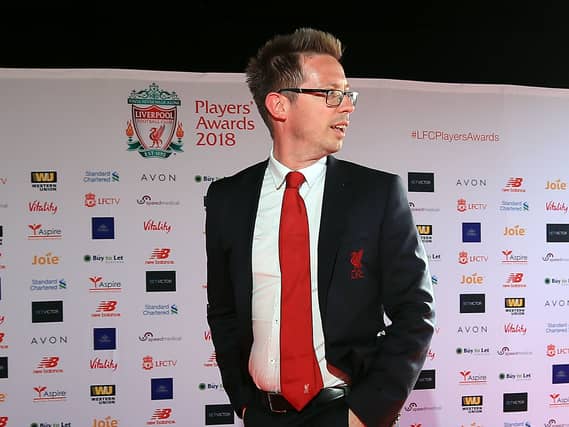

It is a second coming for a man who oversaw the most successful period in Liverpool’s recent history, assembling the squad that won the Champions League in 2019 and Premier League in 2020, identifying players such as Mohamed Salah, Virgil van Dijk and Sadio Mane as the players to build a team around.
Liverpool were not the only clubs looking at Edwards for a senior technical role. Chelsea and Manchester United also held talks with him about postings that involved running their football operations.
In recent years, the role of sporting director – or similarly titled jobs – has become particularly important.
How much of this is down to performance and how much is merely about self- promotion?
There is no arguing that, done properly, the job can be key to the success of a football club.
But we have also seen the rise of the celebrity sporting director with figures such as Victor Orta at Leeds United a typical example of what happens when an ego gets a platform to perform.
Dining out on his ability to persuade Marcelo Bielsa to join the West Yorkshire club back in 2018, Orta developed a knack of attracting attention. This would manifest itself in many forms, be it with exuberant celebrations in the directors’ box or on the pitch at full-time after a win – never a defeat, mind you.
It all turned south for Orta last summer when Leeds United imploded on the back of some questionable recruitment in the dugout and on the pitch.
Edwards is from a different stock and it is a fascinating development that he has decided to return to Liverpool having previously suggested there would be no going back to Anfield.
This CEO of football role appears to be a slightly grander position and it is likely he will appoint a sporting director to work under him.
Again, this marks a departure from the usual structures adopted by many clubs across the Premier League
However, there are parallels with Sir Jim Ratcliffe’s decision to bring in Dave Brailsford to a key boardroom position at Manchester United following the takeover at Old Trafford earlier this year.
There is a lot of merit in creating an extra layer of management between the owner and sporting director, if it is done successfully.
Edwards is likely to appoint Richard Hughes to the post of sporting director after the former Portsmouth midfielder enjoyed a decade working on the south coast with Bournemouth. The pair have a strong working relationship form their time at Fratton Park.
At clubs the size of Liverpool and Manchester United there is so much administration to be undertaken on the football side that a sporting director working under another key football figure who is answerable to the owner creates that buffer necessary for the sporting director to get on with the job of player recruitment and development.
Edwards comes in as an FSG figure first and foremost, and he will now replace the Liverpool owners’ president Mike Gordon as the decision-maker on all football matters at Anfield.
Gordon has been open about stepping back from football matters at Liverpool – but will remain on the FSG board and Edwards will report to him on all football issues, giving the sporting director greater freedom and time to work in their specified domain.
Edwards will also be responsible for identifying and recruiting a new manager to succeed Jurgen Klopp.
Xabi Alonso, attracting interest from Bayern Munich to replace outgoing manager Thomas Tuchel, remains the outstanding candidate for the Liverpool manager’s role.
There is plenty for Edwards to get his teeth into. Like Brailsford at United, his early decisions could be the most crucial, setting the tone for the way Liverpool build after the departure of a legendary manager is rubberstamped in May.
Comment Guidelines
Iconic Media encourages reader discussion on our stories. User feedback, insights and back-and-forth exchanges add a rich layer of context to reporting. Please review our Community Guidelines before commenting.