
Life in retirement alright for Dwight
Chief Sports Writer Martin Swain talks to former Villa star Dwight Yorke about his decision to call time on a glittering playing career aged 37.
He scored 66 goals in 120 appearances for one of the biggest clubs in the world and won a hat-trick of Premier League titles.
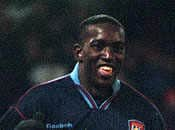

He mixed with presidents and champions and, most celebrated of all, was a key figure in the greatest single campaign ever put together by a club from these shores.
But Dwight Yorke brought down the curtain on his extraordinary career at the weekend with barely a murmur from the world of football.
That lukewarm reception to the end of one of the most remarkable personal stories of the Premier League age tells much about Yorke's frustration at his legacy.
For the blunt truth is that the mention of his name in most circles will prompt more discussions about his private life than the triumph of his career.
It is a frustration Yorke hopes to address next month with the publication of his autobiography for which, earlier this year, I was asked to 'ghost' write.
It was the first time I had sat down and talked with Yorke since his halcyon Villa days, where it was immediately clear how much he now resented the public perception of his life and football – that is to say a man who ruined it all by partying too much.
He lamented on our first meeting: "At 36, I captained my country at the World Cup. At 37, I played in the Premier League. Do you think I could honestly have done that if I had not been a serious athlete?"
"Sure I loved a party. But there were times in my life when I knew the party had to stop. I might have been the last man into training but I was always the last man out as well."
It would be a theme, a cry from the heart, he would repeat so many times during the interviews which followed as we went through his incredible story from the dirt tracks of Tobago to that night of Champions League glory in Barcelona's cathedral of football.
Then came the personal crises that then sent him into a tail-spin, before the salvation of the 2006 World Cup.
His mind-boggling spell at Manchester United was, of course, preceded by a nine-year journey at Villa in which he became one of the most entertaining and talented forwards the club has ever produced.
When he made it clear that he wanted to leave for Old Trafford in 1998, Villa fans took it deeply personally, as they would a betrayal by a much loved member of the family.
Even now some refuse to forgive him what was essentially an unavoidable professional decision – it would have been plainly daft not to go to United – but more prefer to focus on some of his wonderful flourishes in a Villa shirt, which had the twin climaxes of the 1996 League Cup triumph and his electric form in 1998 which lured Sir Alex Ferguson.
What Yorke never came to grips with was the change in profile which came with the move.
He carried on doing what he had always done – playing great football and chasing gorgeous women – at Villa not realising he would now be a subject for the front, and not just the back, pages.
Yorke was 27 at that time, but suffered from not having been schooled in the 'United Way.'
While his contemporaries Giggs, Beckham, Scholes, the Nevilles et al had learned what playing for Manchester United meant for their personal profile, an unsophisticated and innocent Yorke walked slap bang into a media firestorm which eagerly burned forests to bring us tales of his bedroom exploits.
Yorke never truly adjusted although he did try. But the most famous and infamous passage of his life, his brief but life-changing fling with the brazen model Katie Price, aka Jordan, did for him.
Inevitably, the impact she brought to his life and career forms a significant chunk of his book. The shadow of her cheap and vulgar celebrity and the painful potshots she took at his parenting contribution to the raising of their son, Harvey, darkened what had been one of the game's happiest faces.
This will be Yorke's first response to his ex-partner's savage verbal attacks but we're back where Yorke hates to be – talking about his women and not his football.
He said: "Do you know, it reached a point where I had people having a go at me, telling me I was only famous because of HER!"
Without revealing too much of the book's contents, it is safe to say that Yorke does not avoid his mistakes but can't understand why they seem to outweigh his playing record.
I first met him when he was a shy, 17-year-old new arrival at Villa all those years ago, that famous grin beaming out from beneath his peaked jockey cap, in his first interview on English soil.
His Caribbean accent was so thick I could barely understand a word he said and I daresay he could barely make out what my questions were. He is very much the product of his time – that is a footballer of humble origins who happened to cop for the biggest revolution the game has ever known.
Yorke started at Villa on £200 a week and finished with the club throwing millions – literally – at him in an effort to persuade him to stay.
After all that, it was gratifying to discover on meeting up with him again that the same genuinely decent, amiable and humble chap is still there. And it is difficult not to sympathise with his irritation, bordering on anger, at the way his football has fallen in line behind his celebrity lifestyle.
At one session, Yorke reckoned the absolute peak of his career came in an FA Cup tie against Liverpool during United's treble season – "the greatest game I ever played for them."
Intrigued, I headed for YouTube and found some highlights and marvelled at what I saw – pure, natural, un-coachable instinct going forward.
It dawned on me then that I knew why Yorke was so annoyed. He was right. Like too many others, I knew he was a bit of a lad.
But I had forgotten just how bloody good a player he was.