
'Harrowing' - How the Champions League dream has turned into a nightmare for Aston Villa's disabled fans
The Champions League might be the world’s premier club football competition but for disabled supporters following Villa this season it has felt a long way from elite.
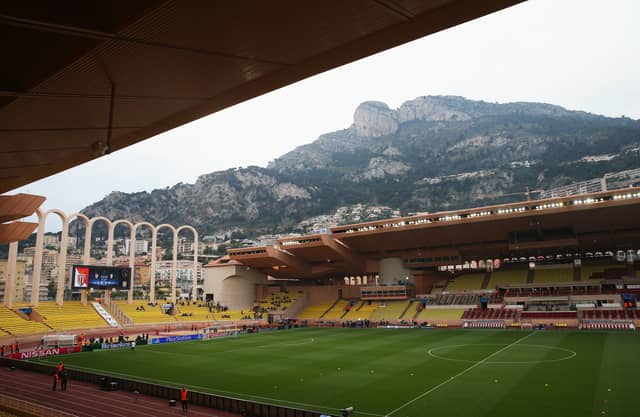


“Harrowing,” is the first word Joanne McKibbens uses to describe the experience she and a friend, both of whom use wheelchairs, endured before and during Tuesday night’s match in Monaco.
Stuck in a crowd outside the Stade Louis II for nearly an hour, to the extent they missed kick-off, they were then given an unwanted guided tour of the ground’s concourse before finally finding a member of staff capable of getting them to the disabled viewing point in the away section.
“By the time we got there and could start watching the match, it was about five minutes to half-time,” says McKibbens.
“Nobody seemed to know where we should go. We told the Monaco staff we were in the away section but they told us there were no wheelchairs allowed in that part of the ground, despite me showing them our tickets.
“At one point they tried to put us in the home section. The worst thing was the attitude. The way the staff spoke to us, we really did feel like criminals. They were so rude. At one point I’d had enough and asked to leave but they wouldn’t even let me do that.”
McKibbens, a Villa supporter of more than 40 years who has not missed a match home or away for a decade and attended every European away game in the past two seasons, was so worn out by the ordeal she is considering not bothering with any more away games in the competition.
“It is not just going to the match,” she explains. “It is also the challenge of travelling. There are so many more considerations you have to take as a disabled person and it is even more frustrating when you go through that process and only see half of the game.”
The trouble is while Tuesday was in McKibbens’ words the “worst so far”, it was far from the only time Villa’s disabled fans have had cause to feel let down during this season.
As chairperson of the Aston Villa Disability Supporters Association (AVDSA), she has either experienced first-hand or been told of major issues on every Champions League away date so far, from dilapidated facilities in Brugge, to inaccessible transportation in Leipzig, where she was among a group of wheelchair using supporters who arrived at the Red Bull Arena turnstiles to be greeted by six flights of stairs.
“The provision for disabled fans in Europe is way behind the UK,” says McKibbens. “Half of the clubs don’t seem to know what they are doing.
“The fact we were in Monaco, one of the richest places on earth, you might expect different but this was the worst yet.
“It just feels as though we are the last ones thought of. Everywhere we have gone this season, there have been problems.”
Villa’s disabled supporters are not alone in finding trouble when trying to follow their team in Europe. In a survey released last October by Level Playing Field, a body which represents disabled sports fans, more than half the respondents who had travelled to attend a Champions League, Europa League, Conference League or Super Cup match in the past five years claimed the access to stadiums was either “poor”, “very poor” or in some cases “non-existent”.
There was also criticism of Uefa’s communication levels, with only 22 per cent of those who took part in the study rating it better than “poor”. Nearly a third considered it “non-existent”.
In response, the governing body said it was “committed to strengthening inclusivity and accessibility at stadiums across Europe” yet McKibbens’ account of Tuesday evening calls into question whether it is adequately enforcing the minimum standards for visiting supporters sent out to clubs two years ago.
That document, issued in part due to problems experienced by Liverpool supporters during the 2022 final when just four wheelchair spaces were offered at the 80,000-capacity Stade de France, includes nine bullet points for clubs to consider. These include ensuring safe access to the stadium and an appropriately designed ticket control point, clear signposting to entrances, exits and all facilities and appropriately trained stewards to manage the access process.
According to McKibbens, none of these were in evidence in Monaco. Villa were also offered only five wheelchair spaces, when the minimum requirement for a stadium of its size according to Uefa’s protocols should be eight. Three of those spaces, it might also be noted, were located in the home section of the stadium, by all accounts a not uncommon occurrence.
McKibbens and her friend were allocated the two spaces in the visiting section but instead of entering the ground with the rest of Villa’s supporters on the south side of the stadium, they were instructed to enter through the western main stand.
It was there they became caught in a crowd with hundreds of other supporters - the delay on entering was never properly explained - before being eventually assisted to the turnstiles by a police officer. Yet after finally getting inside the stadium concourse, at around the time Wilfried Singo headed the game’s only goal, no-one appeared able to help them reach the away end.
“They were adamant we were wrong and they were right, in terms of where we were supposed to be,” says McKibbens. “It wasn’t until their ticket office manager turned up we finally got help.”
McKibbens says Villa also have questions to answer. A member of the club’s fan advisory board, who also sits on the Premier League’s disability advisory group, she has directly questioned chief operations officer, Ben Hatton, about the standard of site visits ahead of matches.
“They told us it would be better next time. Instead, it was worse,” she says.
“Last year in the Conference League all the access was sorted out. We had suitable ways of getting to the stadium. They would lay on a bus for us. There was always someone from Villa there on site ready to meet us.
“That hasn’t happened this year. On Tuesday there was nothing and when you get to the ground, you get treated like imbeciles.”
Prior to even reaching the stadium, McKibbens described getting out of Monaco rail station, located on a hill, as a “nightmare” while the match ticket collection point in Nice was also positioned on a steep incline.
“My chair couldn’t get up it,” she says. “Someone had to go up and bring my ticket down for me.”
All of which adds further to the level of frustration and the sense that, in a competition where participating clubs make millions, the provision for disabled supporters should be so much better.
“You become quite good at putting up with the barriers and overcoming the challenges you face following football as a disabled supporter,” says McKibbens.
“But the experience over those couple of days was just not good enough. It was very frustrating and stressful.
“It is one which could easily be solved by better communication and simple planning.”
In a statement to the Express & Star, Monaco offered "sincere apologies" to McKibbens and her friend. It is understood a senior representative from the club has also contacted both to personally apologise.
The statement said: "An internal investigation indicates that this incident occurred as a result of an isolated dysfunction and the club would like to reiterate its apologies to the two Aston Villa fans.
"AS Monaco has always made it a point of honour to welcome its supporters as well as its opposing fans in the best possible conditions, and will ensure that this situation does not happen again in the future.”
Uefa and Villa were also contacted for comment.
Comment Guidelines
Iconic Media encourages reader discussion on our stories. User feedback, insights and back-and-forth exchanges add a rich layer of context to reporting. Please review our Community Guidelines before commenting.