
Derek Mountfield: The Everton giant who made his Wolves mark at Molineux
Derek Mountfield, recently honoured as an ‘Everton Giant’ by Wolves’ next opponents, had already made his mark at Molineux prior to signing for Graham Turner in the early 1990s.


The epic Littlewoods Cup tie between Aston Villa and Wolves in 1989, a fiercely partisan two-legged affair which formed two-thirds of only three meetings between the two across 19 years, saw Mountfield notch a crucial goal in the second leg to put Villa 3-1 ahead in the tie.
Steve Bull would later grab an equaliser on the night, whilst being knocked unconscious in a collision with Villa’s colossus defender Paul McGrath and keeper Nigel Spink.
‘Brilliant,’ enthused commentator Martin Tyler. ‘Brave…and brilliant.”
Bull has never been able to recall anything about the goal, the game ended 1-1, and Wolves nobly exited the cup despite a positive showing against their Midlands rivals who were then occupying a division above.
But one fan for whom the night remains vividly etched in the memory bank is Bruce Harper.
Harper recently contacted Mountfield via ‘X’ to inform him of the role his Molineux moment played in being the catalyst to many years of matrimonial bliss.
‘I met my wife because of you,’ Harper told him.
‘After you scored and knocked us out of the cup, I went to a pub on the way home to commiserate and met my wife.
‘Best thing that happened to me – I owe you a debt of gratitude.’
“I told him ‘well done’ and wished him all the best,” Mountfield says with a chuckle.
“I think it’s really funny, one of those things that happens with fans and football.”
Mountfield not only represented Villa and Wolves, he pretty much rounded off his playing career with over a century of appearances at Walsall.
Not quite the full West Midlands set although, as the former defender explains, he can lay claim to it in one respect.
“I made my Everton debut at St Andrew’s against Birmingham, and scored my first goal against Albion at the Hawthorns,” he explains.
Mountfield loved his time in the Midlands. But, of course, Merseyside will always be top of the pile. And so it should be.
A lifelong Evertonian, who helped marshal the defence during the most successful time in the club’s long and illustrious history, just pulling on the Royal Blue shirt once would probably have been enough.
Let alone winning two league titles, an FA Cup and a Cup Winners Cup, during a mid-Eighties run under Howard Kendall that would probably have yielded more international honours without the ban imposed on English clubs following the tragedy at Heysel Stadium.
“People often ask me what was my proudest moment,” he reflects.
“And to be honest, it’s not winning the cups or the leagues, it was just signing for Everton.
“I’m an Evertonian, and so few people get the chance to sign for the club which they have supported all their life.
“When I went to sign the contract, it could have been a blank sheet of paper or said ‘Derek Mountfield owes Everton £2,000 every time he plays for them’, and I’d still have put pen to paper.
“I got the chance to live out all of my dreams, and the dreams of so many others as well.”
Mountfield can still recall the phonecall he received from Kendall telling him his performance in a testimonial which doubled up as a trial game had been sufficient to secure a permanent move from Tranmere, the club he had joined as an apprentice from school and for whom he made around 30 appearances in the first team.
He had spent a week charging down the stairs from his bedroom on the third storey of the family home in Wallasey every time the phone rang, hoping it would be the call.
“When it came, my Mum answered it, and she had no idea who Howard Kendall was,” he recalls.
“My Dad was the football one out of my parents!”
There followed the incredible story that saw Kendall mastermind those incredible few years, which included Mountfield breaking into the team to partner Kevin Ratcliffe and win an FA Cup final against Watford at the age of just 21.
Two league titles in three seasons followed, as well as the Cup Winners Cup, as Mountfield chalked up a total of 154 appearances, scoring 25 goals of which 14 came in the 1984/85 campaign alone. Not bad for the princely transfer fee of just £30,000.
Little wonder that the dominant and commanding defender joined his former team-mates Andy Gray, Kevin Sheedy and Paul Bracewell in being inducted into the ‘Everton Giants’ at the recent Premier League fixture against Manchester United.
“It was an incredible day, quite an emotional one, and we received a superb reception from the fans,” Mountfield explains.
“It was a fantastic afternoon of reminiscing and, for me, a former Everton season ticket holder, to now be called an Everton Giant is something I am very, very proud of.
“That team from the 80s was fantastic, and we are still very close, with five or six dinners coming up to celebrate the 40th anniversary of the league title, and it will be like we’ve never been apart.”
Mountfield’s move from running out to Z Cars in front of the Gwladys Street End, to Fanfare for the Common Man in front of the South Bank, was sandwiched either side of three years with Aston Villa.
In his first season, by his own admission, he was ‘poor’, as Villa narrowly avoided relegation, but in his second, he wasn’t far off making it a hat trick of league titles as Graham Taylor’s side pushed Liverpool before eventually finishing as runners-up.
“Like Howard, Graham was a fantastic manager, he was brilliant, and he built a team where we really clicked,” says Mountfield.
“We maybe didn’t have the big names that Everton had, although we did have Paul McGrath, although when we lost him for four or five weeks through injury, myself and Kent Nielsen played well together.
“When Paul came back, it was a question of how to get three into two, but instead, Graham played all three, and it really worked.
“There were some very good players in that side, Gordon Cowans – what a player – David Platt, who was getting better and better, a rejuvenated Tony Daley, and a young striker Ian Olney who was different class up front.
“I think in football it is the collective that wins games, not individuals, and as a collective, Villa were excellent at that time.”
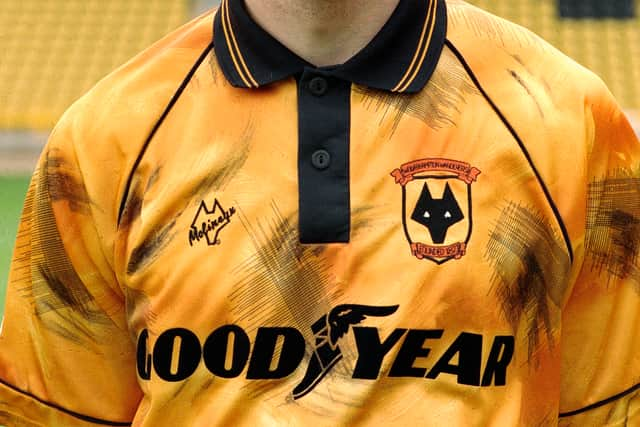
When arriving at Wolves, in November 1991, there was perhaps every reason to hope that Wolves would also be able to build a similar sort of collective spirit, albeit at a lower level, but one which could help them return to the top division.
Now a few years into their return to this level following the back-to-back lower league titles that had rescued them from near oblivion, Wolves were aiming, under Turner’s guidance, to refine their approach to try and take that elusive next step.
In Bull and Andy Mutch, they had one of the best striking duos outside of the First Division, in Mike Stowell one of the best goalkeepers, in Paul Cook one of the best playmakers. The list could go on.
And yet, despite the arrival of the hugely experienced Mountfield, and others in the years that followed such as Geoff Thomas, David Kelly and Kevin Keen, it would be at least another decade until Wolves finally put paid to years of frustration and made it to the Holy Grail.
All these years on, talk to the management, the staff, and the players, and it remains difficult to explain.
“Still now, I have no idea why it didn’t happen for that Wolves team,” Mountfield admits.
“It’s a question all of us still get asked a lot, and it’s one I really can’t answer.
“I remember arriving at Molineux and wondering what I was walking into because the Waterloo Road Stand was being knocked down and there was more water coming through the ceiling than there was through the shower.
“But I could see the plans for the development of Molineux, which happened over the following years, and I knew that better facilities would attract better players to play better football and get higher up the table.
“It felt so close, but still I can’t put my finger on why it didn’t happen.
“We had a great group of lads, and Bully was an outstanding goalscorer, but maybe we were short in one or two positions.
“I also remember it felt like we struggled to get the settled team which had proved so successful for me at Everton and Villa.
“I do think sometimes there was a bit too much chopping and changing, we can all have a bad game but would often get dropped straightaway which didn’t allow us to build up any sort of rhythm.
“There was so much optimism ahead of the one season (1993/94) when we beat Bristol City on the opening day at Molineux, and I scored one of the goals but was out of the team a couple of games later which I didn’t really understand.
“A settled side can be so important, regularly bringing in a couple and leaving a couple out doesn’t allow a team to build up any real consistency, and that’s how it felt to me at the time.”
There are, however, no regrets for Mountfield, who made 91 appearances during two-and-a-half years at Molineux, and certainly settled quickly amongst a lively dressing room.
“They put me next to Bully on my first day, and I couldn’t understand a word he was saying to me,” he laughs.
“I needed to ask Mutchy to translate!”
There was also the odd session of training on the North Bank Car Park, or Wombourne Hockey Club, or wherever else that would accommodate them.
“We didn’t make it to where we wanted to be, but I still enjoyed my time at Wolves, pretty much like everywhere else, especially with that banter in the dressing room which cannot be replicated anywhere else.”
As well as happy two-and-three-quarter years spent with the Saddlers, Mountfield also enjoyed more success after leaving Wolves with a season with Carlisle culminating in lifting the Fourth Division title and losing to Birmingham at Wembley in the final of the Football League Trophy.
A defender who reached the pinnacle of his profession, and deservedly reaped the rewards, it is also worth remembering that Mountfield won one solitary England Under-21 cap. In the second leg of the 1984 European Championship finals when a 2-0 win against Spain secured a 3-0 aggregate success, and the trophy.
When the time came for hanging up his boots Mountfield did initially move into coaching and managing, spending six months at the helm of Cork City in the League of Ireland.
Ultimately, however, he decided that ‘management wasn’t for me’, and was left, slightly in limbo, pondering his next move.
“I was doing quite a bit of media work and had completed a sales and marketing qualification, and fitness training diploma so was working in that sort of area,” he recalls.
“I was talking to the PFA who mentioned they had a degree course starting and I was a bit reluctant as I had hated school and was always just waiting for the bell so I could play a bit of football, rugby or cricket.
“I hadn’t been in education for 24 years, but just before my 40th birthday, I enrolled on a degree in sports science at Manchester University.
“It was a hard three years because it came at a time when I was getting divorced, had my ankle fused, but then met my new wife.
“But the studying opened my eyes to so much that I should have known when I was playing – when I look back, I wish I had done it 20 years earlier.”
With a degree now under his belt, it was a question of where next for Mountfield, for whom the fitness side would have been his only preferred route into football.
As it was, he found a purpose, in a completely new industry, that of teaching, and including to children with SEND (Special educational needs and disabilities).
“People say doing something like that is giving back but it was never giving back for me,” he insists.
“I really enjoyed it and the kids gave me back just as much as I gave them.
“Some of the children couldn’t walk properly because of their conditions and had big heavy boots on so it was about helping them to develop their movement and coordination, and it was incredible to see the progress that they made.
“With the work in mainstream schools, it wasn’t just about football but other sports as well such as handball, rugby, tennis, cricket and more.
“I had around 15 years of wonderful time teaching, and it was as enjoyable doing that as it was playing football.”
The arrival of Covid brought an end to Mountfield’s full-time working life and, now 62, a little property business with wife Julia is interspersed with plenty of golf, along with regular interviews and podcasts.
He was actually at Molineux as the guest in the Museum and Corporate lounges when Wolves welcomed Everton on Boxing Day last season, although was only a couple of months into recovery from meningitis from which he is only now returning to full health.
Still as affable, good-humoured and gregarious as he has always been, Mountfield has no hesitation in describing himself as, very much, a ‘people person’.
It served him in good stead in his second career in teaching, as well as in life as a footballer, where he made a settled home at several different clubs, all of which he continues to hold in high regard.
“I have nothing but fond memories of my career,” he insists.
“I had some wonderful times, and some desperately hard times, getting injured, dropped or having to move on from clubs.
“But I enjoyed pretty much every single minute of about 95 percent of it.
“No matter what shirt I wore, I always gave my best, and every club I played for, has kept a little piece of my heart.”
Comment Guidelines
Iconic Media encourages reader discussion on our stories. User feedback, insights and back-and-forth exchanges add a rich layer of context to reporting. Please review our Community Guidelines before commenting.