
40 years on from a Wolves trip to Brentford in midst of most troubling times
Wolves will round off a seventh successive Premier League season on Sunday by welcoming Brentford in front of a full house at Molineux.
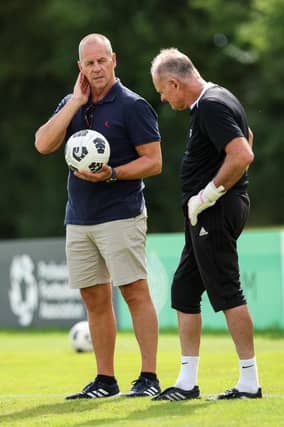

Nearly 40 years on from when they actually started a campaign against the same opposition, locked in the midst of a far more turbulent spell.
Scott Barrett was Wolves’ goalkeeper on that August afternoon which launched the 1985/86 schedule, one which would finish with the second instalment of an unwanted hat trick of successive relegations from top division to bottom.
Neil Edwards scored on his debut but Wolves were beaten 2-1 in front of a crowd of 5,876 at Griffin Park.
Ever the goalkeeper, Barrett recalls the pitch being one of the shorter in length of its time. As one of the few between the sticks to have actually scored a goal in a league fixture, he knows all about that sort of thing.
One of football’s legendary figures Frank McLintock was Brentford’s manager that day, and praised Barrett for making ‘three great saves.’
Barrett also knows, that whilst he loved his time at Molineux, and continues to harbour fond and almost encyclopaedic memories of those days from four decades ago, Wolves was a very different club back then
“It was an interesting time with the club in a bit of turmoil,” the now 62-year-old recalls.
“After the Bradford fire, only two sides of the ground were open and that was strange having played in front of all four in my first appearances.
“The Bhatti Brothers were in charge and the club was struggling.
“We used to get paid monthly and I remember one month when we didn’t get paid, and then we all received a big brown envelope full of cash.
“We didn’t really know what was happening from one month to the next, with players coming and going, and managers as well.
“It’s a pity that I’ve not yet been back to Molineux, on the inside at least, but having driven past it a couple of times, it’s obviously a very different club now to what it was then.”
Barrett’s arrival at Wolves came after he was spotted playing non-league for home-town club Ilkeston, where he had spent three years after being released after an apprenticeship with Notts County.
Originally becoming a goalkeeper as it was the only way his two older brothers would let him join in games on the streets or at the park, he had combined that non-league stint with a driving job, delivering car parts to garages in the local area.
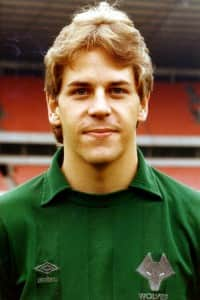
Tommy Docherty was the manager who brought Barrett to Molineux, the keeper having played a few trial games in the reserves before interest from Derby - and the departure of John Burridge - chivvied Wolves along to make their move.
At 21, he was signed as cover for a highly-rated prospect who was even younger, then a teenager - but also a future Premier League winner and England international - in Tim Flowers.
“You could see what a talent Tim was, even at the start,” Barrett acknowledges.
“He was always destined for great things.”
It was Flowers’ absence, suffering a tooth abscess which prompted a sleepless night before an away game at Portsmouth, which opened up the opportunity for a Football League debut for Barrett, one which he marked with a clean sheet.
Pompey were flying high in the Second Division table, and Wolves less so, but Jim Melrose’s first half goal, and a strong defensive display in which Barrett, according to the Express & Star match report, put in a ‘nerveless display of bravery and sound handling’, was enough to secure the points.
“It wasn’t until the morning of the game that I knew Tim wasn’t going to make it, and with it coming out of the blue I didn’t have the chance for any nerves,” he says.
“I think I did o-k, in the first half I didn’t really have much to do, but in the second it was pretty much attack against defence but we managed to hold out.
“There was a bit of a party atmosphere afterwards and I remember (Chairman) Derek Dougan coming into the changing rooms and being very pleased, because it wasn’t a result anyone was expecting.”
Wins were certainly few and far between during that era. But Barrett, who went on to chalk up 35 appearances in total between the sticks for Wolves, still remembers plenty of positives.
One that lingers in the memory is the Molineux playing surface – “it was always beautiful to play on” – and Barrett was also there for the birth of a legend, playing in some of the early games of Steve Bull’s historic Wolves contribution.
“Mutchy (Andy Mutch) was already there and then Bully and Andy Thompson arrived from West Brom,” says Barrett.
“Bully had such a broad accent that when he came to the club he would talk and none of us could understand him, so Thommo had to interpret.
“On the pitch he was one of those strikers who knew where the goal was, and as soon as he got the ball and was in on goal, you knew he was going to score.
“He was such a top striker.”
Barrett recalls forging friendships with David Barnes, who would invite him around for meals, and Floyd Streete, his carshare partner when living in Derby, which sometimes proved a challenge given Streete drove an MG Midget and took up a fair bit of space with his athletic frame!
On the managerial side, even though Barrett picked up a fair few appearances in the early days of Graham Turner, it was his temporary predecessor under whom he felt most comfortable.
“There were a lot of managers during my time at Wolves, and if you asked me who was the best for me, I would say Brian Little,” he explains.
“Not only was he a really nice guy, but because he had played the game at the highest level, what he said made perfect sense.
“We were playing some really good stuff under him and had started picking up, so it was quite a shock when he was given the chop.
“Obviously Graham came in and did brilliantly for the club, but for me, it was the start of being edged out of the picture.
“They signed Mark Kendall, a great keeper who was far more experienced, and so for me, it was time to move on.”
That moving on, with thanks to former Wolves assistant and promotion-winning boss Sammy Chung, was to Stoke City, a couple of divisions higher at the time, as cover for the experienced Peter Fox.
Chung was assistant to Potters boss Mick Mills, and had returned to Wolves on a scouting mission to watch Flowers, only for injury to mean Barrett was playing instead.
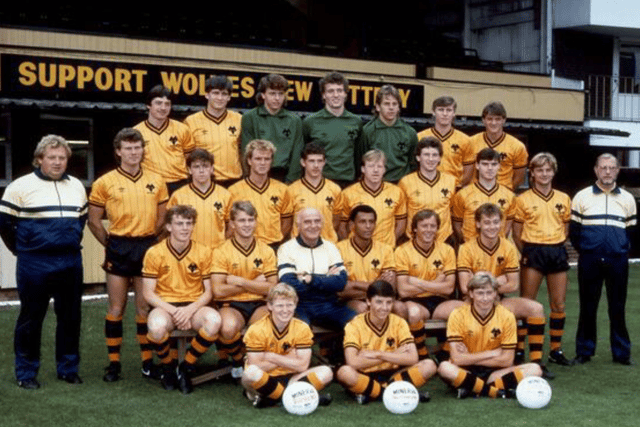
Opportunities knocked when Fox was injured, and Barrett made 60 appearances across four years with a notable highlight – a clean sheet against all-conquering Liverpool in a season when they were only denied a league and cup double by the giantkilling exploits of Wimbledon at Wembley.
“We drew Liverpool in the FA Cup who were flying and beating teams by four and five in the top division,” he recalls.
“We drew 0-0 at the old Victoria Ground, I think we were only the third team to stop them scoring that season, and then headed to Anfield for the replay on the Tuesday night.
“I will never forget getting to the stadium and heading out to look at the pitch an hour or so before kick-off.
“Most of the ground was empty, but the Kop was absolutely packed, and even though they weren’t making a sound, it gave us an idea of what to expect when the game kicked off.
“We had the likes of Lee Dixon and Steve Bould in defence at the time, and while I was a very loud goalkeeper, it was so noisy that no one could hear what I was shouting.
“We did o-k in the game, and only lost 1-0, and even though it meant we were out of the cup those two games provided some great experience.”
There were many more great experiences to follow for Barrett in a playing career which also took in Colchester, Stockport, Gillingham and Leyton Orient.
He played at the ‘old’ Wembley twice, winning the FA Trophy after dipping into non-league with Colchester in 1992, but losing the Third Division play-off final with Orient, against Scunthorpe, in 1999.
“It’s true what they say – you remember everything when you win at Wembley and nothing when you lose,” he admits.
He was then on the bench at the Millennium Stadium when Orient lost the play-off final again to Blackpool two years later, as he had been for the two legs of a League Cup tie against Bobby Robson’s Newcastle - Alan Shearer and all - in 2000.
A couple of years later however, at the ripe old age of 38, he was in the nets for an FA Cup fourth round defeat at Goodison Park against an Everton side featuring Paul Gascoigne, Kevin Campbell and Duncan Ferguson. A memory to cherish especially with that stadium rounding off its men’s action with Sunday’s Premier League fixture against Southampton.
“It was shown on Match of the Day and I’ve kept the tape all these years,” Barrett reveals.
Yet all of that is still perhaps overshadowed by the moment he wrote his name into goalkeeping folklore. By becoming one of the select few to have scored a goal in a competitive fixture. And what an important goal it proved to be.
Alongside winning the FA Trophy in 1992, Colchester made it a double by winning the Conference title, on goal difference, ahead of Wycombe Wanderers.
That was only because, earlier in the season, Colchester won 2-1 at Wycombe thanks to Barrett’s long goal kick taking one bounce and finding the net, in the 90th minute!
“You could say, looking back, that scoring that last minute goal was what got us promoted,” he explains.
“It was strange because in the summer after that season I actually met Martin O’Neill who was Wycombe boss, and he said he wanted me to sign for them.
“We agreed a deal and then I never heard from them again, so no idea what happened there!”
What happened later, was that Barrett hung up his boots having made his final senior appearance for Orient a couple of months shy of his 40th birthday.
He joined Grays Athletic in the Conference where he made a few first team appearances but was more focused in launching his coaching career, as assistant boss to Mark Stimson.
They enjoyed some magical times, not just winning the FA Trophy in 2005 and 2006, but in helping to develop some fantastic young players who went on to enjoy great careers, including Freddy Eastwood, Aaron McLean and a certain Michael Kightly!
Kightly, of course, went all the way from non-league to Premier League after joining Wolves, making over a century of appearances as his exciting wingplay helped Mick McCarthy’s team to the Championship title.
“Kights is a great lad and you always wish the best on people like that,” says Barrett.
“Not everyone is like that, and I’m so pleased that he went on to play at the highest level.”
For Barrett, the alliance with Stimson continued at Stevenage Borough, where they made it three consecutive FA Trophy triumphs with a comeback win against Kidderminster Harriers in the first ever match played at the new Wembley, a ‘test event’ which saw a crowd of 53, 262 take in their 3-2 victory.
Gillingham, one of Barrett’s previous clubs, then offered a way in to at Football League level, in what was a mixed time and a cycle of relegation, promotion – another Wembley trip and play-off win against Shrewsbury – and relegation.
Beyond that, Stimson moved back into management in non-league, but for Barrett, the financial need to make a living took over and he reluctantly moved away from football, rolling back the years by going back to a driving job, this time in London.
Eventually he worked hard enough, and smart enough, to retire, and now spends most of the year in Spain, relaxing and enjoying life but also making sure he keeps himself in shape with regular trips to the gym.
He also continues to closely follow English football closely, particularly his former clubs including Wolves, whom he once represented in the Masters, helping the team to the final in Sheffield where they lost out to Ipswich.
Barrett still has his Masters shirt, and can still remember the incredible support on the night from the Wolves fans, taking him back to the start of his career, and a launchpad, which he cherishes to this day.
“When I think back over my career, I have been really fortunate in that everywhere I have been I have always been able to enjoy some form of highlight,” he says.
“It’s never just been run of the mill.
“And without Wolves, I would never have had the career that I had.
“I would like to think I would always have become a footballer, but it was Wolves who gave me the chance, and Wolves where I met some great people.
“It gave me the opportunity to visit some fantastic places, and I remember a trip to Malta at the end of one season – a lad from Ilkeston being given a trip to Malta, that sort of thing sticks in the memory.
“I had a great time, and will always be so grateful to Wolves for starting me off.”
Several appearances at Wembley. Play-off glory and disappointment as player and coach. A clean sheet against the might of Liverpool. Scoring a goal! So many memories and experiences to savour.
And it all began at Molineux.
Comment Guidelines
Iconic Media encourages reader discussion on our stories. User feedback, insights and back-and-forth exchanges add a rich layer of context to reporting. Please review our Community Guidelines before commenting.