
Straight talking Mark McGee on his Arsenal FA Cup call, Wolves near misses and helping young coaches
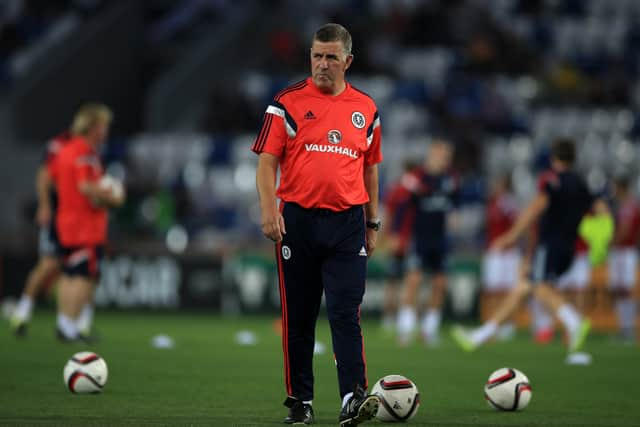
Trying to stop Arsenal is the test facing the rest of the Premier League at the moment. It was also part of Mark McGhee’s spell at Wolves, and remains a hot topic of conversation, even though it’s now 30 years since he arrived at Molineux.
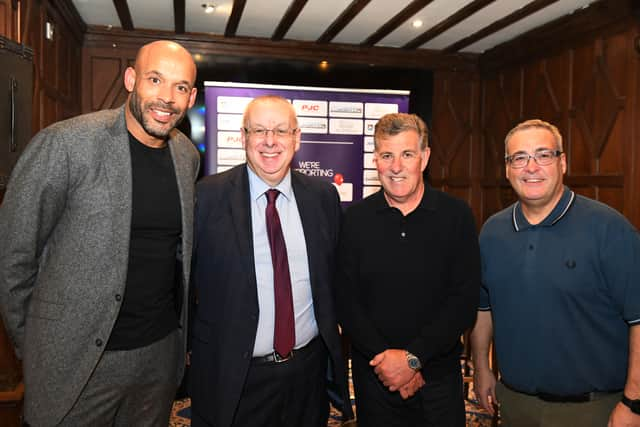
Paul Berry met up with him ahead of a fundraising engagement at the Mount Hotel.
Speak to any Wolves fan who witnessed the Mark McGhee era and there is usually one question which quickly comes into the conversation.
First on the agenda is not usually a discussion of the play-off near miss against Crystal Palace and the incredible atmosphere in the second leg at Molineux.
Or not perhaps the league double over nearest and dearest West Bromwich Albion, including a sensational 4-2 win at the Hawthorns in which Iwan Roberts plundered a hat trick.
Not about giving Robbie Keane his chance on a pre-season tour, and then in the first team, being rewarded with a match-winning brace on his debut at just 17.
And nor even the run, with away draws all the way, to the last four of the FA Cup, including a memorable and dramatic giant-killing victory away at Leeds United.
No. It’s usually, plainly and simply, to enquire as to McGhee’s thought process behind picking his team for the semi-final against Arsenal at Villa Park.
Namely why Steve Claridge was preferred up front with Steve Bull and Robbie Keane left on the bench, and Dougie Freedman not even making the matchday 16.
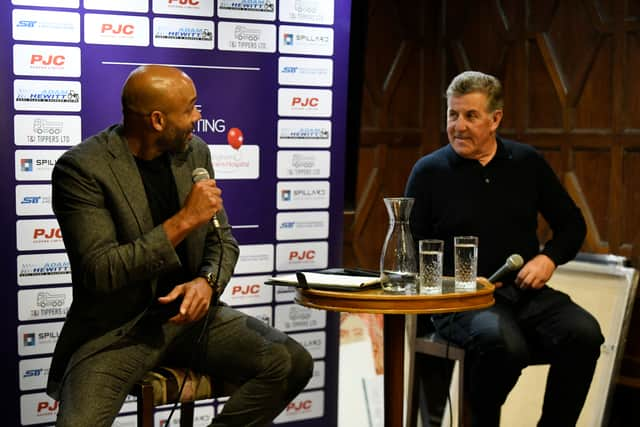
During a 45-minute chat in the boardroom at the Mount Hotel, sharing a pot of tea with both McGhee and former Wolves club secretary Richard Skirrow, with whom he remains in touch, he knows exactly what’s coming in the interview with Matt Murray which will follow as part of the charity night organised by supporter Carl Falconer.
“I know that’s what fans always want to know, and while I can’t remember everything about that day, I can definitely recall part of my thinking,” he begins.
“First of all, of the three teams we could have faced in the semi-finals – Newcastle and Sheffield United being the other two – we got Arsenal, who hadn’t lost in about 12 years!
“I had to think of the best way to try and get a result against them, and just felt there was a danger that if we went too attacking and kept giving the ball back, we might score one, but could concede three or four.
“We needed to try and keep the ball, and at that time, Steve Claridge was the best we had at that. Infact, he was one of the best in the league.
“Obviously I knew how good Bully was at scoring goals but he was always so much better facing the opposition goal rather than trying to hold the ball up.
“So, Claridge was always going to play up top, and then it was about picking the two players either side of him.
“Keaney had played a lot of football in what was still his first season and I felt he was maybe suffering a bit from fatigue, so I went for Don Goodman and Paul Simpson either side.
“What I then wanted was for those two not to worry about tracking back when their full backs pushed on – we needed to leave them up there and let the rest of the team deal with any overlaps and crosses.
“That meant that when we got the ball back, we could get it up to Claridge, and those two could get in and around him to provide support.
“The problem was that it was completely against their instincts not to track back, it wasn’t natural to them, and so they kept doing it, and when we did get the ball back, there was no support for Claridge.

“As it was, we only lost 1-0, and I know fans weren’t happy, but as a coach and manager, I had to try and think of a way to try and stop them given they were absolutely flying at the time.”
It’s an explanation. Not perhaps one that will appease many of those frustrated supporters, even 27 years on. But a thought process which explains how McGhee and his coaches Colin Lee and Mike Hickman at least tried to derail the Gunners’ juggernaut.
In mitigation, Wolves were eighth in the Championship at the time. Arsenal, second in the Premier League, were en-route to a league and cup double. They had lost just one of their previous 22 games, and went on to score 19 in winning the six which followed, including plundering one five, two fours and a three!
Containment was a strategy, which ultimately didn’t work, but amid fan frustration at not perhaps ‘giving it a go’ with the two more natural goalscorers, McGhee’s more cautious approach did at least keep Wolves in the game. And, lest we forget, it was another 21 years before the club reached another FA Cup semi-final, ending in a far more painful – gruesome even - finale against Watford.
McGhee continues, on a similar theme. “When I first went into management, I asked Sir Alex Ferguson: What is the most important thing I had to do?”
“He said you have to make decisions. And back your judgement.
“Whether it was team selections, substitutions, moments, you had to make decisions and have the bottle to back your judgement and not fudge decisions.
“That is what managers get paid for.”
McGhee is a very open and erudite speaker. Agree or disagree with his decisions, and many will still disagree with that FA Cup selection, not much is hidden away. There is very little PR or politics, and a sense of straight-talking which often got him into bother, and also secured Skirrow a trip to the recording of the Parkinson chat show at television studios in London. More on that later.
But, given his links with Ferguson as he developed as a player, McGhee’s direct and forthright approach to communication should come as no great surprise!
Born in Glasgow but brought up in Cumbernauld, as a player McGhee started out on a part-time basis with Morton, producing a hugely impressive goals-to-game ratio as a centre forward.
That led to a move to Newcastle, one of which he had very little choice, having to give up his studies to become an architect by throwing his lot in with football, full time.
From there, in 1979, he moved back to Scotland as Ferguson’s first major signing at Aberdeen.
The next five years would bring incredible success - two league titles, three Scottish cups and, perhaps most famously, the European Cup Winners Cup courtesy of victory in the final against Real Madrid.
Way too much to dissect into a small part of a larger article, but there is one story from McGhee which pinpoints why he believes Ferguson is one of the best sports psychologists there has ever been.
“I was playing for Aberdeen against Morton, and I think we were about 4-0 up by half time,” McGhee begins.
“I hadn’t scored but as far as I was concerned, I was doing brilliant, producing a few flicks and nutmegs and setting up a couple of the goals.
“Fergie came in at half time and went straight after me, asking what the hell I was doing and why I was taking the mickey out of my former team-mates.
“I took my jersey off, chucked it at him, and went and sat in the bath.
“Archie Knox was his assistant, who’s a good pal of mine, and he later told me that he spoke to Fergie and told him that no one else could play centre forward if I didn’t go back out!
“So, Archie had to come and tell me to get my shirt back on and go out and prove that I could do it and play the way he wanted me to.
“I went out, played the second half, and then after full time was away to the tearoom where my wife Jacqueline was waiting.
“I was still fuming, which she couldn’t understand given we’d won 4-0 and I had played well, and I said I just wanted to get out of there as quickly as possible.
“’You can’t’, she replied. ‘Alex has invited a few of us out for a Chinese meal at the Happy Valley!
“I couldn’t believe it, he’d got to her first, and had invited a few of us and our wives out for dinner.
“Of course I had to go, and as we walked in, he put his arm around me, then slapped me on the back and said: ‘the day I stop having a go at you is the day you’ve got a problem’.
“His man management, the sports psychology – he was an absolute genius in all of that and the best I have ever seen.”
His impact on McGhee continued long after their successful time together as Aberdeen. And it was Ferguson who, in circumstances which have drawn comparisons with new Wolves Head Coach Rob Edwards deciding to swap Middlesbrough for Molineux, persuaded him to head across the Midlands from Leicester to Wolves back in 1995.
McGhee had joined Leicester towards the end of a Premier League campaign in which they were struggling and ultimately relegated, and they were still far higher than Wolves when he decided to make the move.
He admits that while the lure of Wolves was substantial, he wasn’t completely comfortable about upping sticks from Leicester with only 12 months on the clock.
But attending a board meeting where he intended to tell them of his intention to stay and reject Wolves’ advances, he was called out to take a phone call from Ferguson, who said if he didn’t accept the offer he would come down and drive him to Wolverhampton himself!
“Sir Alex, as he is now, felt I had potential, and backed me from the beginning as a manager, phoning me every few weeks,” McGhee reveals.
“I think Wolves had asked him about me, and even though I loved the move and have no regrets, it was still against my better judgement a little bit.
“I just felt guilt about what I had done to Leicester, particularly the chairman Martin George, but Fergie told me that you always make enemies along the way.”
Ferguson played a part in getting McGhee to Wolves, 30 years ago next month. But those particular seeds had been sewn far earlier, in his first managerial role at Reading.
The Royals visited Wolves on the opening day of the 1994/95 season, and were by far the better team with their football, but Steve Froggatt’s goal was enough to secure three points for the hosts.
McGhee found himself heading up in the Molineux lift after the game, alongside Sir Jack Hayward! Delivering, what he now terms, an ‘elevator pitch’ to the then Wolves owner.
“It was just coincidence that Sir Jack got in the lift at the same time, introduced himself and asked if that was the way my teams always played and I replied by saying that was what I was trying to achieve,” he says.
“He asked a few different questions, and while I didn’t think any more of it at the time, I am sure that probably played a part in me getting the job not so long after!”
So then came the Wolves years. That cup run provided many memorable moments, notably the epic quarter final one courtesy of Don Goodman’s goal and Hans Segers’ penalty save, but in league terms, the big chance arrived the previous season, in 1996/97.
Despite missing key defenders Keith Curle and Adrian Williams for long periods of the season – absences which McGhee believes denied the team automatic promotion – Wolves made the play-offs before enduring what was customary agony during that period.
The first leg at Crystal Palace ended in a 3-1 defeat following a crazy finish when Jamie Smith reduced the arrears to one before Dougie Freedman completed a brace for the Eagles.
And, in the Molineux cauldron, and one of the most frenzied atmospheres the stadium has ever witnessed, a 2-1 victory in the second leg just wasn’t quite enough.
“It still feels tragic that we got so close and losing that third goal in the first leg was crucial,” McGhee recalls.
“The atmosphere in the second leg was incredible, but over the two games we just made some basic errors which cost us in the end.
“I’ve never looked back at those two games, it’s too painful, but I still think if we’d had Curley and Ady for more of that season, it would all have been very different.”
Wolves had been edged out for automatic promotion by Barnsley, whom McGhee had annoyed during the run-in by suggesting Premier League teams would prefer them to be promoted given the difference in the two club’s resources at the time.
Perhaps a fair point, but one which caused all sorts of negative publicity, even in the pre-internet age.
So much so that renowned TV broadcaster and Barnsley fan Michael Parkinson was sufficiently moved to condemn the words in his weekly column in the Times, prompting a letter from Wolves club secretary Skirrow suggesting that McGhee was not the sort of character that had been portrayed.
Parkinson was then equally sufficiently impressed by Skirrow’s measured response that in the spirit of footballing competition he passed on two tickets for his chat show!
Sadly however, the ticket to the Premier League was one which eluded McGhee, despite the very best of effort over three years, and plenty of moments of contrasting drama.
It was he who, with the help of Academy director Chris Evans, spotted the emerging talent of Keane and gave him his opportunity.
It was also he who found himself in the crossfire of Sir Jack’s relationship with his son Jonathan – then Wolves chairman – prompting the infamous ‘Golden Tit’ television interview at the end of that play-off near miss. And the change in the financial situation which ultimately played its part in the team’s struggles, and McGhee’s eventual departure.
McGhee remains close to Skirrow and Jonathan Hayward – the trio catch from time to time – and what is clear during our chat, and the evening Q&A which follows, is that there remains genuine affection for his time at Wolves, along with nagging regret.
“We lived out in Pattingham, which we loved, and my boys went to school not far from here at Tettenhall College,” he says.
“And I loved being at the club, working with the players and everyone behind the scenes, which I really enjoyed.
“I still remember holding a housewarming barbecue and inviting all the players, without realising they had hatched a plan to each steal an item which would then magically reappear in my office over the following days.
“So there was a great relationship there, and my only regret, although obviously the most important regret, is that I didn’t achieve the goal of getting promoted.
“Therefore, no matter how well we all got on, no matter the good days that we had, it has to be judged as a failure.
“It was a failure because we didn’t get promoted.”
As ever with McGhee, there are no half measures. A failure in his eyes perhaps, but one which included many positive memories, even if, as for so many managers in the 90s, the final obstacle proved a bridge too far.
There were many more managerial postings after Wolves, notably in winning promotion with Brighton, still the nearest club to where he now resides down south and has seen them play twice at Molineux this calendar year.
At 68, he has also been involved in mentoring younger managers, a role he particularly relishes.
No doubt the necessity of making decisions, just as he did at Villa Park almost three decades ago, is never far away from the conversation.
The event at the Mount Hotel, organised by Carl Falconer, raised an incredible £10,000 which will be shared between Pancreatic Cancer UK and Birmingham Children’s Hospital.
Express & Star Black Friday offer
We’ve got a huge Black Friday subscription offer happening right now and there’s never been a better time to be a subscriber.
Get a full year of Express & Star Plus for just £1 a month for 12 months and unlock full access to exclusive premium reports on news, sport and features and unlimited ad-free digital access for less than the cost of a weekly coffee.
The offer is only around for a limited period of time, so be quick and grab your discount now to join the growing members of Express & Star Plus.
It takes only a minute to sign up to Express & Star Plus - visit https://www.expressandstar.com/subscribe/
Comment Guidelines
Iconic Media encourages reader discussion on our stories. User feedback, insights and back-and-forth exchanges add a rich layer of context to reporting. Please review our Community Guidelines before commenting.