
Former Wolves striker Paul McLoughlin and his finest Molineux hour
For former Wolves striker Paul McLoughlin, a fixture with Chelsea last season provided the perfect opportunity to celebrate his 60th birthday. It’s also now three-and-a-half decades since his finest Molineux hour, as he tells Paul Berry.
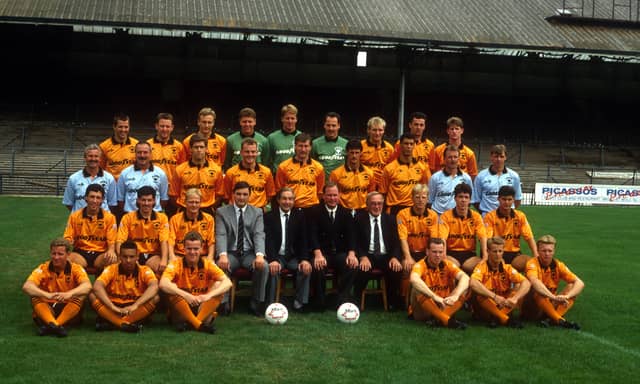

The late 1980s, when the Molineux phoenix rose from the ashes, was an incredible time to be a Wolves fan.
Flying up through the divisions, packing out the two sides of the stadium which were open and travelling away in massive numbers, and feasting on a diet of new heroes whose down-to-earth and approachable natures were every bit as powerful as their impacts on the pitch.
But imagine for a moment, just for a moment, what it would have been like to be an understudy to the twin strike threat of Steve Bull and Andy Mutch?
There were times when it must have felt like being an aspiring James Bond, and watching Sean Connery and Roger Moore churning out masterpiece after masterpiece.
Great to watch, great to learn from, but, at some point, please can you just step aside and let someone else have a go?
You would anticipate those were the sort of feelings experienced by Paul McLoughlin, who knew full well what he was letting himself in for when joining Wolves from Hereford for £45,000 in the summer of 1989.
To be fair, such was the attraction of the club, the lure of Molineux, that nothing would ever have stopped him putting pen to paper.
He was 25, with plenty of experience already under his belt at home and abroad, and excited by the opportunity of making the step up to such a big club, then in the Championship.
“I had a few offers at the time, but there were several different reasons why I was so keen to come to Wolves,” McLoughlin recalls.
“I had just got married, and it was a good offer financially, which, while never the main motivation, is still important as you want to look after your future.
“But above all that, the chance for me to go to a club like Wolves – that was just huge.
“I hadn’t experienced anything like that before and it was definitely something I wanted to try.
“And even though they had Bully and Mutchy, who were both unbelievable players and goalscorers, I had belief in myself that I could make it work.
“Obviously I didn’t go on and play as much as I wanted, but to watch those two lads in training, and see the level they were at, it was always going to be difficult to dislodge them.
“Although Graham (Turner) was the manager who signed me and brought me in, Bully and Mutchy had delivered for him for years, so it was understandable they had his complete trust.
“They certainly did the business for him and for Wolves.”
Across two-and-half-years at Molineux McLoughlin was confined to 29 first team appearances, only 12 of them starts, although not only competition for places but also injuries and loan spells elsewhere were to limit his opportunities across the second half of that spell.
He did, however, leave his mark, notably with a couple of match-winning braces, including one after coming off the bench against Swindon, 35 years ago on Monday.
And yet at the start of his career, which was something of a globe-trotting one prior to checking in at Molineux, goals were not necessarily the priority for McLoughlin whose undoubted technical ability was utilised chiefly as a winger or wide midfielder, and on occasions even at wing back.
Born in Bristol, he had trials with Bristol City before enjoying his first taste of senior football in the National League with Yeovil, then taking advantage of an incredible opening to head Down Under and play for Gisborne in New Zealand.
“It was actually a difficult decision because I was 19, had broken into the first team at Yeovil and was playing regularly,” McLoughlin recalls.
“But the biggest thing which convinced me was that Gisborne had six of the team who had been to the 1982 World Cup with the All Whites of New Zealand, and had played against Brazil, Russia and Scotland.
“It felt like an opportunity that was too good to miss, and it worked out brilliantly as an experience, and we also managed to win the league while I was out there as well.”
On returning to British soil, McLoughlin wrote to all the Football League clubs to try and drum up interest, and received just three replies.
From Cardiff, Arsenal and Tottenham.
“I decided to go to Cardiff, and then if that didn’t work out, I could maybe join Arsenal,” he says with a hearty chuckle.
It certainly worked out at Cardiff, signing a two-year deal after a month’s trial and again playing regularly, until the club were relegated, dispensed with the services of manager Alan Durban and released a large number of their squad, including McLoughlin.
Interest emerged from his home city, and he went for a trial at Bristol Rovers, and later spent six months on a non-contract basis under boss Terry Cooper at Bristol City, but, sandwiched in between, came another life experience overseas, with Friska Viljor in Sweden.
“That was another really good opportunity which almost felt too good to be true,” McLoughlin explains.
“It was in Northern Sweden, which was pretty cold, but I was given a car and a free apartment and opposite was a 70-metre ski jump!”
On returning home he was really enjoying his time at Ashton Gate but Cooper already had two excellent wingers and, in revealing that Hereford had taken a shine to McLoughlin when the two teams met, Edgar Street was his next destination.
That was to prove a major turning point in McLoughlin’s career, with manager Ian Bowyer converting him from winger to centre forward, where he would form a deadly partnership with Phil Stant.
McLoughlin was more the positional player, and Stant the prolific goalscorer, whose list of potential suitors included Wolves assistant manager Garry Pendrey popping along to watch him in action in a cup game against Kidderminster Harriers.
As it was, McLoughlin – not Stant - caught Pendrey’s eye and, having played against Wolves twice for Hereford in the Sherpa Van Trophy of 1988/89, he then made his move to Molineux at the end of the season.
There were mixed feelings on leaving a club which he had enjoyed so much, albeit had also suffered the unfortunate, and indeed ‘scary’ experience, of being hospitalised for a fortnight and sidelined for three months due to blood poisoning.
“That all came out of nowhere, it was the Sunday after a game, and I suddenly started feeling really, really bad,” McLoughlin explains.
“I think it was to do with something I had eaten, causing a reaction from my body and an infection in the blood, and I could actually see the movement of the bugs twitching and jumping in my shin – it was a horrible feeling.
“Thankfully they caught it early and did all the tests and I recovered but it led to a long spell out of action.”
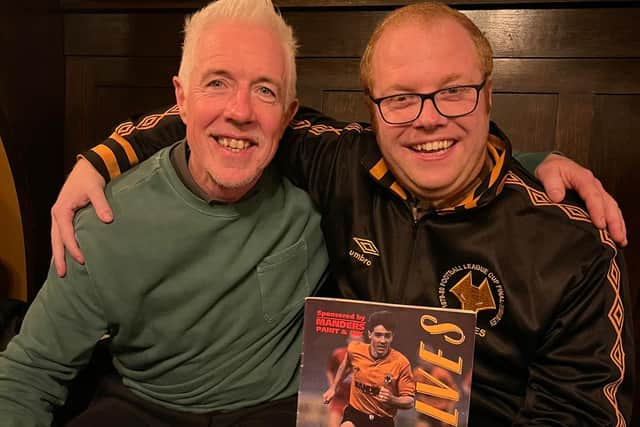
Starting on the bench after making the switch to Molineux, it took a while to land his first opportunity, although the momentous New Year’s Day win against Newcastle at St James’s Park, when Bull notched four second half goals in a 4-1 win, saw McLoughlin come on to replace Robbie Dennison in what was his fifth Wolves appearance.
“What a day that was, one of those which brought home to me the size of the club I had joined and the calibre of the players in the squad,” he recalls.
His own big moment came just a few weeks later.
On for the injured Mutch, Wolves were trailing at home to Swindon until McLoughlin popped up with quickfire goals in front of the South Bank in the 70th and 73rd minutes to complete a superb comeback and send the Molineux faithful home happy.
A memorable double-salvo although, as McLoughlin recalls, not enough to earn him a place in the starting eleven.
“I think those goals gave me an instant affinity with the South Bank,” he recalls.
“But it wasn’t enough to get me in the team for the next game at Plymouth, and I wasn’t happy.
“It was Bully and Mutchy though, which was fair enough, and Mutchy got the only goal of the game in a 1-0 win.
“We were back at home the next weekend, we went behind and the South Bank started singing, ‘we want Macca!’
“I got really excited and jumped up to prepare to go and warm up but Graham (Turner) grabbed my arm, told me to sit down and said no one tells him what to do!”
“I responded by telling him that what they were singing wasn’t my fault!”
Eventually, McLoughlin was handed his chance.
And in only his second Wolves start, and first on his travels, he notched another brace, from close range just like Swindon, to help mastermind a 3-2 victory against Blackburn at Ewood Park.
“The four goals I scored for Wolves were all finisher’s goals, which I was really pleased with,” McLoughlin recalls.
“I learnt a bit of that from Ian Bowyer at Hereford, who always told me that I could do all the right things and produced some decent set-up play, but needed to be in the right places to be able to find the back of the net.
“It was funny because Wolves was the first time that I had experienced that level of support from the fans, where I’d get out of the car on a matchday and be mobbed and security would be around to help us get inside the stadium.
“My wife used to go through all that with me and would come to games week after week when I didn’t play, but she didn’t come to the game against Swindon!
“Fortunately, she was there at Blackburn, so did see me score a couple of goals for Wolves.”
That was to prove as good as it got for McLoughlin at Molineux.
He did have a short run in the team as a starter, albeit when Mutch was carrying an injury, but those opportunities were to prove few and far between.
Wolves had relied on such a direct approach which had served them so well in coming up from the Fourth and Third Divisions, and, while Turner’s swoop for McLoughlin had perhaps indicated a desire to play more passing football, it never really transpired.
That doesn’t however detract from looking back only with fond memories, on his whole Molineux experience, including that still barely believable but painfully real pre-match training on the North Bank Car Park.
“The real difficulty I had was the style of play, which didn’t suit me at all,” McLoughlin admits.
“I would have liked for the team to have played a bit more football, and I probably also needed today’s rules and referees where strikers have a little bit more protection.
“I still have great memories though, especially of the lads, people like Keith Downing and Ally Robertson…I could go through and name them all.
“I sat in the corner of the dressing room, next to Bully, and couldn’t understand a word he said, but I’d make sure I smiled at the right times!
“Coming into the squad after they had won back-to-back promotions, I could instantly see why they had been so successful – they all got on so well but really pushed each other too.
“And I will never, ever forget, the Friday morning training sessions on the car park.
“A Championship team, training on a tarmac car park, the day before the game? Even now, looking back, I am wondering if I am making it up!
“I’ve seen some nice car parks, don’t get me wrong, but this one was sloping, breaking up, had loads of potholes.
“But the lads loved it – some of them would actually fly in with sliding tackles!
“I believe it started as a superstition after the training pitch was frozen and they won the next day, but it was something that Graham liked and kept doing, it kept everything very simple and straightforward.”
Ultimately McLoughlin’s frustrations grew, especially as his wish to head out on loan for regular football was initially rejected, although he was eventually allowed out for a successful short spell with Walsall, then under the management of Wolves legend Kenny Hibbitt.
"That was maybe when my career could have had a fresh start, because Walsall played some good football, I scored a few goals and they wanted to keep me,” he recalls.
“But Wolves wanted about £40,000 for me, and while Kenny said he would have taken me tomorrow, Walsall just couldn’t afford it.”
Things did take off again with a switch to Mansfield as, reunited with Hereford partner-in-crime Stant, McLoughlin helped the Stags to promotion.
Injuries and wear-and-tear finally took their toll, however, prompting McLoughlin to step down to non-league level, where he enjoyed another eight years of semi-professional football on top of the 11 spent as a pro.
He completed a three-week residential to pick up his UEFA ‘B’ License, and then spent a couple of years managing Clevedon Town in the Southern League, a club he had previously graced as a player.
Eventually, however, particularly with there being so many former players trying to land so few vacancies within the senior game, McLoughlin decided it was time to put family first, and look for a more settled existence for the next chapter of his working life.
For the last decade or so, whilst there has been an element of coaching of junior teams, McLoughlin’s main focus has been in the construction industry, working as a site manager for some major companies and contractors.
“I thoroughly enjoy every single day because it still means we talk a lot of football,” he laughs.
And the beauty of being a former footballer is that there are always games and memories which can roll back the years and take you right back to the days of your career.
This week has been no exception.
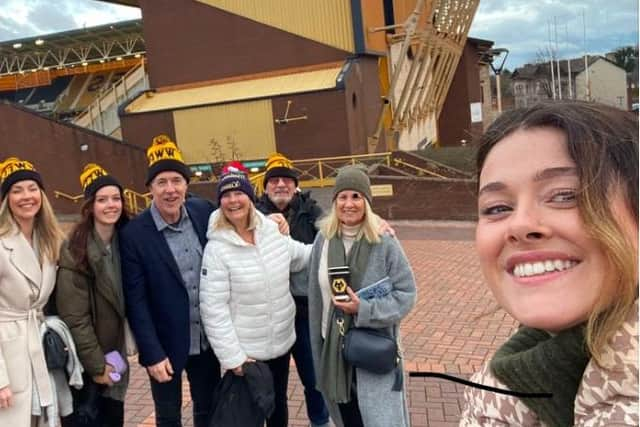
At the weekend, McLoughlin was at Ashton Gate for Wolves’ FA Cup win at his home city club, meeting up again with Wolves Museum staff Peter Crump and Sam Warrington who had welcomed him to Molineux just over ayear ago, to celebrate his 60th birthday with the game against Monday night’s opponents Chelsea.
And, of course, Wolves’ midweek trip to Newcastle brings immediate recollections of that New Year’s Day extravaganza in which he came off the bench some three-and-a-half decades ago. Not to mention an impending FA Cup tie at Ewood Park where he notched those two goals.
McLoughlin and family – wife Lee and football-loving daughters Elly, Lauren & Beth, and even in-laws Dave and Sue - have become lucky charms for Wolves in recent times.
The 2-0 win against Chelsea was his first trip back for many years but, coupled with the team’s FA Cup win at the weekend, the McLoughlin clan were also back at Molineux for the Boxing Day success against Manchester United.
“I should be invited back more often,” he says with a laugh.
It is, clearly, always very special to return.
“When I think back, and even if it didn’t go as well as I hoped and I didn’t play as many games as I hoped, ultimately, I played for Wolves and I scored goals for Wolves,” McLoughlin reflects.
“Those are moments that you never forget, and sometimes I think I can still smell the grass of that Molineux turf!
“Considering I didn’t get an apprenticeship in football, and came into the game late through a different route, when I assess my career, I truly believe that I had everything and more.
“Just going back to Molineux as recently as Boxing Day, and seeing what the club is like now, and the noise coming from the South Bank, it’s incredible.
“And I can turn to my grown up children and say, ‘you see the South Bank, I scored a couple of goals in front of that!’
“Special memories, which no one can ever take away.”
Comment Guidelines
Iconic Media encourages reader discussion on our stories. User feedback, insights and back-and-forth exchanges add a rich layer of context to reporting. Please review our Community Guidelines before commenting.