
Wolves set plan to fix defensive crisis
Vitor Pereira takes charge of Wolves against Leicester tomorrow seeking a solution to the club's defensive nightmare.
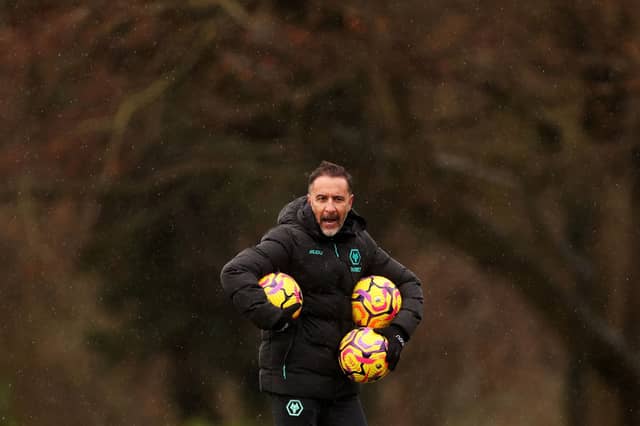


Sitting 19th in the Premier League table, Wolves have conceded 40 goals in 16 games, including 16 from set pieces and the most penalties and headed goals in the top flight.
Gary O'Neil hired and fired set piece coach Jack Wilson within just three months this season and Pereira now takes the reins needing to solve a defensive crisis.
"We will work on set pieces every day," he said.
"I know a way to improve this is with work, correct it and then try again, then correct and try again.
"We need to find a way to not allow goals to go in like we did in the past.
"We need to be more aggressive, more pro-active and not wait in the zone.
"We need to be more aggressive in the duels, man-to-man.
"We need to open our body to see the movements, because if we close the pitch with bad body movement, we cannot see the pitch and it means we cannot anticipate the movement.
"These small details we need to improve and work to not allow the goals."
With just three fit senior centre-backs, Wolves are targeting an addition in the January transfer window.
But first, Pereira is keen to see what the current squad can give him.
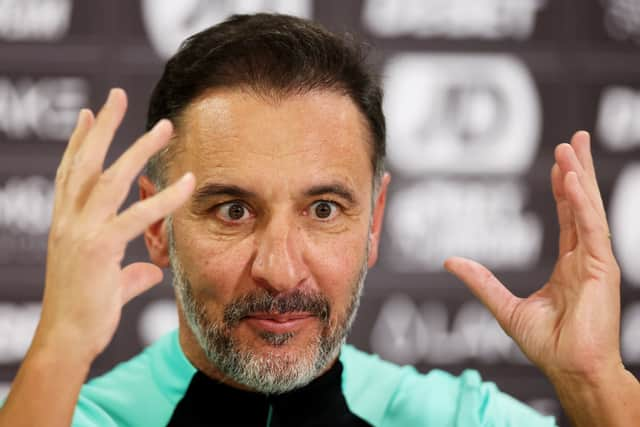
"The club is open to doing it, but in this moment it's important that with new ideas, to understand the answer of the players on the pitch," he said.
"I have at least one week to understand what I can do with our players.
"We will study the personalities, study how they will understand what we need and after this we will decide."
In order to get the team back on track, the new boss is keen to introduce an identity in their style of play, as he went into detail on his plans.
He revealed: "I like to play with the ball and I like a team to be the protagonist with the ball.
"But, with balance. Every time with balance.
"I want the team to be aggressive when we have the ball and when we don't have it we need to anticipate the next moment.
"Imagine we are with the ball but we know we will lose it, when we have it we need to have tactical organisation and a positional game to react when we lose it.
"It means we cannot lose the position every time, we must have balance and be ready to react in this moment.
"It's the same when we don't have the ball, we are in our defensive organisation but we must have the intention to attack fast in our transition and explore the spaces that the opposition gives to us.
"When I'm on the bench I'm trying to anticipate the next moment, that's why a lot of times I cannot see the goals.
"I'm not seeing if we are crossing and scoring, I'm looking if we have balance at the back to press them if we lose the ball.
"Every time, I'm trying to be a step ahead before it happens."
Comment Guidelines
Iconic Media encourages reader discussion on our stories. User feedback, insights and back-and-forth exchanges add a rich layer of context to reporting. Please review our Community Guidelines before commenting.