
'Why have we all declared a war on all that is beautiful?'
Our towns, our dress, our cars, our music – all have lost their unique style, says Roshan Doug
I sometimes wonder whether we’ve quietly declared war on beauty.
No politician has stood up and announced it, of course. There hasn’t been a government department set up to eliminate delight. Yet walk through Birmingham, Wolverhampton or almost any British city today and you could be forgiven for thinking beauty has become almost unfashionable – taboo even.
Just look up.
Where once skylines were graced by church spires, elegant Victorian buildings and handsome civic architecture, we are now confronted by giant slabs of concrete, glass and steel. They rise into the sky, blocking out sunlight and leaving us feeling enclosed rather than uplifted.
Cities should make us feel alive not suffocated.
The Victorians understood something we seemed to have lost. Libraries, railway stations, museums and town halls weren’t simply built to do a job; they were built to inspire. They reflected civic pride and became part of our cultural stamp, defining who we are. Today,
however, functionality seems to have triumphed over creativity and imagination.
As a Hindu, I’ve always believed we should live in harmony with nature, not in spite of it. Trees, flowers, birdsong and open skies aren’t luxuries; they nourish the soul. The Romantic poets understood this exact point. People like Wordsworth and Keats knew that nature
restored something essential within us. Nature wasn’t just greenery it was a divine force.
Yet we continue pouring concrete while squeezing out that greenery.
Fresh air, beauty and access to nature shouldn’t be optional extras. They should be among our basic rights as human beings.
But the uglification of Britain doesn’t stop with architecture.
Look at how we dress.
Once upon a time an English gentleman took pride in his appearance. Bowler hats. Trilbies. Cravats. Waist coats. Proper umbrellas. Well-cut jackets. Polished leather shoes. Even a colourful pocket square if he was feeling adventurous.
Now? Juvenile dress code – jogging pants. Football shirts. Shorts. Trainers. Even office wear has surrendered. Stylish ties have disappeared beneath open-neck shirts, while tailored suits have been replaced by garments that seem to fit absolutely nobody. Good leather shoes have given way to cheap tacky stuff from fly-by-night outlets.
We’ve exchanged style for convenience.
The same goes for our roads.
Stand beside any main road for five minutes and count the colours of passing cars. Black. White. Grey. Silver. Then another black one. Then another silver one. If you spot a bright red or British racing green, it’s almost worthy of a round of applause.
Cars used to express personality. Now they look as though they’ve all been bought by some provincial bookkeeper.
Even the human form hasn’t escaped.
Tattoos and piercings, once unusual, have become so commonplace that it’s now almost remarkable to meet someone without them. Some people cover their faces with tattoos or wear so many facial piercings that the features nature gave them are almost obscured. To my eye, it feels less like self-expression and more like vandalising one of the finest works of art any of us will ever possess – the human face.
Worst still, there is our curious obsession with covering ourselves up. In some communities women wear the burqa, concealing almost the entire face as though one of the most expressive aspects of our humanity should remain hidden from view. At the same time,
increasing numbers of young men wander our streets wearing their pants only halfway up their backsides and balaclavas, even in broad daylight, as though hiding one’s identity has somehow become perfectly normal.
Even our music leaves me scratching my head.
Every generation thinks the music of its youth was better, so perhaps I should tread carefully. But somewhere along the line melody seems to have packed its bags and – like Elvis – left the building. Much modern popular music favours shouting over singing and shock over craftsmanship. Some lyrics are so coarse you wouldn’t want your children repeating them over Sunday lunch.
Gone are the innocent days of The Bay City Rollers, The Carpenters, Brotherhood of Man, and Bucks Fizz. They have given way to jarring tones, shock value or people simply making political statements. Think punk. Ska. Skin head reggae.
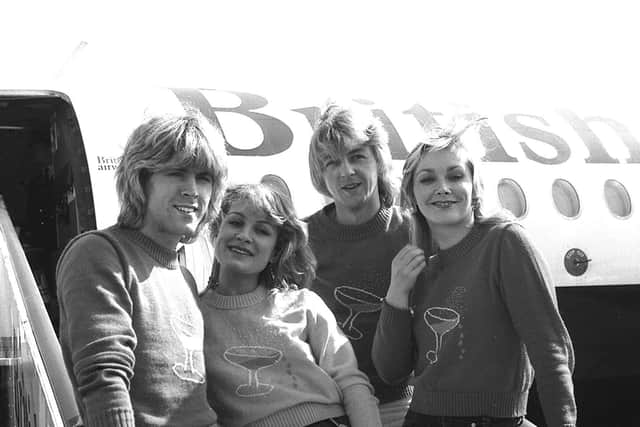

Art hasn’t escaped either. I love the joy and bright colours of the late David Hockney. Compare that with much contemporary art, which often seems determined to make us depressed.
Me, nostalgic and reactionary? Well, maybe.
Give me Turner, Constable or Caravaggio any day. Their work has survived centuries because it speaks to something timeless. I can’t help wondering whether Tracey Emin’s unmade bed will still be drawing crowds in another fifty years.
But nostalgia isn’t always about wanting to return to the past. Sometimes it’s simply recognising that we’ve discarded things that made life richer.
One of the greatest lessons of history is that every generation leaves something behind. We still admire the cathedrals, paintings, poetry and architecture created by people long dead.
They didn’t simply build for themselves; they built for us. They created beauty that has enriched lives for centuries.
Surely we owe future generations the same generosity.
What will our grandchildren inherit from us? Towering concrete blocks? Anonymous glass boxes? Grey cars? Disposable fashion? Music forgotten within weeks?¶We should be striving to create buildings that make people stop and stare, parks that invite children to dream, works of art that uplift, and music that people will still hum a hundred years from now.
Beauty isn’t a luxury. It is one of the greatest gifts one generation can leave to the next.
And perhaps it’s time Britain started believing that once again.
* Roshan Doug is an educationalist and a former Birmingham poet laureate
Comment Guidelines
Iconic Media encourages reader discussion on our stories. User feedback, insights and back-and-forth exchanges add a rich layer of context to reporting. Please review our Community Guidelines before commenting.