
I'm Asian and I think Jenrick is right - former Dudley College lecturer says Handsworth has become a 'ghetto'
A leading Asian academic and writer from the West Midlands has backed Robert Jenrick's controversial comments about the Handsworth area of Birmingham.
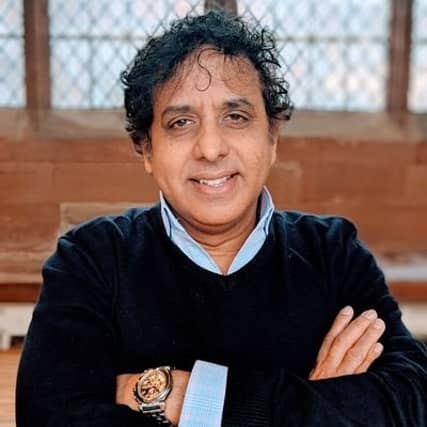


Former Dudley College lecturer and ex-Birmingham poet laureate Roshan Doug, said the Birmingham suburb had become like a foreign country, that few people would wish to visit.
Prof Doug, who has family in the Handsworth Wood area, said he did not feel safe when he visited Handsworth, particularly at night. He accused local councillors of being more concerned with Palestine than the problems affecting residents.
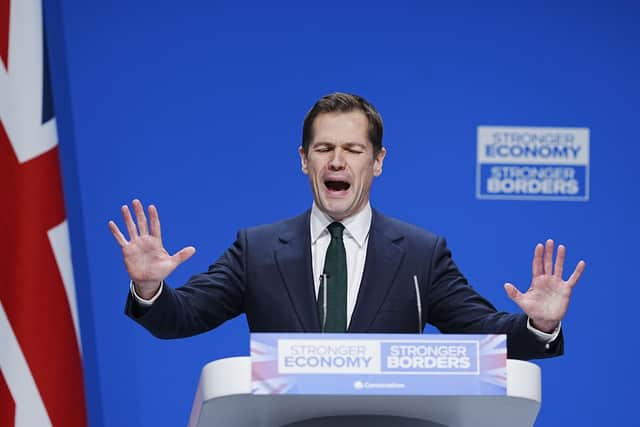
Shadow justice secretary Mr Jenrick found himself at the centre of controversy last week after a recording emerged of him criticising the lack of community integration in Handsworth.
West Midland mayor Richard Parker criticised Mr Jenrick for comparing Handsworth to a slum when he addressed members of Aldridge-Brownhills Conservative Association.
“It was one of the worst integrated places I’ve ever been to," he told party members. "In fact, in the hour and a half I was filming news there I didn’t see another white face.
“That’s not the kind of country I want to live in. I want to live in a country where people are properly integrated. It’s not about the colour of your skin or your faith, of course it isn’t. But I want people to be living alongside each other, not parallel lives.”
Mayor Mr Parker branded the comments 'disgraceful', describing Handsworth as 'a community that is vibrant, is very welcoming, very hospitable, and full of generosity.'
But Prof Doug, who now works as an educational consultant and adviser to government bodies such as Ofsted, said few people in Birmingham would disagree with Mr Jenrick's comments.
In a column for the Express & Star, he wrote: "Walking through Soho Road, any sensible law-abiding person would feel a sense of alienation.
"Like other journalists visiting Handsworth, I too felt unsafe here, especially towards the evening. One feels a sense of threat, as if your personal safety is in danger."
Prof Doug, who came to Britain from India as a child, said the high levels of immigration to the area had left public services stretched to breaking point, which itself caused further tensions .
"Where local councillors are known to proclaim more support for Gaza and Palestine than they do for finding a solution to the continuing bin strike in the city, you might be forgiven for thinking you’re living in a foreign country," he said.
"White British communities have been erased from the area, almost completely. They have been compelled to leave."
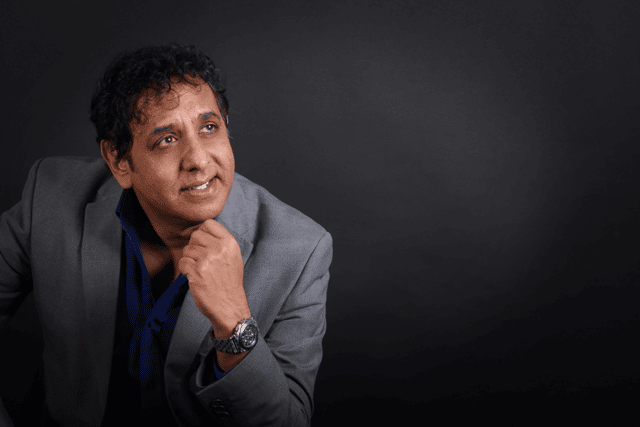
Roshan Dough: You might be forgiven for thinking you are in a foreign country
Very few people in Birmingham would disagree with Robert Jenrick’s comments about the failure of ‘liberal’ policies to integrate communities. Handsworth is not a place that anyone would describe as rich, harmonious, or salubrious in any way.
Unlike local councillors and Andy Street – the former elected mayor of the West Midlands – who have been in the media this week playing down any criticism of the place – many would consider Handsworth as one of the most (socially and economically) deprived areas in Britain. It is after all – along with Toxteth and Brixton – one of the epicentres of the so-called race riots in the early 1980s, and in recent years it has become a magnet for all the migrants/refugees arriving from eastern Europe, north Africa, and the Middle East.
In Handsworth, communities function in isolation to one another and not in conjunction with each other. Every now and then different factions might collide, but they are not in union with one another. There is an array of languages and cultures and differing nationalities who – for the want of a better word – tolerate one another from afar. This is aided further by Gaza flags and – a mile or two down towards West Bromwich – Union Jacks flying on one or two lamp posts, creating a distinct sense that we are living in a divided Britain. With the high influx of immigrants arriving in the area, education and social services are at breaking points because of the growing demands placed upon them. All this is creating divisions, and social and cultural suspicion. And this cannot be healthy or a sensible way to create tomorrow’s Britain.
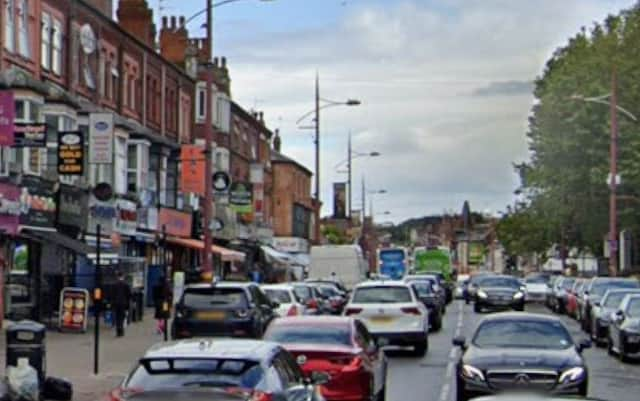
Handsworth is not – as liberal and some local commentators have been saying – a utopia of communal cohesion or a model for other prospective multicultural areas. Walking through its high street (Soho Road), any sensible law-abiding person would feel a sense of alienation. Like other journalists visiting Handsworth, I too felt unsafe here, especially towards the evening. One feels a sense of threat, as if your personal safety is in danger. This isn’t paranoia or xenophobia, but a strange feeling that although you are in England, you are remote from anything you would associate with that undefinable concept. Handsworth is in England and it does embody certain aspects of Englishness, but not as we know it.
Yes, Handsworth's history, and architecture are remnants of an old era with Victorian houses, old churches and listed buildings. But all that is fading away and being replaced by countless gurdwaras and mosques. Local schools are proud to say they have as many as 80 different languages spoken by their pupils. Coupled with the ever-increasing ‘foreign’ stores, selling exotic food and drinks, and where local councillors are known to proclaim more support for Gaza and Palestine than they do for finding a solution to the continuing bin strike in the city, you might be forgiven for thinking you’re living in a foreign country.
The truth is that Handsworth is problematic, alien and poverty stricken with a disproportionate amount of people on welfare and universal credit, school pupils receiving free school meals, and sky-high crime figures. Understandably, it has also seen what critics have described as ‘the white flight’ – white people leaving the area in droves. This has created a sense that differing communities – from all over the world – live together without the togetherness. But white British communities have been erased from the area – almost completely. They have been compelled to leave.
Robert Jenrick is, therefore, right. White British people only come into the area to work or to drive through as part of their commute. And if you stand for half an hour in the high street – an hour even – it is very unlikely that you will come across a white resident of the area. But then, coupled with surmountable rubbish and bin bags strewn across pavements, the occasional glimpse of scurrying rats, the (early morning) presence of alcoholics and drug addicts - not to mention prostitutes - why would anyone want to go through this ghetto? The only people who have anything positive to say are local politicians (who obviously have a vested interest) and liberals - neither of these groups, actually live in the area.
With local leaders and schools celebrating everything from other cultures in the way of arts/religious festivals, but feeling strangely queasy about flying the St George's flag or marking Christmas (lest they offend a certain minority group) - is it any wonder that white British people feel that they are foreigners in their own country? In Handsworth - at least - they are a minority group.
So, what does this multiculturally and racially diverse area mean for our policy makers?
Jenrick's comments raise questions not only about how many people Britain can accommodate, but how we assimilate people who are already here, and how we can establish a sense of cultural identity and nationhood. Just how effective is our schools’ teaching of British values in spite of our teachers sneering at such topics?
As an adviser to government bodies, I believe politicians, educationalists, and policy makers on both sides of the political spectrum have got to face reality and smell the coffee. Instead of regurgitating vacuous stuff about how effective multiculturalism is – and how we love diversity – perhaps they should listen to supporters of the Reform Party and take on board their concerns in a meaningful way instead of simply demonising indigenous British people concerned about their culture and country. Perhaps then – by singing from the same hymn sheet – we might reach a solution that takes in the interests of all our communities and not just those for whom we are providing a safe haven and a home.
Comment Guidelines
Iconic Media encourages reader discussion on our stories. User feedback, insights and back-and-forth exchanges add a rich layer of context to reporting. Please review our Community Guidelines before commenting.