
Who was Lady Jane Grey? How a Black Country tyrant installed his daughter-in-law as Queen for nine days
A television documentary this week revealed actor Jason Watkins' connection to nine-day Queen, Lady Jane Grey. Mark Andrews tells how a ruthless Black Country landowner seized control of the monarchy.


Lady Jane Grey entered the Tower of London as Queen of England. Nine days later she had relinquished the crown and was condemned to death.
The teenage monarch found out the hard way that they didn't call her cousin Bloody Mary for nothing.
The story of the ill-fated nine-day Queen was the subject of a television documentary this week, fronted by Albrighton-born actor Jason Watkins, known for his role in The Crown and detective series McDonald & Dodds. During the Channel 5 programme, it was revealed that Watkins was related to the man who carried out her execution.

But while Lady Jane went-down in history as the infamous short-lived Queen, the reality was she was just the fall girl, a puppet monarch installed by her ruthless and ambitious Black Country father-in-law.
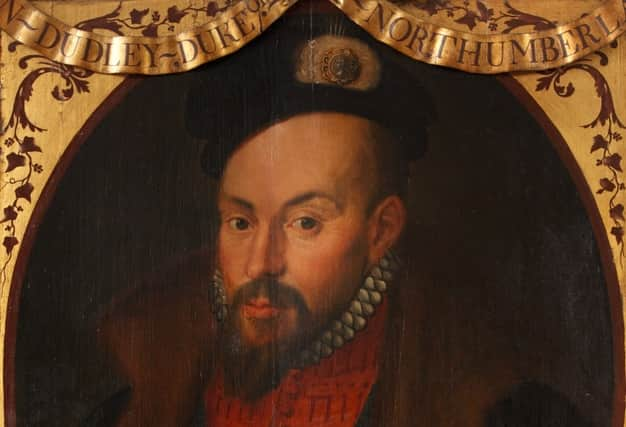
For a brief period during the 16th century, John Dudley was the most powerful man in England. But his failed coup saw him, his son and his unfortunate daughter-in-law all lose their heads.
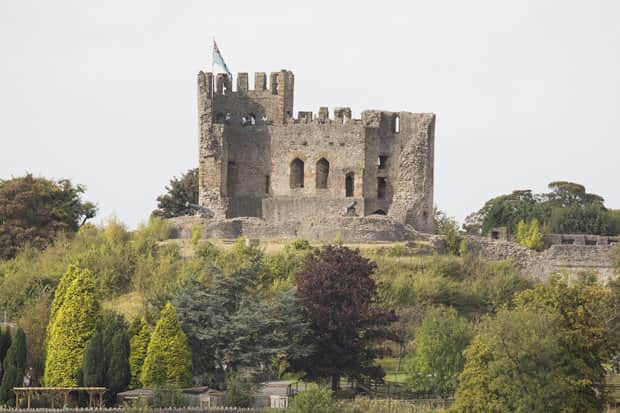
By the end of the 15th century, Dudley Castle's role as a defensive site had come to an end. Ownership passed to John Sutton, 3rd Baron Dudley in 1532, but money problems saw him borrow £2,000 from his cousin, John Dudley, with the castle and the manor as security. Sutton struggled to keep up with the payments, and after failing to secure help from Thomas Cromwell, John Dudley seized control.
Dudley had risen to prominence under Henry VIII, and ownership of the manor now gave him a power base to realise his considerable ambitions.
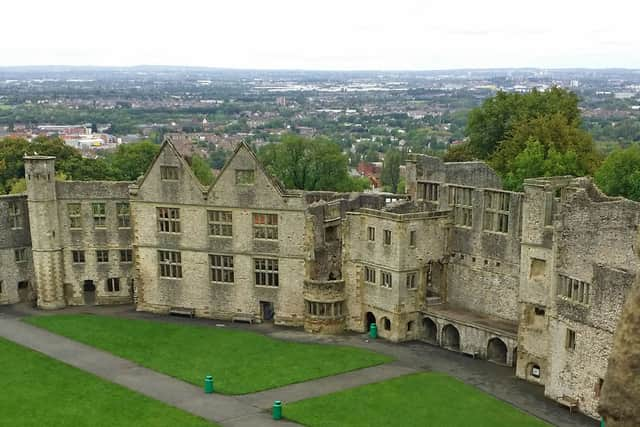
During the 1540s, he set about turning Dudley Castle into one of the grandest houses in the country, a palatial residence befitting a man of his standing. He employed celebrated architect William Sharington, a friend of the King, who created the buildings now known as the Sharrington Range.
His loyalty to Henry VIII saw him become second only to the King in stature, and as the King's health declined he grew in prominence. When Henry died in 1547, the throne passed to nine-year-old son Edward VI, with Henry's will appointing Dudley as one of a 16-man Regency Council to run the country until Edward was of age. By January 1550, Dudley had become the de facto ruler, and the following month was appointed Lord President of the Council, making him the King's chief minister. The following year he was appointed Duke of Northumberland in a ceremony attended by his friend, Edward Seymour, Duke of Somerset. Seymour was the King's uncle, and still the official Lord Protector, although his influence had waned following a peasants' revolt. Five days after receiving his dukedom, Dudley had Somerset arrested on trumped-up charges of plotting to have Dudley killed. His execution left Dudley with almost unchallenged power.
By this time, Dudley had become a somewhat unpopular figure, and his grip on power was threatened by the declining health of the young King. Next in line would have been Henry's eldest daughter Mary, but as a devout Catholic, she presented a severe threat to Dudley, who had unashamedly supported her father's Protestant Reformation.
Back in 1550, at the height of his powers, Dudley had identified 13-year-old Lady Jane Grey, great niece of Henry VIII, as a suitable future wife for his son Guildford. Jane is thought to have been born in Bradgate, Leicestershire, although others say she may have been born in London. lt has been claimed that she may have spent part of her childhood living at the Manor House of Whittington, near Stourbridge, although that his highly questionable.
As the Kiing's health declined, Jane and Guildford were married in May, 1553, when Jane was just 16 or 17 years old. Edward died, aged just 15, on July 6, leaving the succession open to Henry's eldest daughter, Mary.
A month before his death, the dying Edward wrote a will, barring his two half-sisters from the succession, and declaring Lady Jane, now known as Lady Jane Dudley, as the rightful heir to the throne. It can only be presumed that this was done under Dudley's influence.
While Edward lay dying, Dudley sent his son Robert and 300 men to Hertfordshire to arrest Mary before she could assume the throne. [177] Aware of Edward's illness, Mary had moved to East Anglia and assembled an army of her own, throwing Dudley's plans into disarray.
Mary sent a letter to Dudley and the Regency Council, demanding to be recognised as Queen. The letter arrived on July 10, the same day as Lady Jane was proclaimed Queen. Jane herself had been reluctant to assume the throne, and Dudley required the assistance of her parents to convince her.
Jane was proclaimed Queen of England, France and Ireland and Defender of the Church of England, but Dudley found she was more assertive than he had bargained for. She pronounced Guildford as Duke of Clarence rather than King.
It was later revealed that she had pleaded with her new husband to flee with her to France, leaving the throne to Mary, but Guildford refused. And when it was decided by the Queen's Council that her father, the Duke of Suffolk, should be sent to capture Mary, she ordered him to stay and sent Dudley in his place.
While Dudley was out seeking his rival, the Queen's Council held a secret meeting proclaiming him a traitor and declaring Mary Queen.
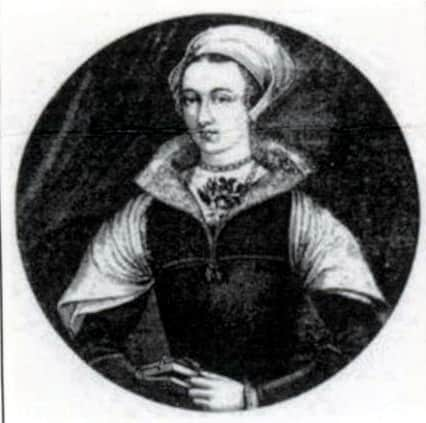
Jane's father told his daughter the news and she gladly relinquished her royal title after nine days on the throne. But when her parents left the tower she was taken into custody with Guildford.
Four days later Dudley was brought back to the Tower of London as a prisoner, and despite pleading with Mary for his life and renouncing his Protestant beliefs, he was beheaded on August 23, 1553.
Jane and Guildford were tried for treason on November 13, and both sentenced to death. Recognising that Jane and her husband were just pawns in her father-in-law's quest for power, Mary had no intention of carrying out the sentence. However, the following year, Jane's father, along with Guildford's brothers Robert and Henry Dudley, backed a rebellion opposed to the Mary's plans to marry King Philip of Spain. While there was no plan to restore Jane to the throne, she was deemed a threat to the Government, and the Privy Council pushed for the execution to go ahead. Mary was reluctant to see her cousin die, but she nevertheless signed the order on January 19,. 1554.
She was beheaded on February 9, 1554, with the proceedings overseen by Sir John Brydges, Lieutenant of the Tower, who we now know was related to Jason Watkins.
The family name lives on in Enville, near Stourbridge, where the grand hall was built by Thomas Grey, a distant cousin of Jane, in the 1530s.
In 1938 Eileen Bissill inherited the 6,500-acre estate from her father Sir John Foley Grey, a descendant of Thomas. Mrs Bissill died in 1999 aged 77 but the family still lives at the hall where, legend has it, a cluster of trees were chopped away at their heads to remember the death of the most famous family member.
Comment Guidelines
Iconic Media encourages reader discussion on our stories. User feedback, insights and back-and-forth exchanges add a rich layer of context to reporting. Please review our Community Guidelines before commenting.