
True Nobility: Peter Rhodes's book pays tribute to his war hero grandfather and great uncle

It was a spectacle being played out in almost every town and village in the country, but it left its impression on young John Willie Smith and his mate.
"There was great excitement, the band played throughout the village and then after about half an hour of hard blowing, in the evening there was a recruiting meeting in the church school room," the 19-year-old wrote in the opening paragraph of his war diary. "I and Joseph Smith fell victims that night."
On a gloomy mid-December day in 1914, the Duke of Wellington's Regiment brought a welcome dash of colour and excitement to the sleepy Yorkshire farming village of Lothersdale.
It was too much for the young lads to resist, and the following day they headed into town for their medicals. Joseph passed first time, but John Willie had a hand injury, and was told to come back the next day. On December 17, 1914, Private John William Smith was a fully-fledged member of 'The Dukes'.
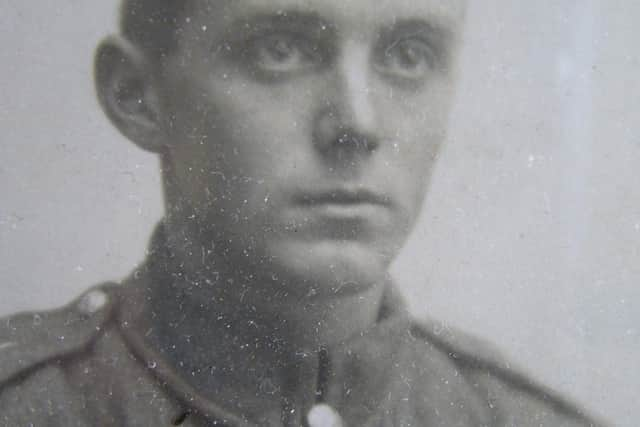

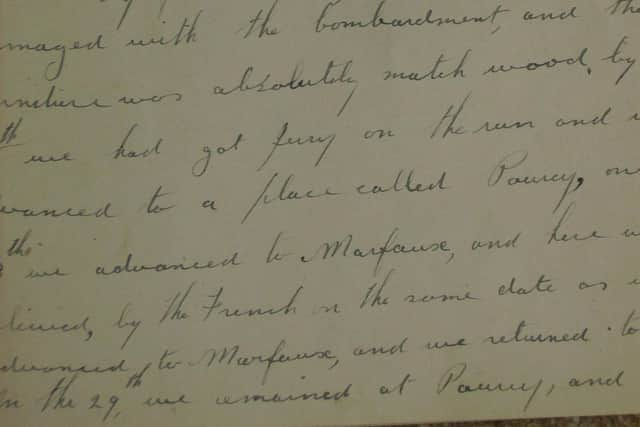
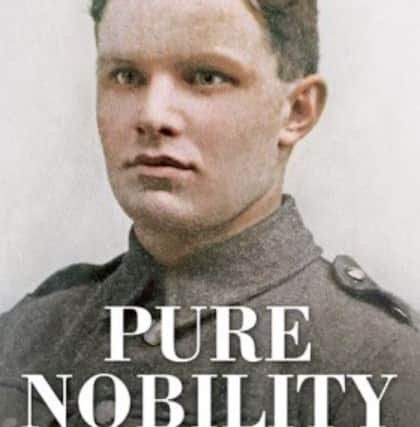
Private Smith was also the grandfather of the Star's Peter Rhodes, and his war diaries, which remained undiscovered until 1993, form the basis of the writer's final book Pure Nobility.
Unlike so many of the early recruits, who had been seduced by the glamour, excitement and marching bands, John Willie returned from battle alive and relatively unscathed, settling down to a happy life with his sweetheart Alice Laycock, and producing two children.
Not so lucky was his younger brother Alvin, who was desperate to follow in his brother's footsteps, but was deemed an 'essential worker' on the family farm. Frustrated at the derision often heaped on those in reserved occupations - it was commonplace for girls to taunt young men not in uniform by handing them white feathers - he jokingly asked his girlfriend Amy Teal if she would love him if he were a soldier.
"Well," teased the 18-year-old, in words that would haunt her for the rest of her life, "I might respect you a bit more." For Alvin, that was the final straw, and on January 26, 1916, just in time for Sir Douglas Haig's "Big Push", he followed his big brother by signing up for The Dukes. Eight months later he was dead, probably killed by his own side.
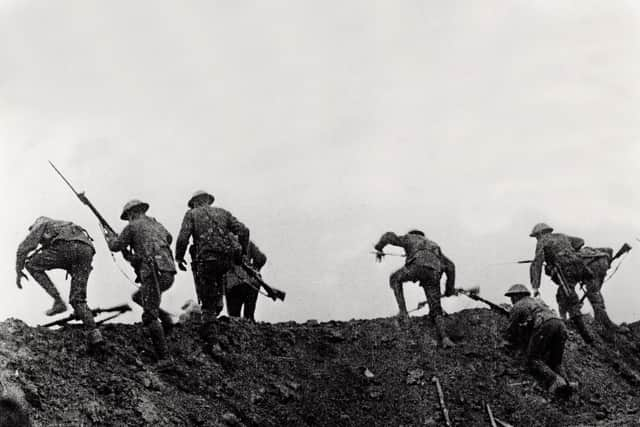
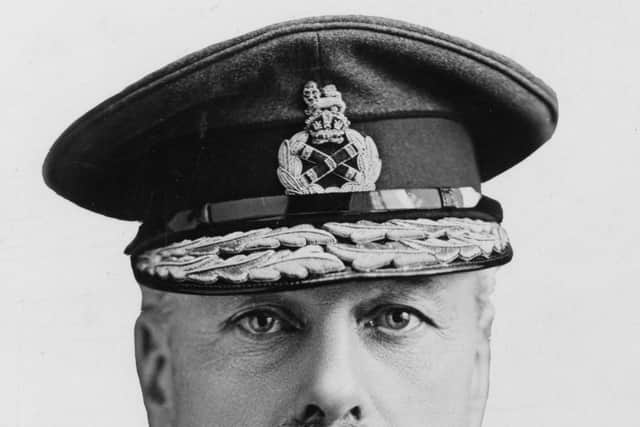
Rhodes's book describes how expendable young men like the Smith brothers were to the top brass like Haig in the killing fields of the Somme, where territorial gains were measures by the number of lives lost in making them.
"The total losses in this division are less than 1,000," the general wrote furiously in his diary, taking the view that they were not dying quickly enough in service of their country. To make matters worse, some of the troops in Alvin's division had failed to salute a visiting general, a misdemeanour addressed with an early-morning saluting drill.
Alvin's death came after British troops seized German trenches south of Thiepval. Three companies of Alvin's battalion took over the trenches, to prepare for another attack, supported by mortar fire from behind. But the battalion's mortars got the range wrong, and instead hit their own trenches, specifically a store of hand grenades. Alvin's body was never found.
The attack, on the other hand, was considered a great success, with 350 yards of ground gained, at a cost of 220 men. General Gough visited the battalion to congratulate the survivors. There was no need for a saluting drill that morning.

First World War diaries are a rare commodity, not least because the keeping of such journals were against army rules, lest they fell into the hands of the enemy. Private John Willie Smith's was never mentioned by his family, and appears to have unread until discovered by Rhodes following the death of his mother in 1993.
"Grandad wrote in a tight script and spelled French place names as he heard them," he says. "Keeping a diary in the trenches was against army regulations yet John Willie was clearly taking notes day-by-day, determined to leave something behind."
Towards the end of 2024, Rhodes and his wife Sally transcribed the 5,500 word document into an online format.
"Once rendered easier to read, it revealed a flowing and fascinating story," he says.
Rhodes wrote his last column last year, after more than 40 years with this newspaper, having been diagnosed with terminal cancer.
So how did John Willie survive to see the end of the war, while his younger brother perished within months?
Inevitably, chance, good fortune, however you perceive it, plays a crucial role. But the writer reveals another reason why his grandfather returned home relatively unscathed, while his great-uncle was less fortunate. One which somewhat made a mockery of the doctor who told the teenager to come back the next day, when he failed his medical.
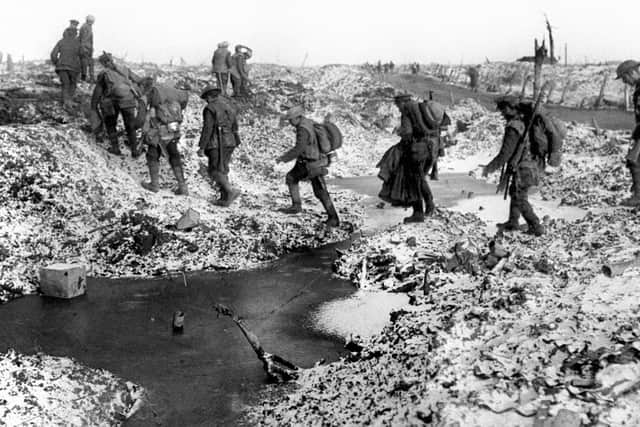
A few days before the outbreak of war, while working as a joiner back in Lothersdale, John Willie Smith lost part of a finger in sawmill accident.
While declared fit for active service, the young man was kept away from the frontline, spending the first couple of years in England on endless training exercises and Zeppelin patrols.
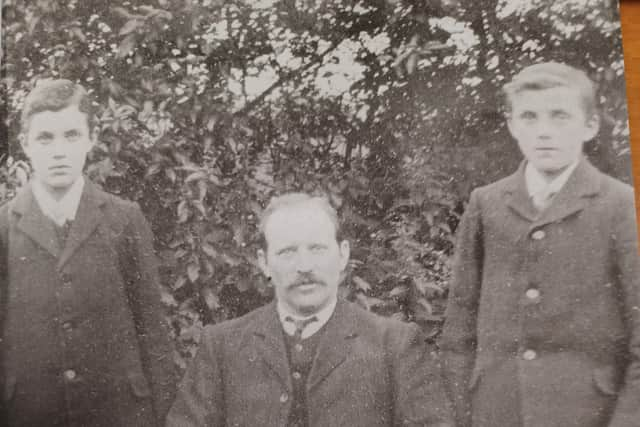
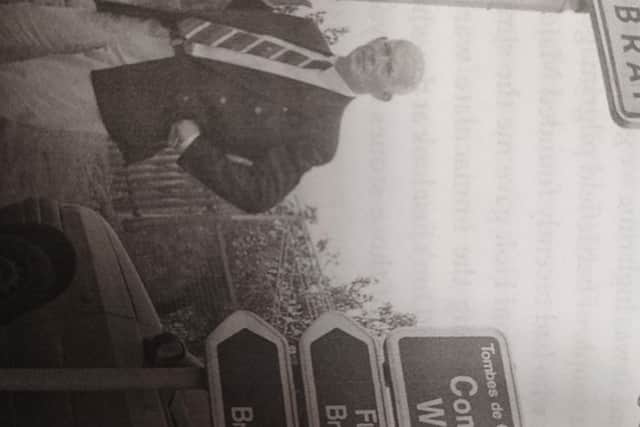
"It was not until February, 1917 that Pte Smith and his pals set sail from Southampton for Le Havre, to be loaded onto cattle trucks and sent to the Western Front," says Rhodes.
"By that then, Grandad was wearing a single black button on his uniform, signifying the loss of his younger brother Alvin, who in the space of a few months, had joined up and been killed in the Battle of the Somme serving with a first-line battalion.
"The irony was that the second-line battalions, including Grandad's, fought a first-class war."
They took part in the battle for Cambrai in 1917, the first time tanks were used in vast numbers, and the following year in the second Battle of the Marne, which marked the start of the final advance to victory.
"In popular folklore, Germans fled in panic at the sight of these metal monsters," says Rhodes, of the tanks at Cambrai. "The reality, after the first few encounters, was that the Kaiser's lads learned how to kill tanks with field guns, and stood their ground."
The return home to Blighty came in March 1919, the last leg of the journey home being via 'a little place outside Shrewsbury called Berrington'. In this piece we have twice referred to how Private Smith returned home 'almost' unscathed, but the reality is that in the last days of fighting, he suffered an injury that might well have afflicted him for the rest of his days.
"On the morning of the 20th (October, 1918), our artillery put a heavy barrage on old Jerry at about 2 o'clock in the morning," John Willie wrote in his diary.
"About 2.30am Fritz retaliated and we were in a big orchard in a little shack, and the old brute dumped one right through the top."
What 'old Jerry' had dumped was a cloud of mustard gas, leaving the young soldier blind.
"It was an awful feeling to be blind, and I was anxious as to whether I should be able to see again," he wrote in his diary.
"But the nurse told me I would be able to see again in about a week and of course she was correct."
John Willie was in hospital for 42 days, during which time the Armistice was signed.
That was not the end of his service though. Despite having been blinded and suffering the effects of gas, there was no time for recuperation. He was needed as part of the occupying force, guarding crucial points in western Germany.
John Willie Smith died in 1955 aged 60. Rhodes recalls that although his grandfather described himself as 'none the worse' for his war experiences, a combination of mustard gas and pneumonia had wrecked his lungs.
"With every passing winter, his chronic conditions worsened, finally leaving him bedridden," he says.
"I was four when he died and vaguely remember him in his final months with the dark-eyed, pinched face of a man old before his time."
Comment Guidelines
Iconic Media encourages reader discussion on our stories. User feedback, insights and back-and-forth exchanges add a rich layer of context to reporting. Please review our Community Guidelines before commenting.