
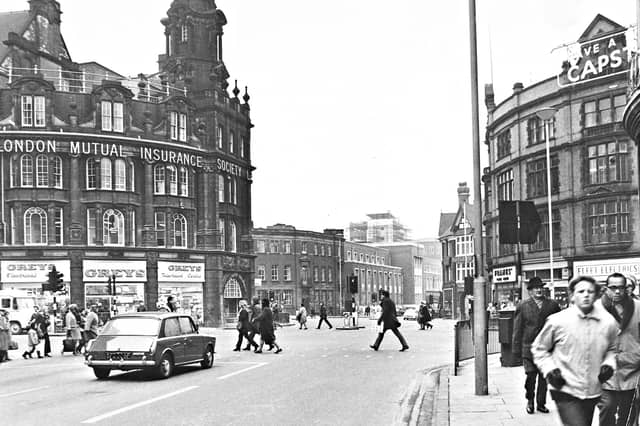

Take a trip back to Wolverhampton in 1969 with this collection of archive photographs capturing a town changing before people’s eyes.
It was a time when the expanding ring road and major redevelopment transformed the landscape, while familiar streets, traditional shops and long-established industries continued to define everyday life.
From busy factories and engineering works to community events, royal visits, churches, markets and neighbourhoods including Heath Town, Penn, Bradley and Tettenhall, these pictures offer a snapshot of Wolverhampton at the close of a remarkable decade.
Do you remember any of these places, people or events? Browse the gallery and let us know which photographs bring back the strongest memories by sharing your stories in the comments.
- Take a look back at Staffordshire and the Black Country in 1962 here.
- You can enjoy this and more with our weekly FREE Nostalgia Newsletter - with scores of archive pictures and exclusive features on the history of Wolverhampton, Staffordshire and the Black Country - all sent to your inbox every week. Sign up here.
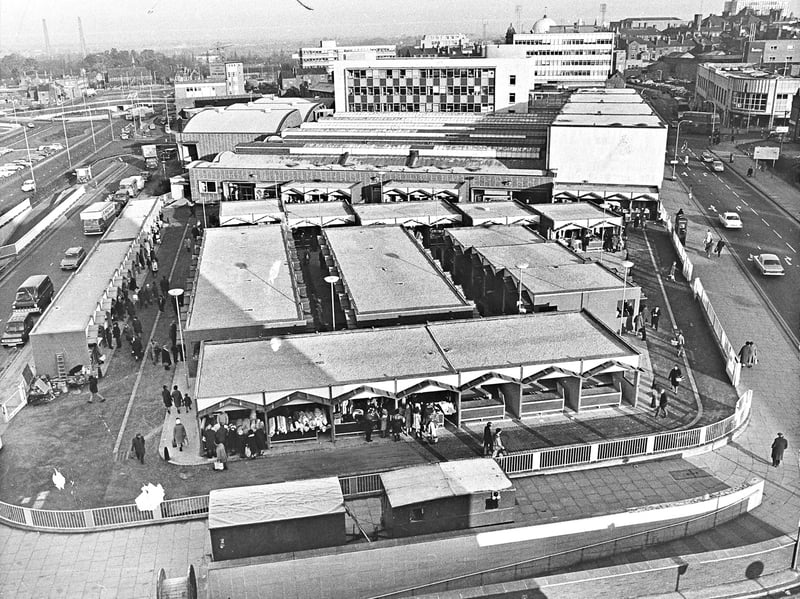
53. A new era for Wolverhampton’s open market
An elevated view looking down across the newly constructed, £93,000 open retail market in Wolverhampton as stallholders open for business in November 1969. Following extensive reconstruction plans and concerns over rising stall rents, traders moved onto the modernised, hygienic site bordering the main ring road. Despite uncertainties over increased costs, market organisers were determined to attract trade and maintain low prices, advertising the location as one of the best value shopping patches in the region while helping to preserve the town’s long-standing street trading heritage. Do you remember visiting the open market or buying bargain goods from the new stalls when they first opened in 1969? | Express & Star archive
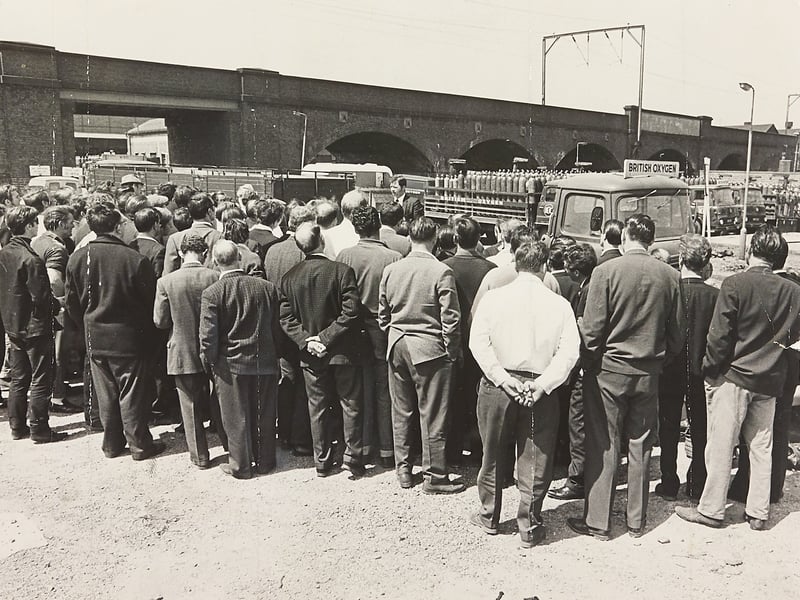
54. Standstill at Lower Walsall Street
Striking workers gather for a mass meeting outside the British Oxygen Company (BOC) depot on Lower Walsall Street in Wolverhampton in June 1969. With gas cylinder delivery lorries parked idle near the railway arches, employees listen to trade union representatives address the crowd regarding ongoing labour disputes. The tense gathering illustrates the broader industrial unrest and active organised labour movements that frequently swept through major manufacturing and distribution hubs across the West Midlands during the late 1960s. Do you remember the British Oxygen depot or the industrial strikes that affected local businesses around Walsall Street in Wolverhampton in 1969? | Express & Star archive
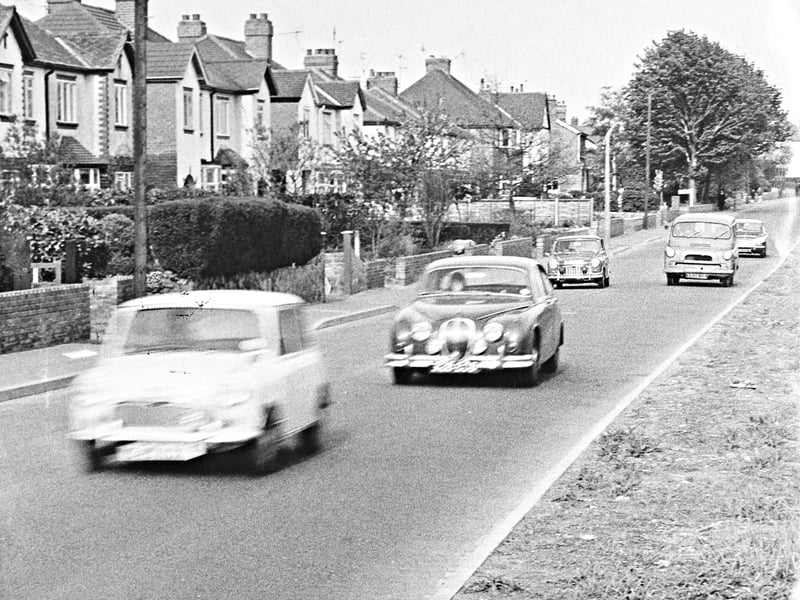
55. Suburban traffic on Langley Road
A classic mix of late-1960s motoring drives along Langley Road in Penn, captured in May 1969. Headed by a distinctive Jaguar saloon, the stream of traffic features popular vehicles of the era including a Mini, a Bedford van, and traditional family saloons navigating the leafy suburban residential avenue. Framed by neat brick walls, manicured hedges, and attractive semi-detached homes, the scene illustrates the steady rise in private car ownership across Wolverhampton’s expanding residential districts during the post-war period. Do you remember driving or living along Langley Road in Penn during the late 1960s? | Express & Star archive
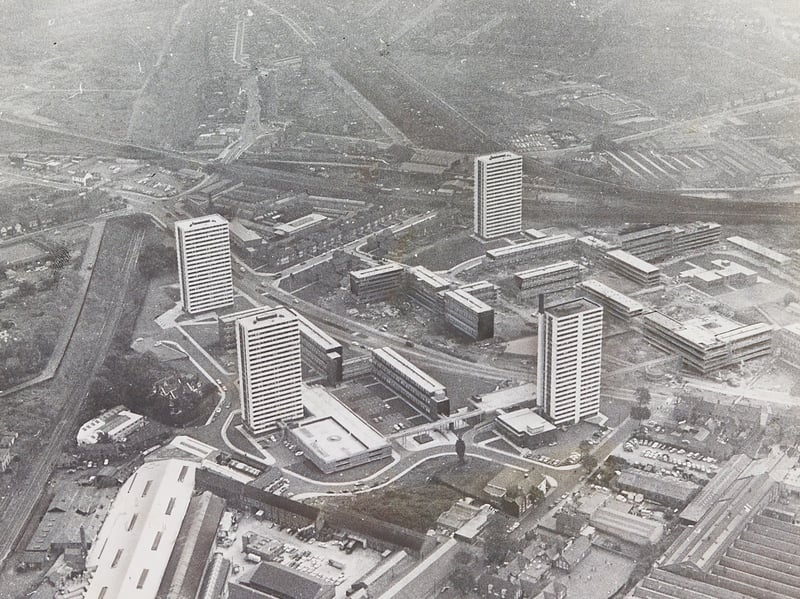
56. Rising towers of the Heath Town transformation
A striking aerial perspective captures the vast scale of the multi-million-pound Heath Town housing development in October 1969. Dominating the landscape are four newly constructed multi-storey residential tower blocks, intersected by Wednesfield Road as it cuts through towards its junction with Tudor Road and Deans Road. Surrounding industrial landmarks frame the modern estate, including the Chubb lock factory visible to the bottom right and the former Culwell Works to the bottom left, then being redeveloped into a modern industrial estate. The dramatic photograph highlights the ambitious post-war urban renewal efforts reshaping social housing across Wolverhampton. Do you remember watching the Heath Town estate being built or living in one of these iconic tower blocks during the late 1960s? | Express & Star archive