
Looking back on quakes that have shaken the region after latest tremors
It was 7.56 on a bright summer's morning, and heading towards the 8am news, Terry Wogan played Good Vibrations by the Beach Boys. Seconds into the track, the West Midlands was rocking to vibrations of a very different type.


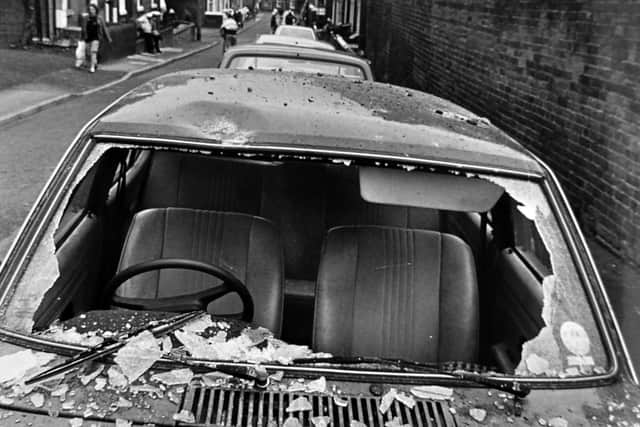
People were thrown from their feet, the chandeliers swung from the ceiling. July 19, 1984 saw the region shaken by the biggest earthquake to hit the UK since records began.
"The power of radio," quipped the affable and unflappable Irishman afterwards.
Wednesday's tremor in Staffordshire was the largest of 21 quakes to strike the UK in the past two months. But if the earth didn't move for you, don't worry. At 3.3 on the Richter scale, it pales into insignificance compared to that of 29 years ago, which measured 5.4 – which, due to the logarithmic nature of the Richter scale, means that the 1984 quake was actually 126 times larger than Wednesday's.
While the UK has never seen a truly momentous earthquake, of the kind which people in other parts of the world take for granted, the 1984 one ruffled more than a few feathers.
Billy Wilson, of Tettenhall Horse Sanctuary, near Wolverhampton, told how more than 100 horses stampeded as they took fright. A dozen sheep and three goats joined the herd as the terrified animals acted instinctively and tried to escape.
They leapt hedges and fences, gathered in a field, before stampeding past Mr Wilson's house. Staff at Wolverhampton Council's Culwell Street depot fled from their offices in terror as the building shook violently. In north Shropshire, a resident of Dudleston Heath watched a mirror crash to the floor.
While the region certainly felt the quake of 1984, its epicentre was actually the Llyn Peninsular in North Wales.
But the region has played a notable role in Britain's seismic history. There will be few who truly remember the Ludlow earthquake of 1926, which measured 4.8 on the Richter scale, and probably no-one who can recall the Stafford earthquake of 1916. But the 1990 tremor in Bishop's Castle, and the 2002 quake in Dudley, are still quite fresh in the mind.
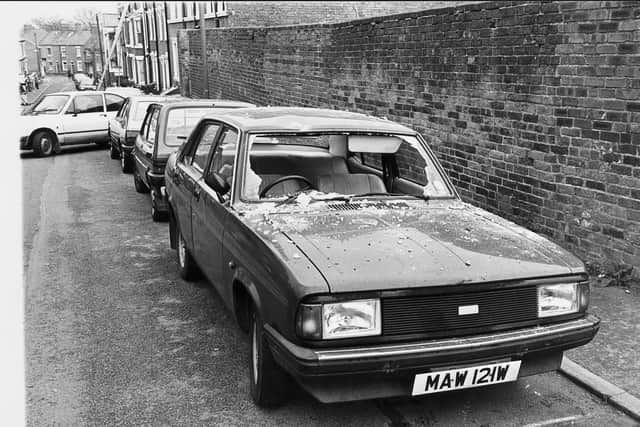
The Bishop's Castle quake measured 5.2 on the Richter scale, causing extensive damage, with Shrewsbury one of the worst-affected areas.
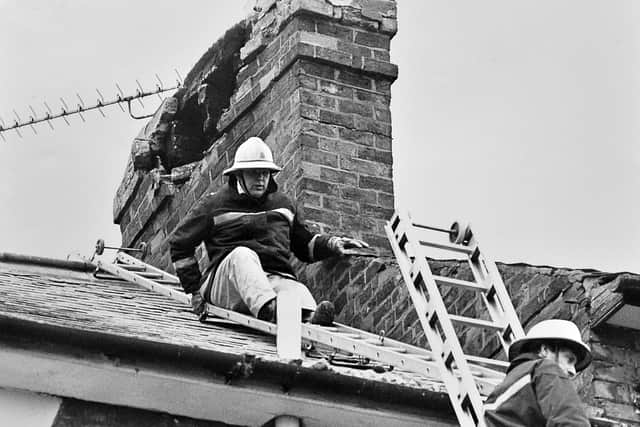
Two streets in Shrewsbury were closed, one because of a gas leak, the other because of falling tiles and slates.
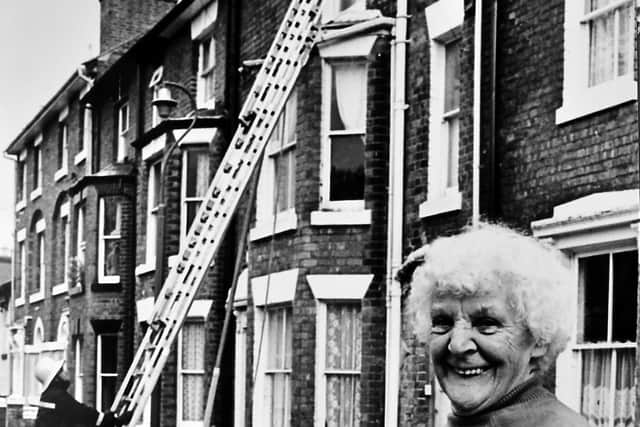
West Mercia Police was evacuated from its headquarters, and the emergency services were deluged with calls following the main tremor at 2.30pm, which lasted for about five seconds.
The 2002 earthquake in Dudley also left its mark, even prompting Chris Tarrant to make a song about it.
The fact that its epicentre was just 500 yards from the famous Crooked House pub, which slopes so much that marbles appear to roll uphill when inside, doubtless added to the colour.
The quake struck at 12.53am on September 23, and the Midlands rocked for 20 whole seconds. Families fled into the streets, chimneys were shaken loose, glass shattered and walls cracked.
Then Crooked House manager Sue Holloway said: "I was just about to get into bed and I heard a rumble, and then all of a sudden there was a big bang that sounded like an explosion and the building shook from side to side.”
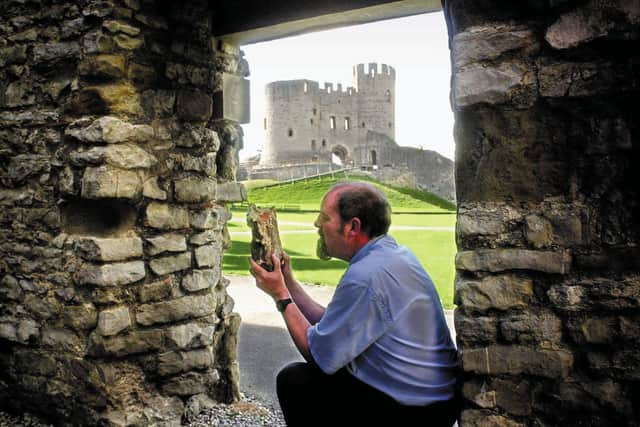
Dudley Castle, which dates back to the 11th century, was damaged during the earthquake, splitting the stonework and sending bricks tumbling from the ruins.
Stones from the walls of the kitchen area, which dates back to the 16th century, fell to the ground.
Castle keeper Adrian Durkin said: “A brick arch in the castle kitchen chimney collapsed and a 12ft crack has appeared between two main walls.
“As a safety precaution we asked a structural engineer to take a look at it.
“Obviously the close proximity of the epicentre meant the castle structure was shaken quite badly.
“However it has been standing for more than a thousand years and the building must have experienced similar tremors in its long history.”
The epicentre was at the junction of High Arcal Road and Himley Road near Himley, but the effects were felt as far away as North Yorkshire, London, and Wiltshire.
West Midlands Police reported about 5,000 calls in the space of an hour after the quake, accompanied by a loud rumbling. Fire alarms were set off and people turned up at police stations in their nightclothes to ask what had happened.
Catherine Mortimer, of Achilles Close, Great Wyrley, was in the process of giving birth to a baby boy at Walsall Manor Hospital just as the earth began to shake.
Her sister Helen Steadman, aged 35, of Shelfield, Walsall, said: “The earthquake happened just as the little boy’s head appeared. They thought it was a bomb had gone off.
“But she just carried on and Max William was born. I don’t think my sister will ever forget it.”
Richard Flynn, of Oldbury, said: “The house started shaking quite violently at about 1am. All the power was cut off and seemed to be so for about a five-mile radius.
“The shaking and trembling was really quite severe. Quite a few people came out of their houses wondering what was going on. The streets were in darkness.”
Glenn Ford of the British Geological Survey said: “It’s an extremely large earthquake in UK terms but not large in world terms. We’d only classify it as a light earthquake.”
He added that the tremor was the equivalent of an explosion of 1,000 tons of TNT or a small nuclear weapon.
Or to put it another way, it was 631 times smaller than the 2015 earthquake that devastated Nepal.
There were two significant earthquakes in the West Midlands last year: one in Walsall on February 22, which measured 2.8, and another in North Shropshire which measured 3.8. The Shropshire quake, which had its epicentre between Stanton upon Hine Heath, Weston-under-Redcastle and Hodnet, was felt as far away as Telford, Shrewsbury and even Cheshire.
Jon-Paul Orsi of the British Geological Society said: "There is an earthquake of this size, or greater, roughly every two years on average somewhere in the UK."
Comment Guidelines
Iconic Media encourages reader discussion on our stories. User feedback, insights and back-and-forth exchanges add a rich layer of context to reporting. Please review our Community Guidelines before commenting.