
From a lock-up garage in Staffordshire to £5.8 billion turnover: 80 years of JCB (and its boss) in 14 stunning photos
Staffordshire-based digger giant JCB is celebrating its 80th birthday with a £100 million investment in its manufacturing capabilities.


And to mark the milestone - as well as its chairman's own 80th birthday - the company is giving its entire workforce a day's paid holiday this week.
The word 'synonymous' is much abused these days, having almost become a lazy shorthand for 'well-known-for'. But the name JCB has unquestionably become synonymous with 'excavator'. Yet its first product was a much simpler affair.
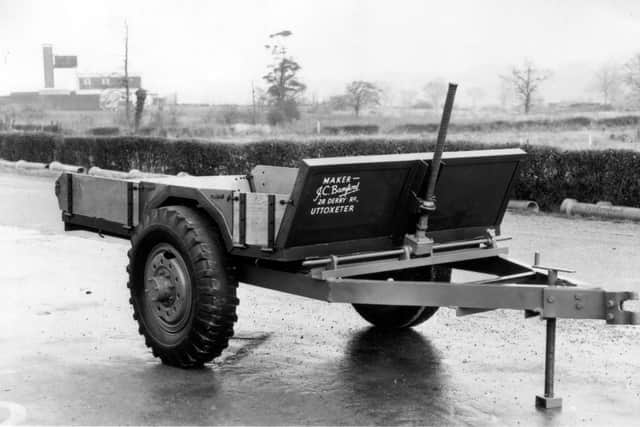
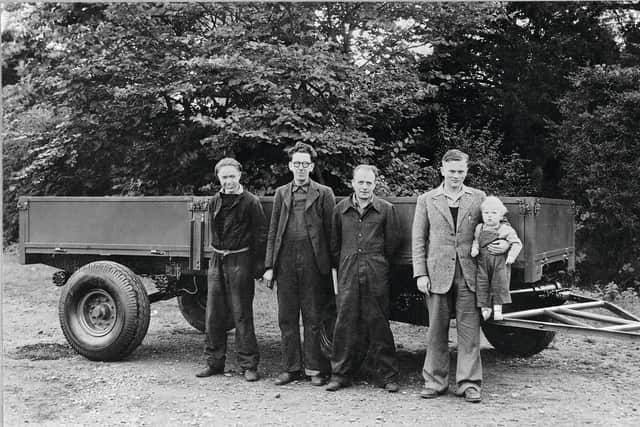
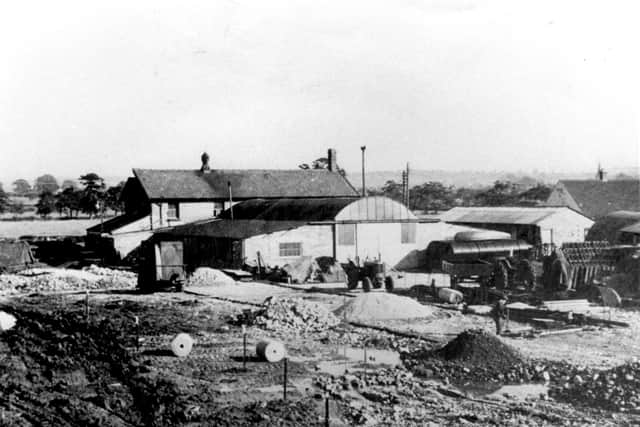
The JCB story began on October 23, 1945, when Joseph Cyril Bamford sold his first product, a trailer he had made out of old air-raid shelters with a secondhand welding kit, on a market near his home.
It was also the day that Bamford's son Anthony was born - and as he prepares to celebrate his 80th birthday tomorrow the now Lord Bamford shows no sign of letting up.
This week he announced a £100 million investment in ultra-modern manufacturing facilities at its global headquarters in Rocester, Staffordshire, saying it demonstrates the company’s long-term commitment to British industry.
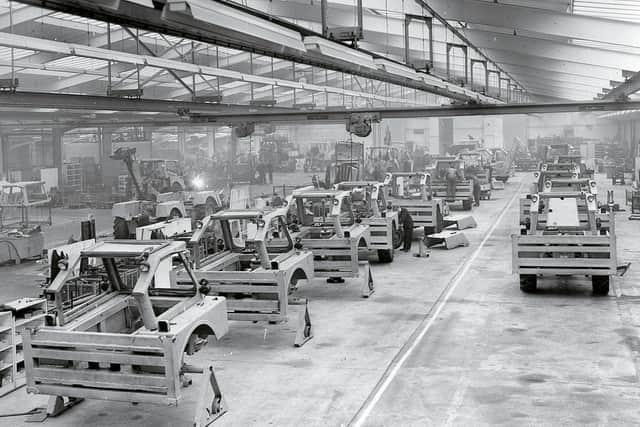
The investment will begin immediately, with a £60 million fully automated powder-paint plant and a comprehensive modernisation of its shop floor, with new machining centres, friction welders and cylinder boring machines.
Lord Bamford said as well as safeguarding more than 8,000 jobs in the UK, the investment will also strengthen JCB’s competitiveness and productivity as it continues to grow internationally.
The past half-century has seen JCB experience phenomenal growth. In 1975, when the company celebrated its 30th birthday, turnover stood at £44 million, and sold about 4,000 machines. Last year the company turned over £5.8 billion last year, selling 120,000 products.
Lord Bamford says investing in the UK was a logical and important step. While JCB is now a global operator, he believes the Midlands is crucial to its success.
“Basing JCB in the UK makes business sense, just as it has always made business sense," he said.
"The work ethic in our country remains strong, especially in the Midlands, with its deep engineering heritage.
“It makes perfect sense to invest heavily in our British factories and the £100 million we are investing now will put us at the forefront of our industry. Obviously, we are expanding overseas, not least in America, where we have been for decades. But the UK is our home.
“We directly employ more than 19,000 people around the world, more than 8,000 of whom are in the UK. And even though around three quarters of our UK production is exported, we continue to make a huge contribution to this country and to the national economy.”
Independent analysis by Oxford Economics shows that JCB contributes £2.8 billion to the UK's GDP, and £739 million to the Exchequer in tax revenues. The company also supports more than 41,000 jobs across the UK economy.
The JCB Academy in Rocester has trained more than 3,500 students since its launch in 2010, with many progressing to employment, further or higher education. JCB also continues to expand internationally – including with a new $500 million (£374 million) factory in San Antonio, Texas, due to start production next year.
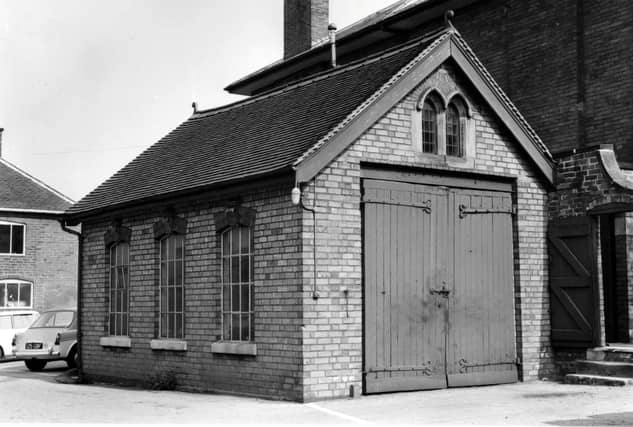
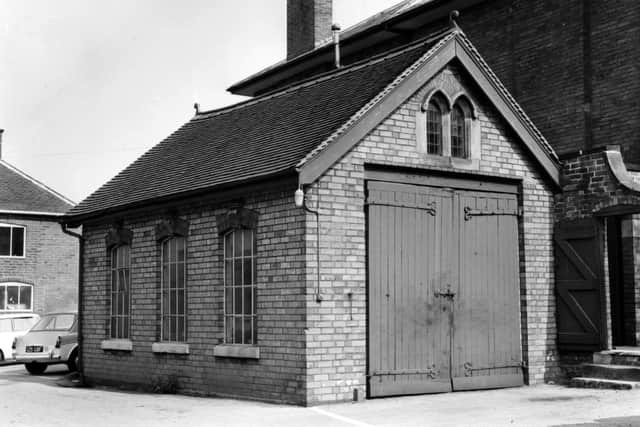
Today a blue heritage plaque will be unveiled at the spot in Uttoxeter where Lord Bamford's father built his first trailer, in a lock-up double garage measuring 12ft by 15ft. Having sold the trailer, and become a father the same day, Joseph Bamford set about building another one.
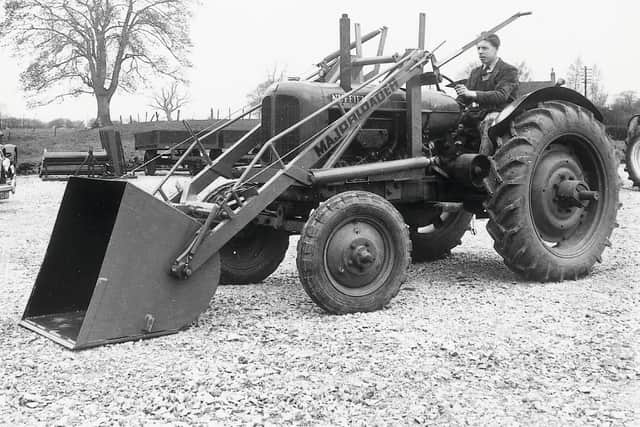
The big breakthrough, though, came in 1953, when Bamford launched the revolutionary MK I Excavator, the world’s first backhoe loader. This ambitious machine attached an excavator with hydraulic rams to the back of a front-loader, creating the design that is well recognisable today. By this time, Bamford had already begun painting his products yellow, and the same year he started using the famous JCB logo,.designed by marketing entrepreneur Leslie Smith.
The company celebrated its 40th anniversary in 1985 with the production of the 100,000th backhoe, and the years that followed saw exponential growth, reaching 500,000 machines in 2004, and topping one million nine years later.
2018 saw JCB launch its first all-electric mini excavator, the JCB 19C-IE. This was the first in a range of zero emission products released by the company. The benefit of this machinery is that it can be used indoors as well as outside on sites, and a full charge can last a full working day.
Lord Bamford stresses the company is committed to clean technology; with a £100 million hydrogen engine programme, launched in 2020, having produced more than 150 engines. Real-world pre-launch testing is now well advanced, making JCB the first construction equipment company to develop a fully approved combustion engine fuelled by hydrogen.
To celebrate the company's 80th anniversary, and Lord Bamford’s birthday, JCB will give its global workforce – comprising more than 19,000 people – an additional day’s holiday on Friday.
Comment Guidelines
Iconic Media encourages reader discussion on our stories. User feedback, insights and back-and-forth exchanges add a rich layer of context to reporting. Please review our Community Guidelines before commenting.