
80 years since D-Day: Bodies on the beach would haunt veterans forever
D-Day June 6 7.30am - midday
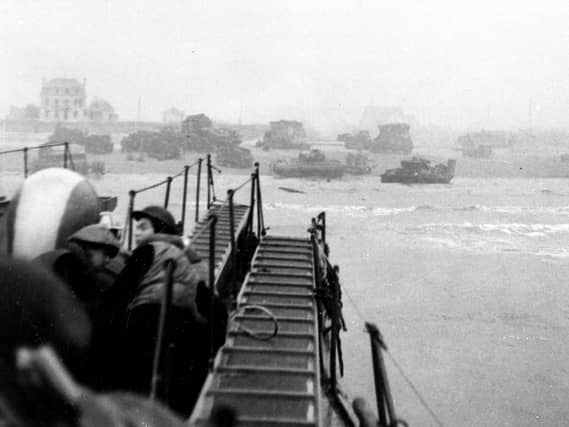

Getting ashore was seldom as easy as it had been on rehearsal exercises.
Ray Whittingham of Codsall, a 20-year-old anti-tank gunner, was detailed to help push out a roll of reinforced steel netting from his landing craft to help vehicles drive ashore. Clad in waterproof anti-gas trousers to keep dry, he and his colleagues stepped into chest-high water and their trousers promptly filled with sea water:
"This, together with the inflatable lifebelts that were being worn must have made us appear more like Michelin men than invaders."
Despite their difficulties, they unrolled the matting and the carriers and guns got safely ashore.
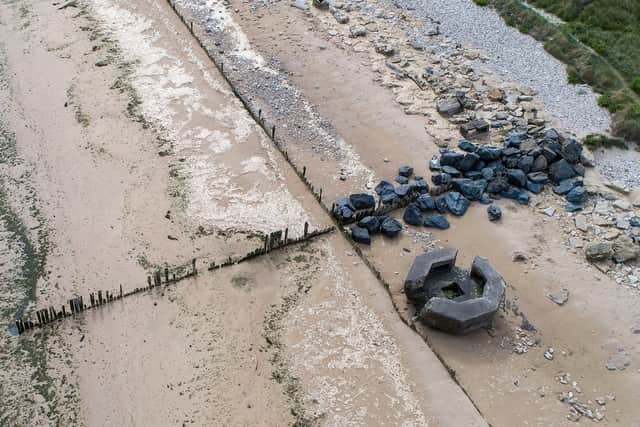
Stan Cartwright of Cradley Heath was crewman on a landing craft heading for Sword beach. He was 19.
"As the tide went out, our craft sat on top of an anti-invasion mine, blowing a great hole in our starboard side."
There was nothing for it but to scramble ashore, dig a fox-hole and hope for the best as German warplanes strafed the beach.
"My thought at the time was, if I have to die it's not going to be in a hole. So back we went aboard our landing craft. I can still see the bodies on the beach and, later in the day, the planes releasing the gliders, the paratroops descending from the planes and some not opening, and us looking on helplessly."
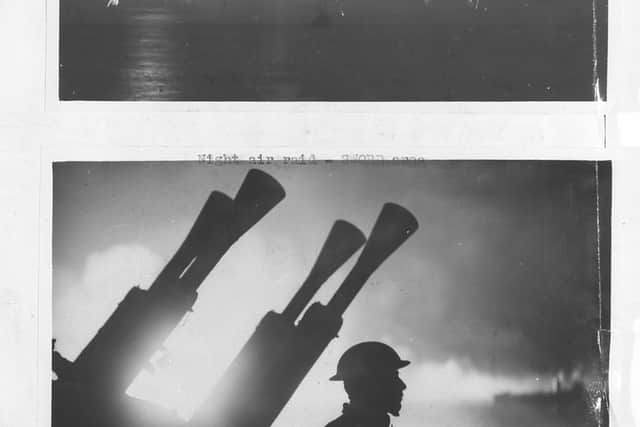
Sam Tuft of Brownhills waded ashore in the second wave as a private in the Queen's Royal Regiment on Gold Beach:
"The water was neck-deep. Your main concern was to keep your rifle dry. Things were chaotic, with artillery fire and sniping from hidden vantage points, making it difficult to keep track of units.
One of my first jobs after landing was to bury a fellow soldier, who had been badly blown-up, in a field.
"The worst thing of all was talking and joking with your mates and then suddenly finding they weren't there."
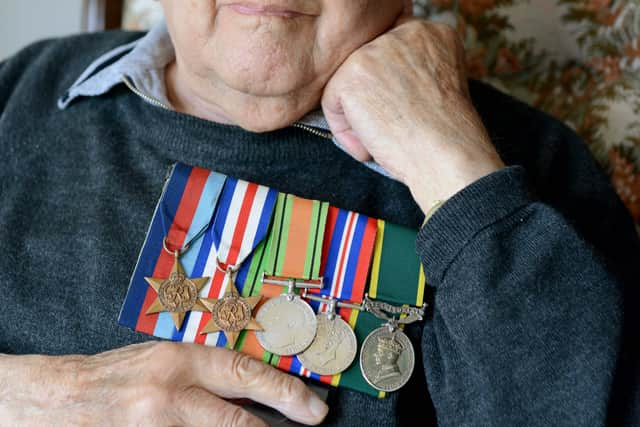
Fred Harvey of Pelsall went ashore on Juno Beach as a 20-year-old gunner: "A few miles offshore we stopped and a `Rhino' came into position to transfer us to shore. I remember thinking we were on our own now as we dashed for a position above the high-water mark.
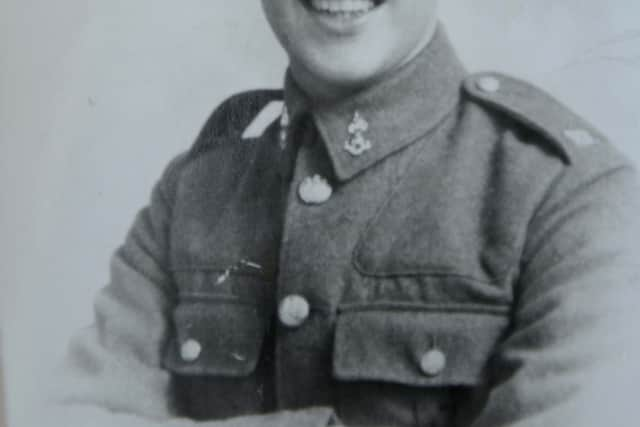
"To our front was a concrete gun emplacement which had caused so much trouble, with two of the Canadian lads lying dead in front of the gun."
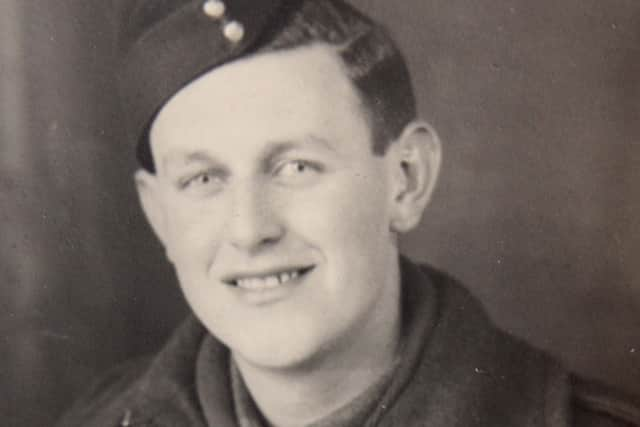
Alan Rochelle, from Staffordshire, landed at Sword Beach at midday. A sapper aged 20 with the Royal Engineers, he was charged with the task of unloading supply trucks. He went ashore in an LCI (landing craft infantry), a 160-foot long craft capable of carrying nearly 200 men, and its initial attempts at discharging its passengers nearly ended in disaster.
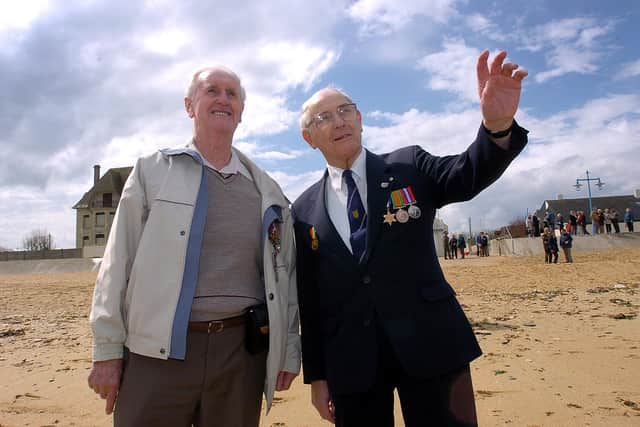
"There were parts of two companies on the LCI I came in with. At first they tried to drop us too far out and the men who went out had to inflate their Mae Wests, they were floating and their feet didn't touch the ground. Some of the navy people on the craft jumped in to help them out. The LCI then pulled back and we put rope ladders down and were instructed to climb down into smaller assault craft to go ashore. We still got a wet landing but not as bad as the first lot. It was the first action I had seen.
"When I landed the assault troops had cleared much of the area but we were still under sniper and artillery fire. There weren't many German aircraft around but I remember one came along the beach trying to bomb the ships but must have missed because I saw a spout of water come up. Another one flew along the beach and we all expected it to open fire on us, but it must have seen a better target further along. It was shot down further as it got further along the beach.
"My biggest fear was stepping on a mine. Having a limb blown off, being maimed like that was terrifying. When the tanks came ashore I made sure that I only walked in their tracks, because I thought that if they hadn't set off, I wasn't likely to. The beach was absolutely jam-packed with vehicles, all of them trying to get off the beach. We were at the beach longer than expected because we did not get in-land as a far as planned. Some of the ships off the beach were flying barrage balloons as the landings went on but soon realised that the German artillery were using them to target the boats."
As the infantry stormed the Normandy beaches, companies of the Royal Engineers came ashore to clear the way for the massive build-up of vehicles and stores.
Sapper Alan Jones of Dudley was 24 and it was his first day in action. Born and raised in Dudley, he was working in heavy engineering before being called up and was drafted in the Royal Engineers. He and his mates went ashore in landing craft with mine detectors and one of the great successes of the Second World War - Bailey Bridges. A civilian engineer, Donald Bailey had sketched out the basic details of his brainchild on the back of an envelope during a train journey.
The Bailey Bridge came into service in 1942 and became a legend. By the end of the war multiple Bailey Bridges up to 1,000 feet long had been thrown across rivers from Britain to Burma. But the Engineers’ job on D-Day, often under enemy fire, was to clear Nazi minefields and bolt shorter Bailey Bridges into place across ditches and other obstacles.
"I remember feeling a bit scared," said Mr Jones. "But we had a job to do, and that was that.
"The Bailey Bridges were great. It was hard work but it was like a Meccano set."
He recalls the satisfaction, by the end of The Longest Day, of seeing tanks and guns heading inland over his bridges as the Allies broke out from the beachhead.
For Bill Kendrick of Parkfield, Wolverhampton, D-Day brought a terrifying encounter with a fellow Black Countryman.
Driving a Jeep converted to take stretchers, Private Kendrick was a veteran of Dunkirk, Alamein and the Italian landings:
'I'd been on dozens of ships and landing craft before but D-Day was the only time I got seasick.'
Storming ashore with the Green Howards on Gold Beach, he was sent forward to collect the wounded as bullets and shells scorched through the Normandy hedgerows.
"The infantry could drop into the trenches and there I was in my Jeep, sticking up like a great big wooden target. There were some of our tanks firing away in the next field and suddenly this bloody great Sherman came crashing through the hedge. I shouted: “Yow look where yoom shoving that tank,” and he said: “Sorry mate, I dae see yow.” I said: “Yowm from Wolverhampton ain't yer?” Never did find out who he was."
Having experienced several earlier retreats, the Jeep-ambulance driver half-expected another Dunkirk. But as the Allies drove hard inland, German prisoners started pouring back.
"They were like a bunch of zombies, very pale, running down the road four abreast with no-one even guarding them.
"They were terrified and so was I. But at least they were getting out of it. We had to go forward."
The sheer scale of D-Day stirred the emotions. Robert Simpson, an army medic from Warley, felt a lump in his throat at the sight of the massive Allied glider fleet passing overhead, and the terror of being strafed on the beach by German fighters. But his abiding memory was an act of humanity as two British soldiers seemed on the verge of killing a terrified German soldier: "Our padre saved the German’s life by persuading them to take him prisoner instead."
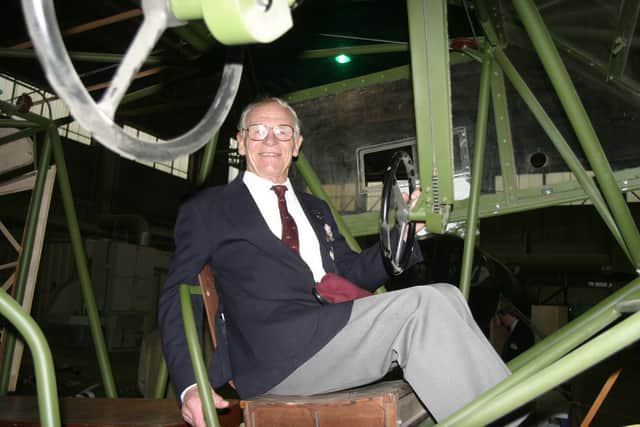
Alf 'Tug’ Wilson from Bloxwich was a glider pilot: "We all knew it was dangerous. We knew they always aimed for the pilot. Kill the pilot and you've killed the glider. You felt pride in your regiment and pride in your army. But it was what you trained for and what you got paid for. We just wanted to get in there and do the job."
His D-Day mission was to land his Horsa, carrying a gun, its Jeep and crew near the River Orne. Towed from Brize Norton to Normandy by a Halifax bomber, he cast off higher than planned and headed straight for Caen to lose speed and height. But a burst of anti-aircraft shells put a hole in his wing and he swung back, looking for a landing place among the dozens of gliders carpeting the Normandy meadows below. He chose his spot and was hedge-hopping towards it thirty feet up at 80 mph when he felt 'one hell of a bump'. A Horsa had crashed into him from above. As it shot past him the other glider, hinged in the centre for unloading, began to open up. Thankfully, both gliders hit the ground and slewed to a halt without any injuries. The guns were unloaded and the heroes of the Glider Pilot Regiment made their way back to the invasion beaches.
"On the beach there were lines of British dead. I walked past to see if I knew anyone, but I didn't."
Bob Stokes of Wednesfield, a private in the Ox & Bucks Light Infantry, arrived by Horsa glider in the late afternoon to defend a line two miles inland from Pegasus Bridge:
"We went into a ploughed field, nose-down, and the pilot was killed. A German anti-aircraft gun was shooting at us but couldn't shoot low enough. Someone took a bazooka and knocked it out, quite casually."
Harry Anderson of Chapel Ash, Wolverhampton was a veteran of the 1940 Dunkirk evacuation. On D-Day he was back in France as a lance corporal with the 4th/7th Royal Dragoon Guards. He landed on Gold Beach on the afternoon of D-Day.
"I always knew we would have to go back and finish off what we didn't do the first time. It had to be finished one way or the other. I just wanted to do the job and hoped I'd survive."
He was a fitter, responsible for keeping the regiment's Sherman tanks rolling and repairing them if they broke down. But in the chaos of the beach landing, only a few of the vehicles made it ashore.
"Even though we had been at Dunkirk, we didn't really know what to expect when we landed. There was a bit of resistance where we came ashore and there were an awful lot of Germans but the big guns were keeping the Germans quiet. We did take some casualties, of course. Some men from my regiment are in the cemetery at Creully. All of the time there were a lot of shells falling and a lot of flak .Only a few of our tanks actually managed to get ashore, but it was only later in the day that we realised how many tanks we had lost during the day.’
Mr Anderson and his comrades moved away from the beach and headed towards the city of Caen, where they were held up by the German defenders.
"That evening I remember thinking about the men we had lost and that I was lucky to be alive."
Jeff Pocock, of Penn, served with a recce unit, the Derbyshire Yeomanry, and endured hours of the 'continuous and overpowering' naval barrage before going ashore. The captain of the cargo ship Winona decided to beach the vessel at high tide. The Yeomanry’s armoured cars were unloaded by cranes and the soldiers set foot on French soil by a most unglamorous means.
"We all thought we would go ashore from landing craft. In the event, we ended up climbing down a wooden ladder. The scene was of utter devastation. Farmhouses had been wrecked, trees shattered and there were dead cattle in the fields."
Comment Guidelines
Iconic Media encourages reader discussion on our stories. User feedback, insights and back-and-forth exchanges add a rich layer of context to reporting. Please review our Community Guidelines before commenting.