
40 years of the Merry Hill centre: How it has changed the face of the Black Country
Hand towels 99p each. Curtains £3.99 a yard. Pillowcases £2.50 a pair.

It was hardly the sale to end all post-Christmas sales.
But the people who turned out for cheap homewares at the Texstyle World sale, 40 years ago this week, were at the centre of something that - for better or worse - was about to shake the Black Country to its core.
The Merry Hill retail park did not exactly arrive with a fanfare. The first business, a branch of flat-pack furniture retailer MFI, had opened about October 1985. A few weeks later it was followed by Atlantis Electrical, Queensway furniture, and Texstyle World. By Christmas, Asda also had a branch there, but its advertising merely described it as being in 'Pedmore Road, Dudley', with no reference to the embryonic 'shopping city'. The opening of Halfords and B&Q followed, but even at that time there was little indication of what lay around the corner.
The story had begun some seven years earlier in the summer of 1978, when the then shadow treasury spokesman Geoffrey Howe delivered a speech in an East London pub. He told members of a think-tank about the need for a new approach to eradicating inner-city deprivation and unemployment. He suggested run-down areas such as London's Isle of Dogs, where he was giving his speech, should become 'Crown colonies' like Hong Kong, freed from state planning regulations and with a low-tax regime to stimulate enterprise. At this stage, this was little more than an intellectual debate, but two years later, when Howe was Chancellor of the Exchequer in Margaret Thatcher's Government, a slightly more nuanced version of the policy was announced.
The 'Crown colonies' would become 'enterprise zones', 11 strategically selected areas which would benefit from targeted government funding, a relaxed planning regime, no land taxes, and crucially, 10 years' free rates. The Government invited local authorities to propose suitable sites. Wolverhampton Council proposed the former Bilston Steelworks, while Dudley Council proposed the Blackbrook Valley. a 540-acre site including Merry Hill urban farm. On January 20, 1981, it was announced that Dudley would be the only enterprise zone in the West Midlands.
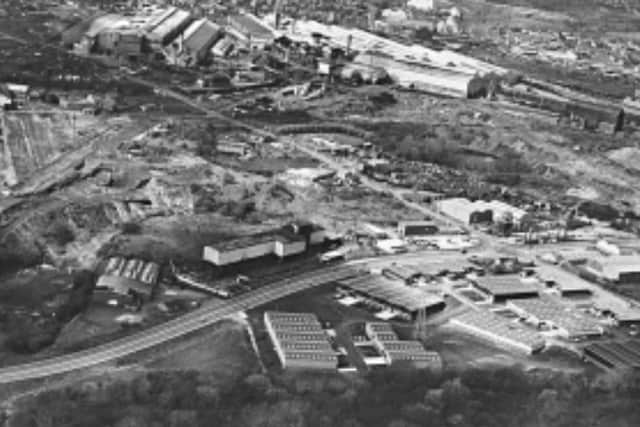

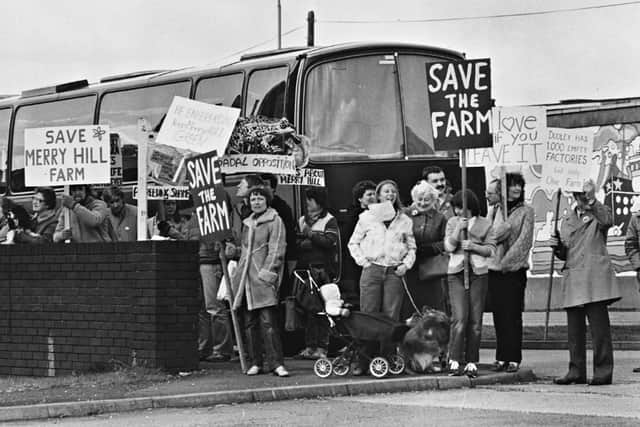
Industrial parks occupied by small and mid-sized works began to appear, but there was little sign of the manufacturing powerhouses the Government had hoped to attract. The Oldbury-based Richardson group, headed by twin brothers Don and Roy Richardson, acquired Merry Hill farm in 1983, sparking a 5,000-signature petition calling for the site to be preserved as a wildlife haven.
But these concerns were largely overshadowed by events at the neighbouring Round Oak steel works. In November, 1982, British Steel announced the plant was to close by Christmas. It had been at the site since 1857, and the closure would result in the loss of about 1,300 jobs. Outlining their £40 million development plan, the Richardsons revealed they had added the site to their portfolio.
In 1984, the enterprise zone was extended to cover the former steelworks. The same year, the twins submitted their plans for a 'shopping city' at Merry Hill farm - raising a few eyebrows from those who assumed it would be for industrial development. The council's opposition Labour group opposed the plans, expressing concerns about the impact on neighbouring towns, but were outvoted just weeks before the ruling Conservative group lost control of the authority. Outgoing council leader Jack Edmonds instructed chief executive John Mulvehill to rubber-stamp the scheme before a new administration could reverse the decision. Mr Mulvehill resigned shortly after the details became public.
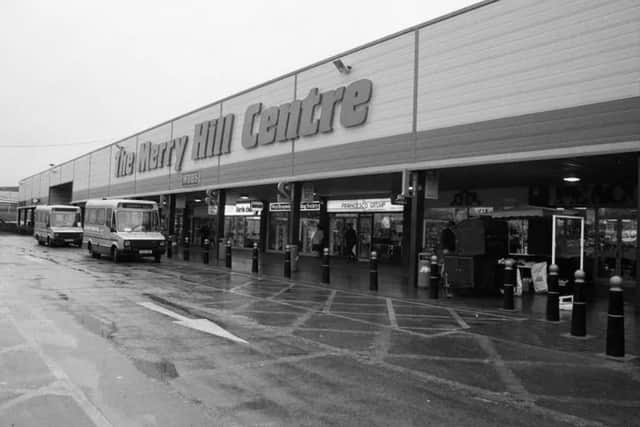
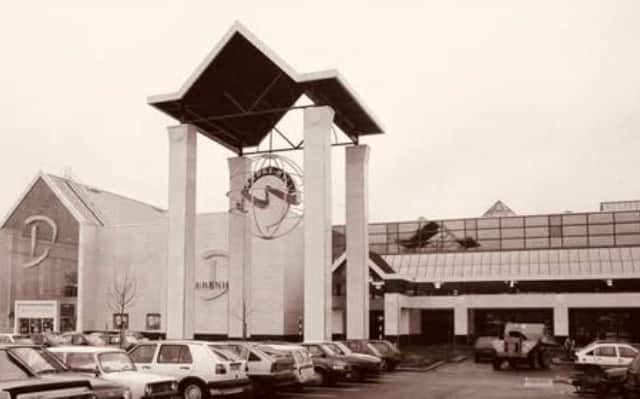
Construction work was swift, and by April 1986, the first phase of the Merry Hill Centre had been completed. Merry Hill was now home to the first free-standing Pizza Hut in the UK, one of the first drive-thru McDonald's takeaways and the largest Texas Homecare DIY store.
But this was just the beginning, as the Richardsons announced plans to treble the size of the complex.
While most of the early development consisted of warehouse-style units, the second phase included a small shopping mall. On July 1, 1986, French hypermarket Carrefour opened at the site, which was quite a novelty when stores on this scale were still rare in the UK. It would not last long; within 18 months Carrefour sold all its UK stores to supermarket chain Gateway, which in turn passed many of them on to rival Asda, which still occupies the unit today. Fountains were installed inside the mall, supposedly to represent the waterways of the Black Country, an analogy which was lost on most visitors.
While there was clearly a novelty factor surrounding the new retail complex, the shopping revolution had yet to materialise, and Dudley town centre had largely managed to hold its own. Mindful of the new competition, plans were submitted in 1988 for a major redevelopment of the market place, with a huge extension to the Churchill Shopping Precinct, including a covered walkway linking it to Flood Street car park. There was even talk of a huge glass roof over the market, although that appeared to be more of a pipe dream. The plans were rejected by Dudley Council on the grounds it would affect the view of the castle.
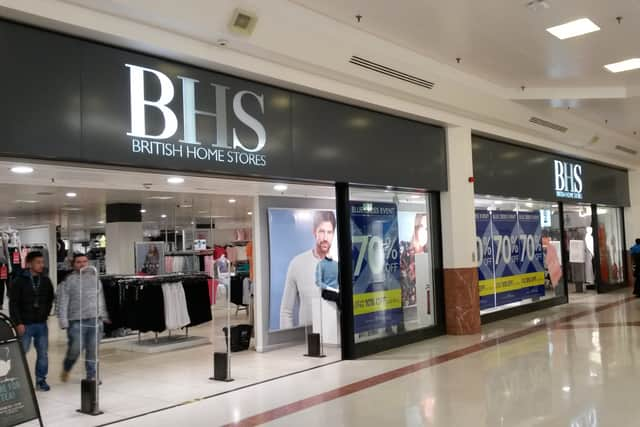
Then the game changed completely. The third phase of the centre was opened in 1989, sparking a mass exodus out of Dudley town centre. Sainsbury's was one of the first to move, closing its store in the Trident Centre, and opening in the new mall in September, 1989. British Home Stores closed its shop in the town, opening at Merry Hill in November 1989. Debenhams, which had left Dudley in 1981, also opened a store in the new mall.
There was more to come. In August 1990, Marks & Spencer closed its branches in both Dudley and West Bromwich, ahead of a move to Merry Hill the following November. Dudley's three branches of Next also made the move, along with Littlewoods. By the time the new mall was fully occupied, Merry Hill had 250 retailers, and claimed to be the biggest shopping centre in Europe. Visitors to Dudley town centre fell by 70 per cent during the five years that followed Merry Hill's opening, turning it overnight into a 'ghost town' of empty shops and clearance stores. The 'Crown colony' had been created in the Blackbrook Valley, but the price appeared to be the near annihilation of Dudley town centre, from which it would never recover.
At one point, plans were drawn up to build the world's largest tower, which at 2,000ft would have dwarfed the 1,450ft Sears Tower in Chicago. The scheme would have had an hotel at the base, a restaurant halfway up, and a nightclub and observatory at the summit. The proposals never got beyond the planning stage.
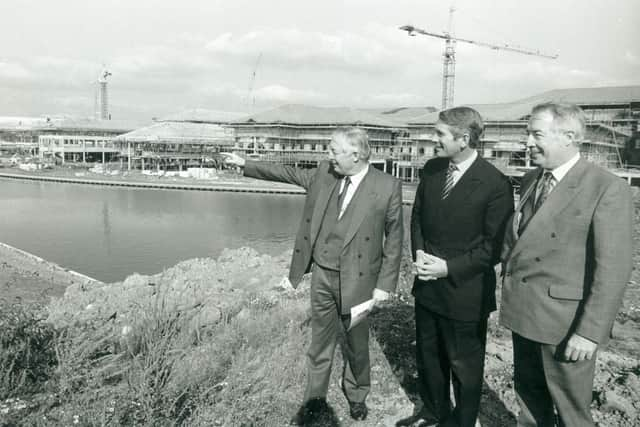
In late 1990, the Richardsons sold the Merry Hill shopping centre to the Mountleigh group, and focused on the construction of the Waterfront development, on the former Round Oak steelworks. A total of 750,245 sq ft office space and 69,965 sq ft of restaurants and bars were planned for the site. After years of preparing the ground, construction work began in earnest in 1989. The first offices were occupied in December 1990, and the complex was completed in 1995.
For many, though, the real party piece was the £22.5 million monorail, which opened in June 1991. Running from the far end of the Waterfront to the Merry Hill centre, the two-mile link had four stations, and caused quite a stir when it first opened. However, once the novelty had worn off, people became reluctant to pay for a journey they could quite easily walk. Problems with passengers being trapped in the air during the monorail's all-too-frequent malfunctions didn't help either. It closed in 1996, after just five years, and was mothballed until 2001 when it was removed and transported to Australia, where it remains until this day.
Comment Guidelines
Iconic Media encourages reader discussion on our stories. User feedback, insights and back-and-forth exchanges add a rich layer of context to reporting. Please review our Community Guidelines before commenting.