
26 pictures provide fascinating insight into a long-gone Wolverhampton community
It looks like a scene from an early episode of Coronation Street.
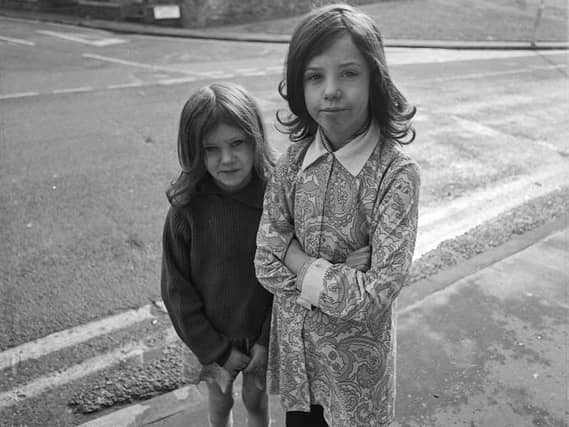


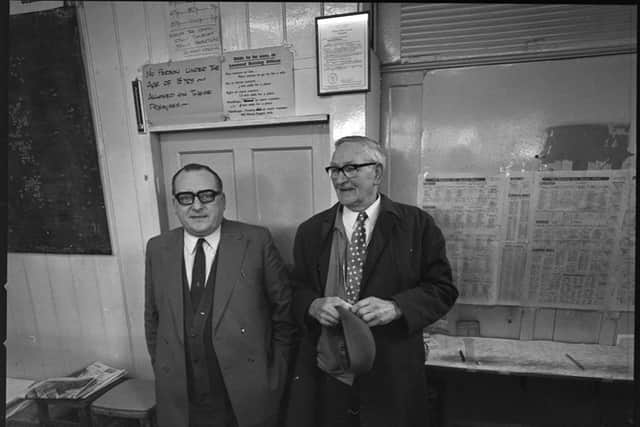
An elderly man takes a drag on his cigarette as he waits patiently for a haircut. A couple of old boys smile for the camera in the bookies’. Some young children play in the street. under the watchful eye of a neighbour on the doorstep.
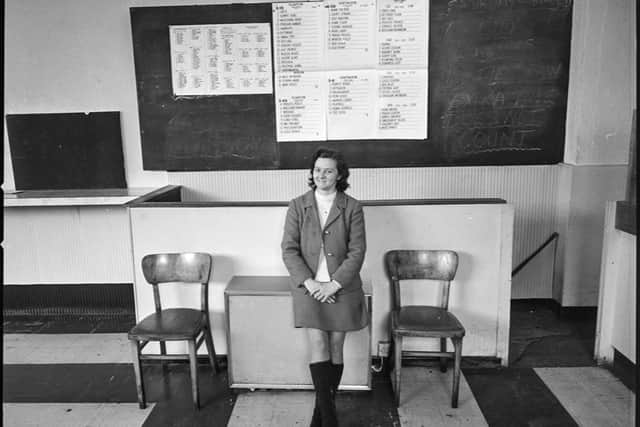
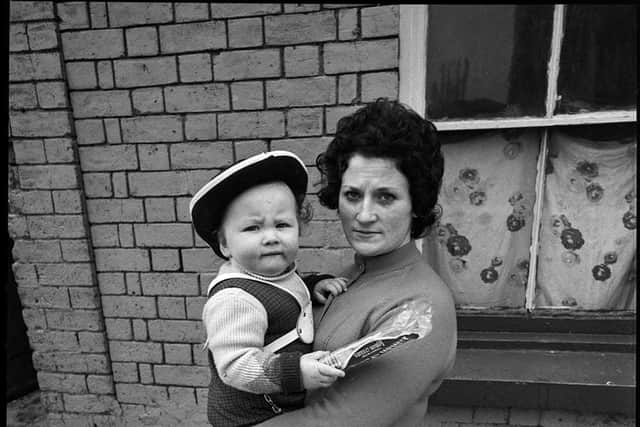
These pictures were taken by graphic design student George Foster circa 1973-74 and capture the last days of a tight-knit community which was about to disappear forever.
George developed a special interest in photography, and began taking pictures of the working-class communities around Wolverhampton.
As Wolverhampton continues to change, with a fresh drive to bring new housing, it is worth reminding ourselves on how the city used to be. Back in the early 1970s the city was being transformed as better roads were built to accommodate the new age of the car.
George spent time chronicling the final days of North Street before the bulldozers moved in.
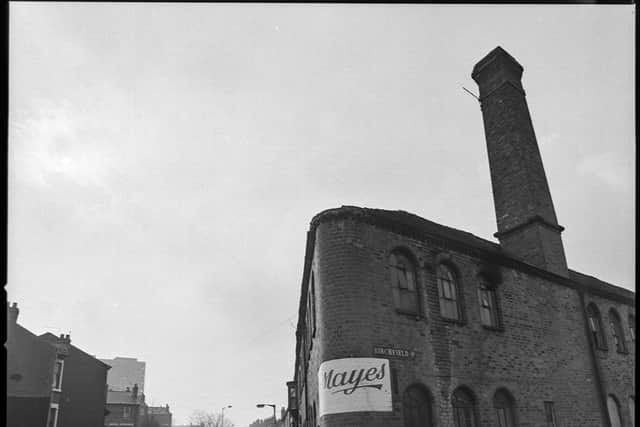
By the time he toured the area with his camera, it had already been split in two by the town’s new ring road. The new Polytechnic art block, where George was a student, is just visible in the background of one picture. In the years that followed, the narrow streets, Victorian terraces and smoky shops that dominated the area were swept away by a massive redevelopment which saw the John Ireland Stand – now the Steve Bull Stand – created at Molineux, and the eastern side of the street gradually being dominated by what is now Wolverhampton University.
In 1973 glam-rockers Slade may have been flying the flag for Wolverhampton in the pop charts, but this was a community still very much rooted in an earlier era, with cramped, dimly lit shops, and old-fashioned, modestly furnished homes.
“I think. North Street was due to be redeveloped and you can see some of the houses and shops were already on their last legs, with some already boarded up,” says George, who now lives in Monmouthshire.
“I would love to know who the boy in the leather jacket was.
“I went out a couple of days and just asked people if I could take their pictures and would have had a chat as well. I cannot recall if they were being offered alternative accommodation or anything like that. The area had a nice community feel to it, everyone seemed to know everybody else.”
Wolverhampton historian Billy Howe, who was born in Nursery Street in 1937, had by this time moved to Wombourne, but he was still familiar with many of the faces in the area where his mother lived until 1975.
“It was very old-fashioned by that time,” he says. “By that time it had become very run down. If you look at the picture with the Jag in it – I think that is Gladstone Terrace – and that used to be a very nice street just after the war.”
Billy, who runs the Lost Wolverhampton website, says George’s pictures give a fascinating insight into the last days of the lost community.
“They are fantastic pictures, they really capture the atmosphere,” he says.
Today, North Street is just a stub, on the southern side of the ring road, home to the Civic Hall and the new Civic Centre, the old town hall which is now the magistrates court, and a few bars and pubs. Before the construction of the ring road split it into two in the late 1960s, North Street continued for another three-quarters of a mile, passing Molineux and joining Stafford Road and Waterloo Road at Five Ways Island, although it became North Road for the final few hundred yards.
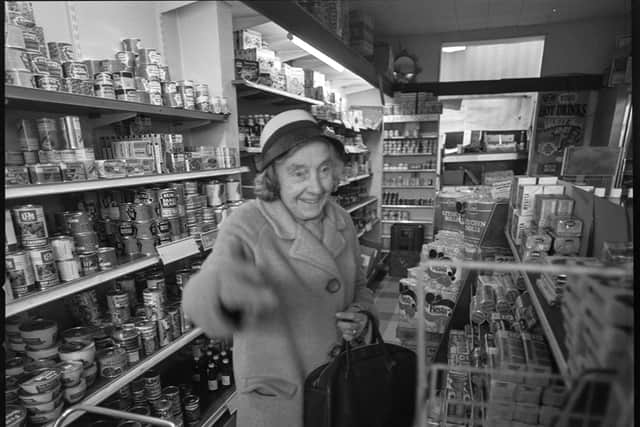
Today, there are still a few remnants of the old North Street, but not many. The Fox Inn, later known as The Wanderer, was demolished in 2014 to make way for a new car park. The former Feathers pub still stands in what is now Molineux Street, although it has now been taken over by the university. The North Road end, around The Hatherton Arms, had already seen considerable redevelopment by the time George’s pictures were taken, with new tower blocks on the eastern side and a modern shopping parade, all of which still stand today. Billy reckons the picture of the new self-service supermarket may well have been in one of these units.
“I remember Teddy McGowan the barber, I think he came from up north in the 1950s,” says Billy.
“He used to be very down-to-earth, and everyone who went in his shop came out with a short-back-and-sides.”
There are two pictures of a woman in a scarf, one on her doorstep, and another seated inside her house. Billy recognises her as Mrs Harrington, the wife of Charlie Harrington, well-known as both a weightlifter and a signwriter.
“Charlie Harrington and his brother Tom were very well known, they did all the signs around the Molineux, they were excellent artists,” he says.
Billy also recalls Preece’s second-hand shop, opposite The Feathers, where he bought many books as a youngster, and Jack Williams’ grocery store.
“It wasn’t far from town, but in those days people always used to go in their local shops,” he says.
“I think one of the men in the betting office may be Jack Smith, the owner.”
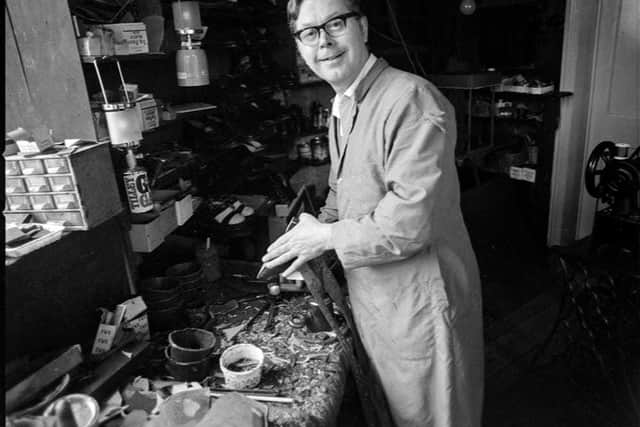
And if the cobbler’s shop looks familiar, there is good reason for that.
“That was Geoff O’Connor’s,” says Billy. “When that closed, all the fixtures and fittings were taken to the Black Country Museum, that is the cobbler’s there.”
* Do you recognise anyone in the pictures? Email [email protected] or call 01952 241491.
Comment Guidelines
Iconic Media encourages reader discussion on our stories. User feedback, insights and back-and-forth exchanges add a rich layer of context to reporting. Please review our Community Guidelines before commenting.