
16 pictures from the past of Scotlands estate and Wolverhampton's wholesale market
Real people, real lives – that was the principle behind the photography of George Foster.
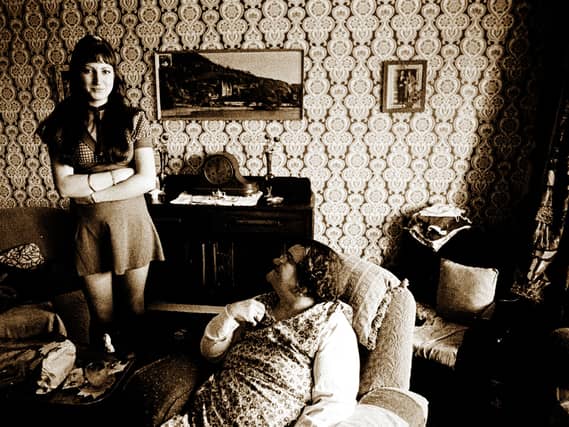


He called many of his subjects the Forgotten People. Old Soldier, Waistcoat Man, Man in Suit ... only Mrs Quinn is remembered by name.
The images were a snapshot in time of Wolverhampton. They say every picture tells a story, but George never got to find how the stories ended.
In 1973, he was a graphic design student at what was then Wolverhampton Polytechnic. He had a special interest in reportage photography, so one of his lecturers suggested he spent a bit of time on the then rundown Scotlands estate, capturing on camera the different characters who lived in the area. He also decided to pop down to the city's wholesale market to see who and what he could find – and then revisited it after it was demolished.
More than five decades on, George’s dark, dramatic pictures show just how much better off people are today, at least in material terms. But George also recalls a close-knit community where people made the most of their lot, and never forgot their sense of humour.
Speaking of the Scotlands, he said: “I can still smell the place, the damp, the urine, the rubbish, and the neglected cold, grey houses that were well past their sell-by date.
“For a rather innocent 21-year-old from a sheltered middle-class background, what I saw there remains with me to this day.
“It may have been 50 years ago, but I recall my anger that people should be treated so badly.”
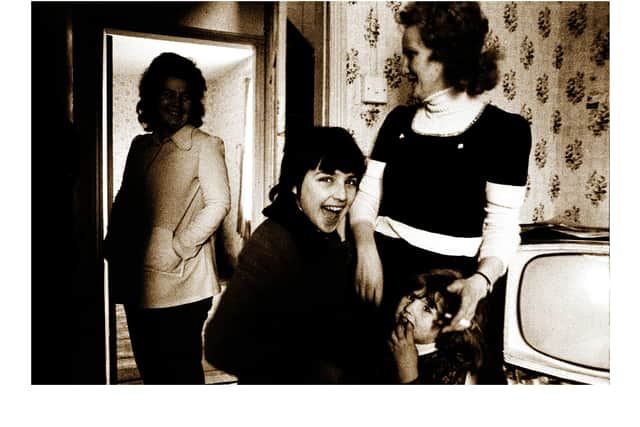
George placed pictures from the project, which at the time won him a photography prize, as the basis of a book he released in 2021.
People of all ages stand in dimly lit, sparsely furnished rooms, with peeling plaster and bare floorboards, long before the latter became a style statement.
George was introduced to many of the local characters by an easy-going young social worker called Stewart, who he recalls as being well-liked by everyone on the estate.
Stewart, says George, would go from house to house, patiently listening to people’s stories, and trying to sort out their many problems. “He was a saint, he really was an amazing character,” says George. “How he put up with that, I don’t know.”
The one character, apart from Stewart, who is identified by name is the formidable Mrs Quinn.
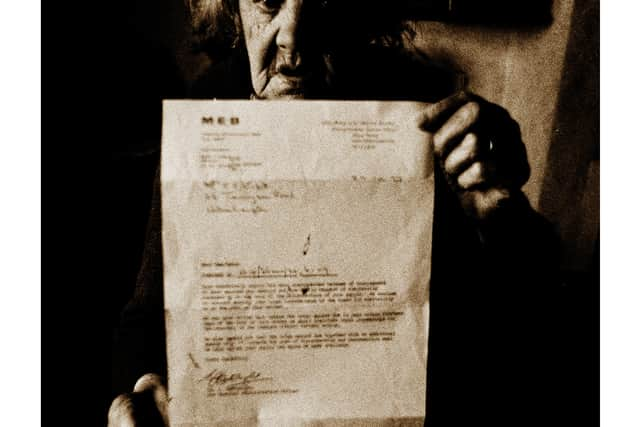
“Mrs Quinn really was a real old, tough, battleaxe who had been through everything,” says George. “They were about to cut off her electricity, they had sent the final demand, and Stewart was pulling the strings, trying to make sure that didn’t happen.”
He recalls many of the people remaining stoically optimistic, despite their hardship, and the youngsters seeming oblivious to the problems around them. One of the most haunting pictures is of a middle-aged man in a crumpled suit standing in a dingy hallway. The walls are half covered with wallpaper, half covered with peeling paint, the floor paved with grubby quarry tiles.
“I don’t think that man had two pennies to rub together,” George says sadly.
Another picture shows an ex-soldier, invalided out of the Army, talking to Stewart about his time in the forces, and proudly showing off the collection of military models he has made from polystyrene kits. In one picture he stands in front of an impressive diorama he has made, with the wallpaper hanging off the wall behind.
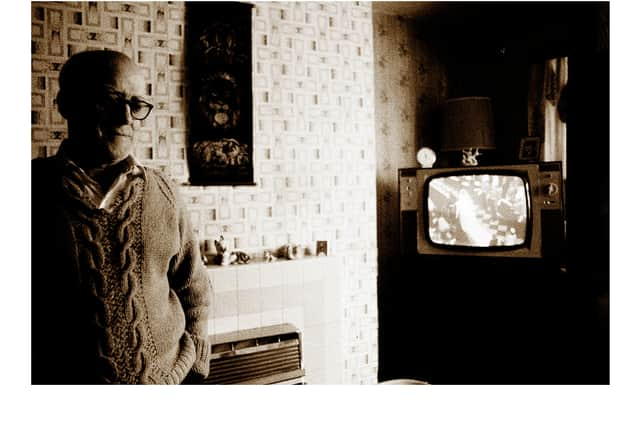
Another former squaddie, a veteran from the First World War, proudly holds a picture of his old regiment, and watches Princess Anne’s wedding to Captain Mark Phillips on television.
“The kitchens were horrible, the bathrooms were horrible, some of the houses looked as though they hadn’t been touched since the 1940s,” says George.
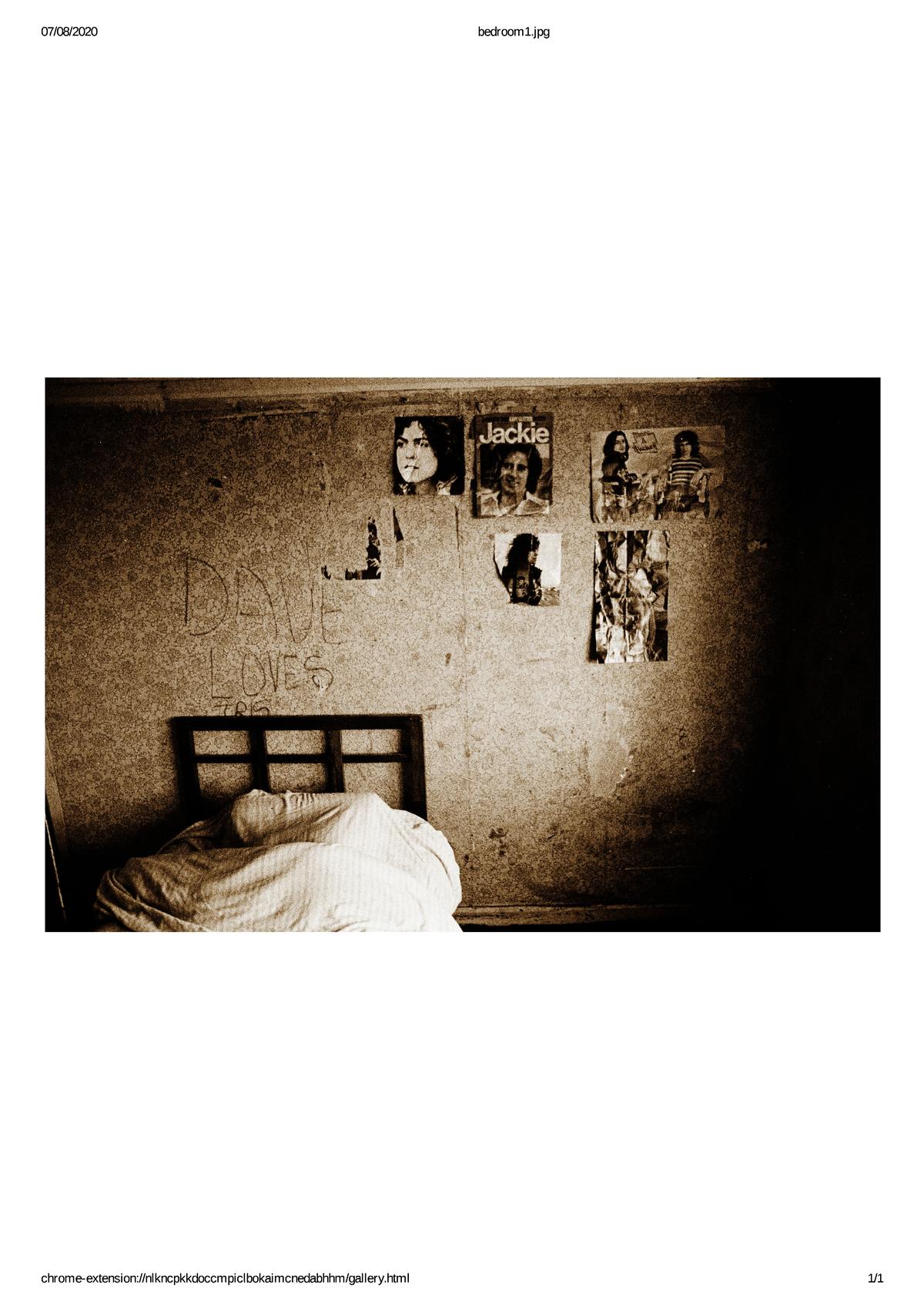
Not every house in the book is squalid, though, and some people appear to have taken a pride in their homes despite their hardships.
‘Waistcoat Man’ is a smartly dressed man, probably about 40 but carrying the haunted demeanour of somebody much older, and wearing browline spectacles typical of the time. At first glance his house looks tidy and well kept, but closer examination reveals a threadbare rug and worn-out furniture, belying the paucity of his means.
George says he also has vivid memories of the sights, sounds and smells of Wolverhampton’s old wholesale market.
The imposing brick and terracotta building, which would surely have been given listed status were it around today, was about to close forever.
But during its last days of trading, George recalls it as a place still bursting with life.
“It was still a busy place, first thing in the morning, with lots of banter from the traders and porters,” he says.
“I recall the smell of vegetables, diesel fumes from the vans being loaded and unloaded, with a background whiff of cigarette smoke and coffee.”
It is many decades since Wolverhampton’s old wholesale market was razed to the ground.
George was fascinated by the bustling hive of activity with its colourful personalities, and decided to capture its last days on film.
He went along with his camera during its last days of trading, in November 1973, and returned the following April to see it being reduced to rubble.
While the combination of tobacco, diesel carcigonens and fresh fruit and veg might not be appreciated by today’s health-and-safety inspectors, for many the old market hall is still sadly missed.
The market was designed by the architect J W Bradley, and its brick-and-terracotta facade looked very elegant when it was built in 1902.
It was located on the north side of an area then known as the Horsefair, between North Street and Wulfruna Street, opposite the retail market which had been demolished in 1961.
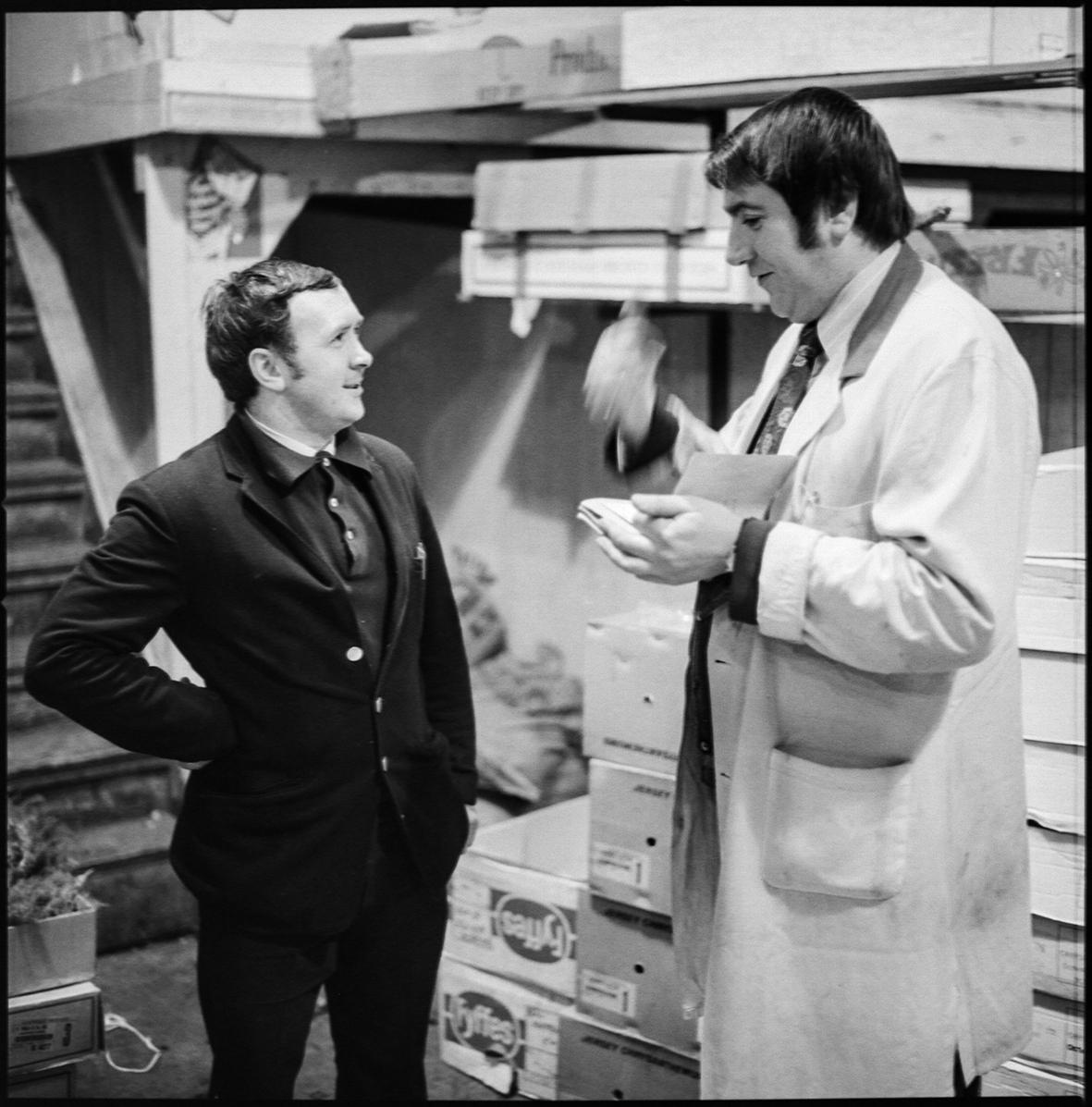
George’s first batch of pictures, taken during the final days before the wrought-iron gates clanked shut for the last time, capture scenes where cheeky chappie wholesalers in white coats would compete for who could shout the loudest as they peddled their wares to shopkeepers.
There would be a constant stream of trucks driving in and out the market, an army of porters rushing around with boxes of fruit and veg on small trollies as the wheels of commerce turned at break-neck pace.
“It was a bit like Covent Garden, I suppose,” says George.
“I was always interested in photographing people, and I knew there would be some interesting characters in there.
“It may have been the last week of trading, and they were starting to wind things down.”
George returned with his camera the following April to catch the final days of the building.
He witnessed as the demolition men took over and flattened the market which had stood on the site since 1902.
By this time, the loud men in white coats had made way for burly men with pickaxes.
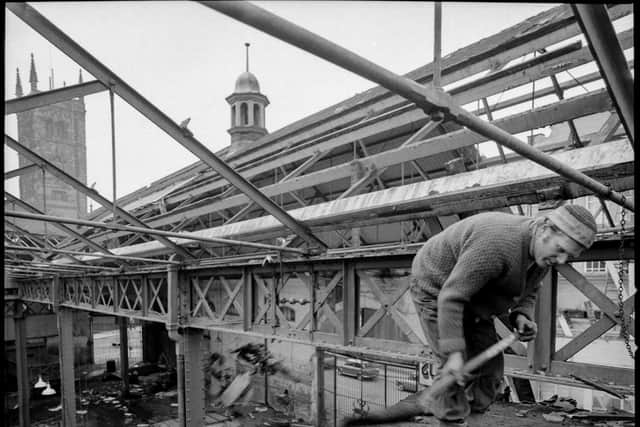
Again, health and safety was less of a priority back then compared with today.
“There were no sign of hard hats or hi-vis jackets, just the basic shovels and pickaxes,” says George.
“I must have gone willingly up onto that open space where the guy is seen shovelling rubble over the edge, but did not stay up there long.”
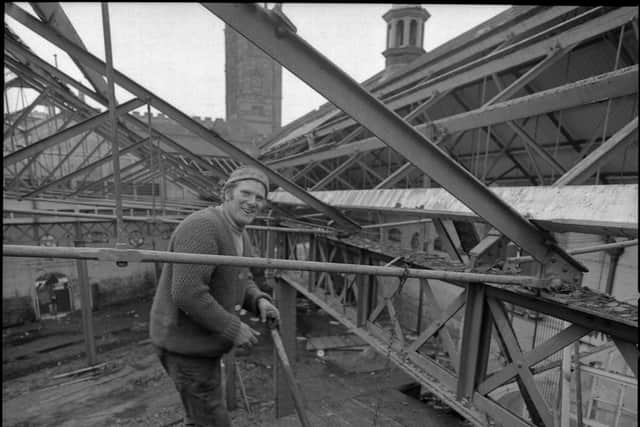
Today, of course, his presence – if allowed at all – would be highly regulated, but back in 1974 the workmen were quite happy to allow him onto the site and have their pictures taken.
“There were some interesting characters there,” he says.
“It didn’t seem to take long to knock the place down.
“Within a few weeks another bit of Wolverhampton history had gone for good.”
Comment Guidelines
Iconic Media encourages reader discussion on our stories. User feedback, insights and back-and-forth exchanges add a rich layer of context to reporting. Please review our Community Guidelines before commenting.