
Council blocks plan for 67ft mast in upmarket area of Wolverhampton

Mast would spoil the character of conservation area, says planning officer
Plans to install a 67ft telephone mast next to a village green have been rejected by council planners on the basis that the development would be out of character with its surroundings.
Wolverhampton Council has refused permission for the 5G phone mast, with antennae, dishes and ground cabinets on Tettenhall’s Upper Green, near to Wergs Road.
Planning officer Jobe Elwell said the development would create ‘visual clutter’ in an otherwise open environment.
Lewis Blackledge, writing on behalf of Jet Infrastracture, which wanted to build the mast, said the site of the proposed mast was ‘part of a nondescript unused piece of land’ on the edge of the conservation area, made of mostly deciduous trees and shrubs.
“The land comprises a minor element of the whole conservation area which is centred upon the large open playing fields and 19th century development which centres around the Church of Saint Michael and All Angels,” he said.
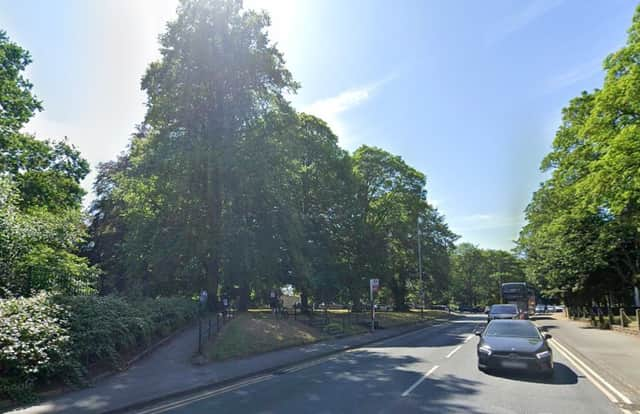

Mr Blackledge said the area’s significance as a distinctive green space had already been compromised by the road's hardscaping and the residential development to the south.
“These elements impart a decidedly residential character to the setting,” he said. “Consequently, the space is now perceived primarily in the context of the adjacent housing estate, rather than as a historic 19th-century village green.”
Mr Elwell rejected this assertion, saying the area was characterised by open views with minimal street furniture, preserving the historical and aesthetic quality of the area.
“The proposed mast and ground cabinet would introduce two discernibly contemporary and utilitarian structures, which would appear discordant within this traditional setting,” he said.
“The added street furniture of the mast and cabinet, adjacent to the confluence of two public footpaths, would be prominent and overbearing, introducing visual clutter in an otherwise open environment.
“Whilst a degree of screening from certain angles would be provided from surrounding trees, these trees are deciduous, hence such screening would only be in place for roughly half the year.
“The mast and antennas would sit prominently above the tree canopy, standing out as an alien man-made feature, creating a harmful juxtaposition within this natural setting. Such harm would be exacerbated by the prominent siting between two junctions and along an arterial route into the city, where the mast would be visible across long distances, including prominent views into and within the conservation area, ultimately diluting its verdant and semi-rural character.”
Mr Elwell said the applicant had also failed to provide sufficient evidence demonstrating that all alternative sites, and strategies such as mast sharing and building placements, had been duly explored.
Comment Guidelines
Iconic Media encourages reader discussion on our stories. User feedback, insights and back-and-forth exchanges add a rich layer of context to reporting. Please review our Community Guidelines before commenting.