
'I want to have a conversation about men': Wolverhampton's Caitlin Moran prepares for home show
You can take the girl out of Wolverhampton, but you can't take Wolverhampton out of the girl.
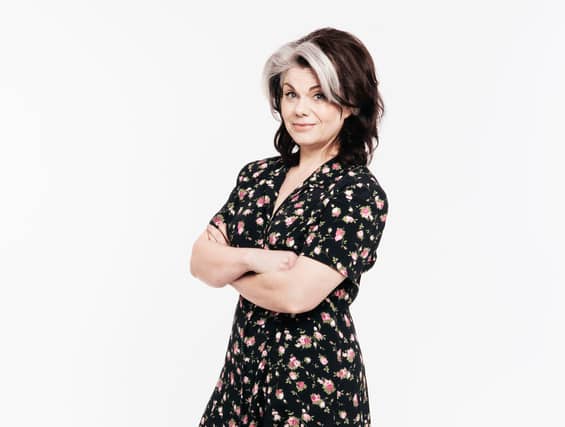


Caitlin Moran left the city when she was 18 in what she described as an action of rebellion, wanting to leave home and live London life, but as she got older she came to appreciate how "lucky" she was to come from Wolverhampton.
The author, journalist, columnist, presenter, film maker and feminist is set to return to the scene of some riotous times at the Wulfrun Hall for a night of talking about men and boys and the everyday issues they face, all tackled with love, and concern, and respect, but also joy, and fun, and humour.
Caitlin said it was amazing to be appearing at the University of Wolverhampton at the Wulfrun Hall on Saturday, June 1 at a place where she said she suffered her first "semi-permanent damage" as a music journalist.
She said: "It was at the Wulfrun Hall, watching Teenage Fan Club in 1992 and I went right down the front and got bruises all across my chest after being crushed against the barrier, then having a ringing sound in my ears for the next two weeks afterwards.
"I can guarantee to my audience that while my voice can be piercing sometimes, you're unlikely to sustain the kind of semi-permanent damage that I sustained the first time I went to the Wulfrun.
"I've never appeared there before, it has always been Birmingham, but I said that this time, I have to do Wolverhampton - we need to do it and it needs to be part of the tour, so we are playing here on my insistence."
Caitlin's love for Wolverhampton has grown back over the years since she moved to London and she still makes regular visits to the city, with one notable appearance being for her 49th birthday and involving trips to some unique landmarks.
She said: "We walked all around our old estate, then went off to St Bartholomew's Church off the Penn Road, as the village hall there used to do the best jumble sales, and there was a woman there who saw me and my brothers looking in and spoke to us.
"She asked if we had been to a party there or had been worshippers at the church, but we said we just loved a good jumble sale and asked if we could look around, which she let us do and it smelt exactly as I remembered it, that old village hall smell of dust and polish.
"We were really excited to be there because of the jumble sales, then we went to the Central Library, which I was pleased to see was still well stocked as my local at Warstones Library seemed to have been stripped out 10 years ago.
"We went to Wightwick Manor, which I had no idea what to expect as we could never afford to go there when I was a kid, but I've been to with my husband and it's just the most wonderful place, with so much history to see at it."
Her departure for London at 18 years old had been, as she puts it, "fuelled by rebellion" and came at the start of the Britpop era in the 1990s, but she said that it was only after talking to her sister how much she realised she was lucky to be from Wolverhampton.
She said: "Everyone goes through a period of thinking that their home town is a dump, and I thought I had to get out of Wolvo and it's all about London, but it was only a couple of years later when my sister pointed out how lucky we were to come from Wolverhampton.
"We lived in a council house where we paid pennies in rent, we had three very well-stocked libraries in our area, we could go swimming for 10p at Heath Town because they had the leisure cards and it really was a safe place.
"I think most people's ideas of the city are that it's either really deprived or really poor and depressing, but that wasn't my experience at all as the town looked after us and we were the town's children, so it made me realise that I didn't need to run so far or so hard as it's a beautiful place."
That love of Wolverhampton has been translated through Caitlin's work, with the TV show Raised by Wolves and the film How to Build a Girl all influenced by her upbringing in the Midlands.
She said that the TV series, in particular, really showcased what a Midlander was, which was something that people from the North and South could both get confused by.
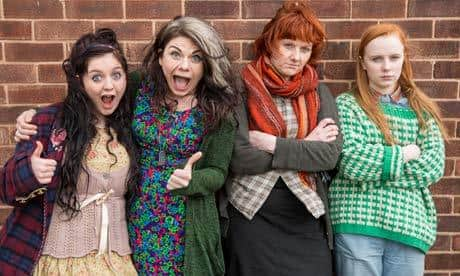
She said: "I think there's something very specific about people from the Midlands as if you talked to Northerners, they don't really consider us to be Northern and think we're too Southern, whereas Londoners presume everything north of Watford is the North.
"It's this idea that we are right in the middle and I've written columns about how, for me, the best kind of man is from the Midlands because they haven't got that Northern swagger, ability to start a fight, nor are they kind of up-themselves Southerners.
"They're very chilled, but very resigned and they'll have a beer and chat and just figure things out, they're not trying to prove their masculinity and they're very comfortable in it.
"I married a man from the Midlands and I think men of the Midlands are the finest of all men in the country."
The show at the Wulfrun Hall follows the topic of men as it supports her newest book "What about men?", where Caitlin said she wants to explore the world of boys, and men, and find a way to talk about their problems in the way women, and girls, have talked about theirs, over the last few decades.
Caitlin has spent many years writing about women and girls and the many issues they've faced over the years, citing examples such as Britney Spears being upskirted by a photographer and Amy Winehouse being chased down the street.
Her work has increased the level of conversation around language and behaviour towards women and how women should be treated with respect, humour and warmth, not told to lose weight or buy a handbag, and help them to find a way to enjoy life and like themselves.
She said her daughters had been in feminist clubs at school and had role models such as Beyonce, as well as having hundreds of books about being a feminist, but she had also noticed that a lot of boys and men didn't have the same sort of support.
She said: "We haven't really talked about boys at all and the boys who my girls went to school with didn't have the same equivalent clubs to go to or role models like Beyonce talking about how great it is to be a boy.
"There are books about how to solve your problems, what to do if you feel anxious or vulnerable, how to make friends if you feel lonely, but there's no pride in boys' bodies, so while a girl can buy badges about the importance of vaginas, a boy wearing a badge that says he's proud of his willy is absolutely unthinkable.
"And yet, why shouldn't boys be able to talk about their bodies and problems and feel proud about who they are? We seem to think that as soon as boys start talking about being boys and proud of it, it immediately tips into toxic masculinity and they stomp around like Andrew Tate and want to rule the world.
"I really wanted to write a book that did the same thing for boys and young men that I've done for women and girls and say you are human beings and you have anxieties that it seems society is not talking about."
Caitlin said she wanted to write a book that was lovely and friendly and started a conversation and focussed on boys this time, helping them to have that conversation.
She said that the idea of toxic masculinity seemed to affect boys the most, saying that a child's development up to five or six saw them able to play games, dress up, tell each other they loved them and kiss each other in the same way that girls did, but then be told at seven to stop doing all that.
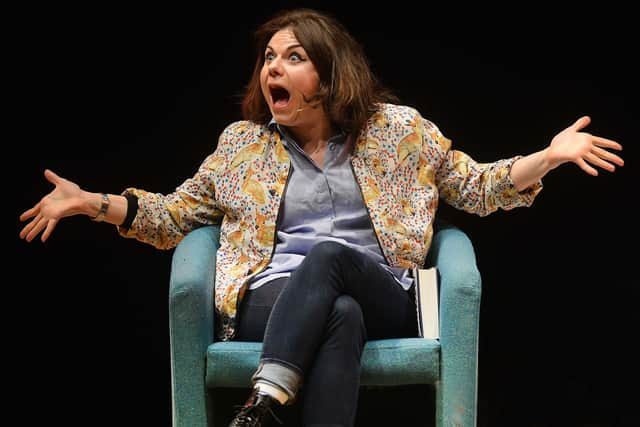
She said: "That makes me sad to think that girls are allowed to carry on as they are, but boys are suddenly told there's a whole bunch of stuff they have to stop doing now.
"We're going to remove a whole load of emotions and reactions that they're naturally having and be told these are shameful and they're not allowed to be sad or anxious or scared or told they can't tell their friends they love them or if they have a problem, they can't get a hug, because that's not what a boy does.
"There's then this idea that a boy's life suddenly becomes lesser and there's all this stuff they become ashamed of from the year before and I feel quite outraged and angry that we just accept the fact that there's a point where if a boy cries, they're having a bad enough day, but they're suddenly shamed for crying.
"You wonder what we're doing to these children and I think there should be equal rights for hugging, for being able to play silly games in the playground and if girls can do it, why can't boys?"
One character highlighted as part of that toxic masculinity by Caitlin has been Andrew Tate, who she said had, from a business standpoint, been extremely successful at talking to boys and men and had almost got a monopoly on that, but said that any teacher she spoke to would describe his influence as corrosive.
She said: "From my understanding, every school in the country has had to have a meeting between parents and teachers about how to deal with Andrew Tate's influence in school.
"You have boys telling female teachers they won't be taught by them, female teachers trying to teach and being told by boys to go make them a sandwich and male teachers being asked if they let their wife have a job.
"Boys have been screaming his catchphrases at girls and reducing them to tears, so the idea that this one man is now being talked about in every single school in this country is just extraordinary."
Caitlin said she had a golden rule, which was "Don't be a d**k" and said that people should follow that and not trample over anyone's happiness.
Her new book has received glowing endorsements from people such as Bob Mortimer and David Baddiel, whose support she said she cherished, and spoke about what she hoped the book would achieve.
She said: "My dream is that it does something roughly similar to what 'How to be a Woman' did, which is to just start a new conversation about boys and men, but one that's friendly and open and warm and non-judgemental.
"I think the problem is with a lot of gender stuff, whether it's feminism or talking about toxic masculinity, is the conversations are usually very humourless and fraught, if someone says the wrong phrase, someone's going to turn around, say they're problematic and try and cancel them.
"It's all done in a very academic, cold and combative way and that's not how people change and not how they want to take on ideas.
"The whole thing I love about books and pop culture and music and films and all the stuff I do and love is that it should be fun to learn something new, so every time you pick up a book, it might make your life feel better or make you feel happier, rather than being lectured at.
"Changing your life shouldn't feel like a duty, like you're changing your brand or eating vegetables, it should feel like eating ice cream, so this is like a big bowl of man-flavoured ice cream where we can ask if you're happy as a man."
Caitlin Moran will be appearing at the University of Wolverhampton at the Wulfrun Hall on Saturday, June 1 at 7.30pm.
Tickets cost £37.15, which includes a copy of the book, and can be bought at crosstownconcerts.seetickets.com/event/caitlin-moran-what-about-men-live/university-of-wolverhampton-at-the-wulfrun-hall/2980198.
Comment Guidelines
Iconic Media encourages reader discussion on our stories. User feedback, insights and back-and-forth exchanges add a rich layer of context to reporting. Please review our Community Guidelines before commenting.