
From YTS to leader of Wolverhampton, history buff council leader talks plans for the future
Stephen Simkins is like a living, breathing encyclopaedia of Black Country history. He loves to go off at a tangent, reeling off tales about everything from the Bilston cholera epidemic of 1832, to the manufacture of the Tommy's helmets during the First World War.
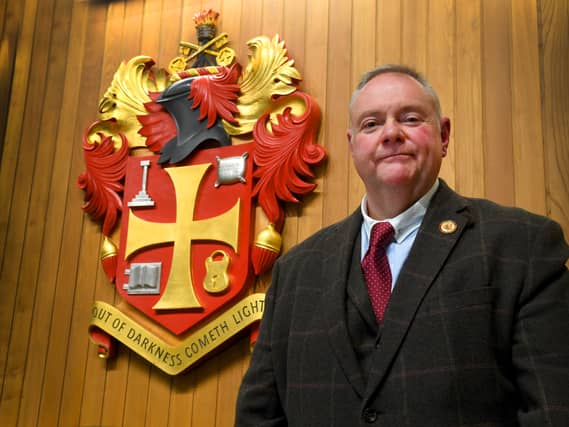


But while the new leader of Wolverhampton Council is passionately proud of the region's past, he knows it is the challenges facing its future by which he will be judged. Tighter budgets, inflation, a city centre suffering at the hands of changing shopping habits, and the growing cost of adult social care, have made for a bulging in-tray since he officially took office in September.
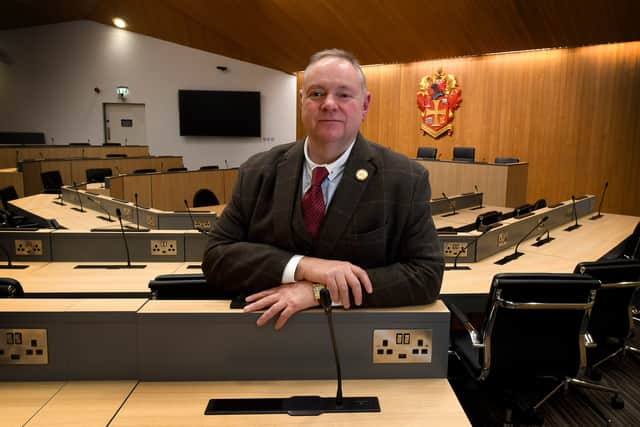
Councillor Simkins, who has represented Bilston South ward for the past 21 years, took over the reins in circumstances he would never have wanted. His predecessor, Councillor Ian Brookfield, died from cancer in July aged just 57, and as his deputy, it fell to him to step into the breach.
"It is difficult for the obvious reasons," he says. "I had been acting leader while Ian was so ill, and that was difficult because Ian was so well liked.
"We had a good working relationship, he could be funny at times, but he could be serious at times as well.
"With Ian, it was always the community and citizens first, and I aim to continue that. Everything we do in the city will be about putting the citizens first."
When he left school at 16 in 1981, it would never have crossed his mind that one day he would lead the council. Bilston born-and-bred, he was always fascinated by local history.
"I went to Wilkinson School, and I was always interested in John Wilkinson," he says, referring to the Bradley-born iron magnate, who initiated the construction of Iron Bridge before handing the project over to Abraham Darby III.
But for many years, these interests went unfulfilled.
"I always thought I was clever at school, but I didn't manage to get any exams," he says.
This lack of formal qualifications meant that instead of furthering his interest in local history, he went to work in the workshop of the Charles Clark British Leyland garage in Chapel Ash, through the Youth Training Scheme (YTS).
"I was just a general dogsbody, I can't say it taught me a great deal," he says.
"Back then, a lot of companies just used YTS for cheap labour. Nobody was checking up on what we were doing."
He then tried an apprenticeship at British Road Services, the state-owned haulage company, but that didn't really work out, either.
"My father was an auto-electrician, he worked for BRS - but it wasn't for me," he said.
He went on to work as a retail assistant at Asda in Tipton for a while, before later taking on a job at Compomotive Motorsport Wheels in Telford.
It was not until he was in his 40s that Councillor Simkins finally got the opportunity to indulge in his passion for history – and discover the reason behind his under-achievement at school.
"I did a history degree at Wolverhampton University, and I loved it," he said.
"My grandfather served in the Second World War, I always admired him as a child. Now doing a degree I was learning about why we went to war."
He is also intensely proud of the Black Country's role in two world wars.
"Thompson Tankers played an important role in the war effort, Sankey's was a big player which made the Tommy's helmet during the First World War.
"I also did a study of the history of women in the Black Country, my dissertation was on the cholera epidemic in Bilston, where we had the highest death rates in the country, with four or five deaths a day."
It was during the course of his studies that Councillor Simkins made a surprise discovery – and at the age of 47 he was diagnosed with dyslexia.
"The university was brilliant, and helped me work around the condition," he says.
"Some of the lecturers we had were fantastic. One of them, Steve Badsey, was asked to address the United Nations on how to keep the peace, and he's a Stourbridge lad."
By this time he was already a ward councillor in Bilston, his interest in politics having been sparked by listening to veteran Wolverhampton councillor Phil Bateman on BBC Radio WM's Ed Doolan show.
"I used to listen to Phil on Ed Doolan, and always thought he sounded pretty good," he says.
"I then got to know Bert and Denis Turner (former mayor and his brother, who was an MP), and it was through them that I ended up standing for the council."
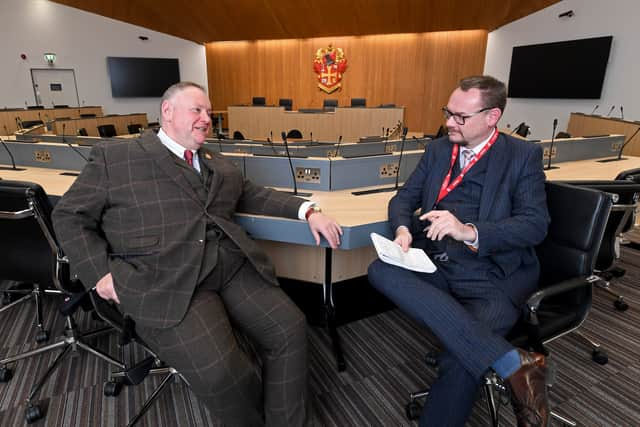
Councillor Simkins celebrated 21 years as a councillor in May, and has held both the leisure and, more recently, the economic portfolios on the council.
He says while there are many things that need to be done across the city, the most important will be maintaining sound public finances. The chain of events which led to Birmingham Council effectively being declared insolvent has sent shockwaves throughout local government, and Councillor Simkins insists there is no possibility of Wolverhampton facing a similar situation.
"It's not just in Birmingham, but up and down the country, we understand there are going to be about 30 councils that are facing the prospect of administration," he says.
"We are not among them, we have had a good 10 years of losing staff and setting strict budgets, and still being able to help the community."
As the former portfolio for the city economy, Councillor Simkins oversaw the deal that handed management of the Civic and Wulfrun Halls to the AEG group. He has also been a driving force behind the £6 million Box Space development, which will see land in Cleveland Street turned into an events space occupied by leisure businesses trading from shipping containers. Despite the challenges facing town and city centres across the country, he is optimistic about the future.
"The redevelopment of the Civic Hall is already having an effect, it is bringing in events that drive people towards the city centre," he says.
"It is generating footfall, so the next piece of the jigsaw is to make the most of that. It's our job to get people into the city, but it's then up to businesses to make the most of that.
"But it's not just about the city centre, it's also about Tettenhall, Bilston and Wednesfield."
His determination to keep a tight rein on the public finances means there is unlikely to be any major bail-out to bring the empty Beatties building back into use.
The large former department store in Victoria Street has been empty for three years since House of Fraser moved to a smaller unit in the Mander Centre. It now faces an uncertain future following the collapse of a scheme to convert it into a mixture of retail and apartments. The Express & Star revealed last month that its new owner SSYS has gone into receivership.
“It’s a tragedy what has happened," he says.
"It would be lovely to be able to offer support or a loan to help bring it back into use, but where is the money going to come from?
"We have twice granted planning permission for the site to be developed, but in the end we had to take enforcement action as it was becoming untidy, and now the receivers have been brought in.
“The council will be having some conversations among ourselves, and I’m sure we will be talking to the receivers to find what can be done. If a private company could come in to develop it, we would not stand in their way.
"If we can help we will do, but it must be a public-private partnership. We can’t rescue the building with council finances. We have to focus on the day job, which is looking after the people of Wolverhampton."
Councillor Simkins says his role in securing regeneration will be as a facilitator, bringing together the private sector, the West Midlands Combined Authority and central government: "It is important that we work with the Government, they will be the ones who will fund any major projects."
He says like with most authorities, the cost of social care for both children and adults is going to put budgets under increasing pressure in years to come.
Improving educational opportunities will also be crucial to the city's future prosperity, he says. And he says his own experience demonstrates why this education should not be the preserve of the young.
"Education should not just be about teenagers and people in their 20s - anybody who wants to learn should be given the opportunity," he says.
Comment Guidelines
Iconic Media encourages reader discussion on our stories. User feedback, insights and back-and-forth exchanges add a rich layer of context to reporting. Please review our Community Guidelines before commenting.