
University axing English courses and half of department staff face redundancy
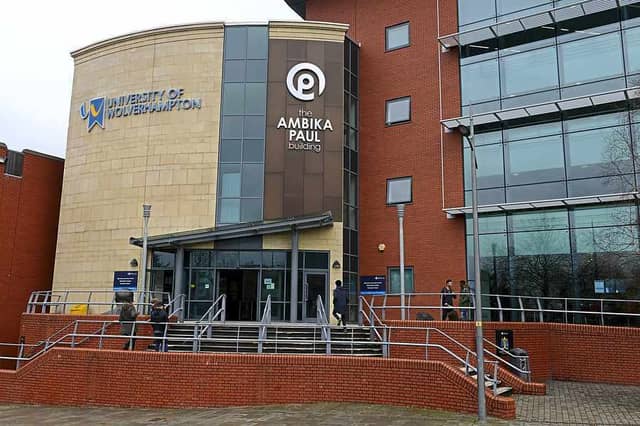

Jobs at risk and concern as English courses dropped as university looks to cut costs
A host of English courses are believed to be being dropped at the University of Wolverhampton, with staffing reductions reportedly afoot, as part of efforts to cut costs.
The University and College Union, which represents members of staff at the university, has told the Express & Star that a number of English courses have been temporarily suspended or permanently closed for recruitment.

It’s understood they include the MA in English Literature, MA in Popular Culture, BA English Literatures, BA English Language and TESOL, BA in English Literature and Language, BA English and Creative Writing, BA English and History and all other joint courses.
The university’s BA in English (covering Literature and Language) and the BA in Creative and Professional Writing remain open for recruitment, the union said.
The news has been met with shock and sadness from former students on social media.
Black Country musician Timothy Parkes said it “doesn’t do much to combat the illiterate Black Country folk myth” and he added: “English at Wolves Uni was iconic in critical thinking and was doing incredible work to widen the horizons of the good working class people of West Midlands.
“There has to be access to learning more about the English Language for any of the other arts and humanities to have a context, and we devalue the arts at our own peril.”
The union said it understands that around half the staff in the department are at risk of losing their jobs as a result of the proposed changes.
A spokesperson for the UCU Wolverhampton Branch Officers said: “Staff in the department have been invited to formally consult on a proposal to reduce the numbers of lecturers and senior lecturers by about 50 per cent. While not yet confirmed, this would clearly represent a drastic reduction in teaching staff this summer and UCU are concerned that this would impact the experience of students currently registered on these awards as they are taught out, as well as the course closures reducing study options for future students.”
“The university justifies the course closures as a means to reduce costs and impacts relatively few students while still providing courses in the general subject area for future students. Management also argues that the proposed reduction in staffing is commensurate with reducing student numbers on these courses in recent years.
“However, UCU oppose these changes because of the reduction in choice for future students, the detriment to the learning experience of current students and the impact job losses have for staff, representing a managed decline in the institution generally and limiting the possibility of developing new and innovative courses in the future. Arguments over recruitment numbers do not reflect that fact that the university has refused to positively market English and related subjects.”

The union said staff have raised concerns about how the department would be able to provide specialist subject expertise covering 2,000 years of literature, poetry, drama and language use and evolution and how current PhD students can be adequately supported by the remaining members of staff.
Echoing the concerns of members of the public, staff have reportedly also expressed concern about the exclusion of local and working class people from studying the creative arts - creating a risk of restricting this to a narrow class of privileged people who do not represent the population as a whole.
The university did not provide any further detail on the situation and the likely impact of proposed changes when contacted for comment but a spokesperson told the Express & Star: “While the specific course portfolio at the university will change year on year, we continue to offer courses in English.
“We continually develop our course portfolio to best meet student demand and industry needs, and we ensure all programmes are resourced to deliver an excellent student experience.
“Any proposed reduction in staffing is a last resort and comes only after careful consideration of demand, long‑term viability and the need to protect the experience of current and future students.”

The university was named in 2024 on a list, published by the University and College Union and Higher Education Statistics Agency, of institutions facing financial problems that could lead to staff cuts; and last year it announced plans to close its Telford campus, its School of Art building in Wolverhampton and sports hall at its city campus which is being repurposed as a medical school.
The university said the closures and changes were part of its long-term strategy to reduce the cost of its estate so it could reinvest in better student facilities and enhance its education offer.
Relocation of teaching, research and support activities from Telford Campus to the university’s Wolverhampton and Walsall Campuses is expected to take place by August 2026.
Completion of Black Country Medical School facilities in the Wolverhampton City Campus Sport Centre is scheduled for September 2026; and a new integrated facility for the School of Creative Industries is expected to open in the Housman Building (MX) in 2027.
The restructuring comes nearly four years after hundreds of university staff lost their jobs as student recruitment was halted for nearly 140 courses as the university tackled a £20 million deficit and 10 per cent fall in UCAS applications. Many of those job losses were within the arts.
Comment Guidelines
Iconic Media encourages reader discussion on our stories. User feedback, insights and back-and-forth exchanges add a rich layer of context to reporting. Please review our Community Guidelines before commenting.